Wednesday, 13 January 2016

More holiday science experiments

We've previous put up a demonstration and explanation of capillary action using flowers, but this one is also quite fun. Simply fill two small glass containers with water, putting plenty of blue food colouring in one, and yellow in another. Connect the two containers to an empty middle container with absorbent paper. The paper absorbs the water, and through capillary action, the water moves through the paper to the middle container. After a few hours, this middle container has the same amount of water as the external containers, and you can see the effects of mixing blue and yellow (it makes green).
A photo posted by Marc West (@westius) on

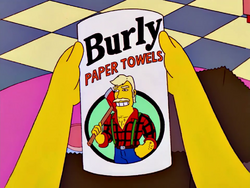
Make sure your paper is burly.

Wednesday, 26 August 2015

Science Week 2015

National Science Week has come and gone for another year. This year, I spent a lot of it down at Canterbury Public School where I am their tamed scientist as part of CSIRO's Scientists in Schools program. It was a lot of fun, and we walked away with a world record - more on that in a bit. Here's some of the cool stuff we did:


Above is my box of household products for various experiments, and the results of cabbage indicator. Cabbage indicator is made by simply boiling purple cabbage. The resultant solution contains a chemical called anthocyanin which exists in an equilibrium of three forms depending on the ph, allowing a wide range of colours. We used mould remover (strong base), window cleaner (mild base), lemon juice, vinegar and tartaric acid (mild acids).


We've made corn flour slime before, but if you make it with tonic water, it will fluoresce under UV light and glow in the dark. Tonic water contains quinine, which apart from fluorescing, is also a preventative for malaria (which is why it was put in tonic water in the first place). And here's some phosphorescence:


None of the kids had seen an overhead projector before. This demonstrated some basic optics regarding mirrors and light travelling in a straight line, as well as how old I now am. The food colouring / milk / detergent experiment works in the same way our detergent-powered boat works, noting that the fat in the milk helps keep the food colouring separate (it doesn't readily dissolve until the soap is added).


Liquid nitrogen is always good (as was the liquid N2 ice cream we made), as is entertaining your local MP and making a homemade periscope.


And on that world record, we participated in the world record stargazing attempt for most number of people gazing at the stars at once across many sites. And we got there (unofficially at the time of writing anyway). It was dark, I didn't get many shots, but I did get this one of our planetarium and star demonstrator...


Tuesday, 11 August 2015

Ep 158: Food science with ABC Radio

Every month, I chat with ABC Central West and the science topics of the day, and this week we chatted food, in particular:
  1. Consumption of spicy foods may lead to a lower risk of death (and a little about correlation and causation - I really should do some more correlations of the week)
  2. Human brain evolution needed carbs
  3. 3D printed food
 Have a listen below, or on the mp3 - all credit to the ABC (and the wonderful host, Kia).


Thursday, 2 July 2015

Ep 157: Where to now for Cold Fusion?

Big Bang / Cold Fusion

Do you remember Cold Fusion? Remember when electrochemists Martin Fleischmann and Stanley Pons claimed to have achieved nuclear fusion in a bottle on a table in their lab in Utah? That was so 80s! Cold Fusion was quickly debunked and, apart from its appearance in a 1997 Val Kilmer Movie (The Saint), most people forgot about it. So it may surprise you to hear that Cold Fusion research continues to this day, with some “interesting” participants and some extraordinary and surprisingly persistent claims. The most recent International Conference on Cold Fusion (ICCF-19) was the largest yet reflecting a climate of renewed interest.

Dr. Timothy J. Surendonk has a passion for cold fusion, and in this podcast episode, tells its story, of the new players, recent events, and particularly the curious story of the “e-cat.” It isn't heavy on technical science, but rather a more entertaining talk that just might challenge the way you relate to science.

Listen to this show here:


References:
  • Fleischmann, M., & Pons, S. (1989). Electrochemically induced nuclear fusion of deuterium Journal of Electroanalytical Chemistry and Interfacial Electrochemistry, 261 (2), 301-308 DOI: 10.1016/0022-0728(89)80006-3
  • Kim, Y. (2009). Theory of Bose–Einstein condensation mechanism for deuteron-induced nuclear reactions in micro/nano-scale metal grains and particles Naturwissenschaften, 96 (7), 803-811 DOI: 10.1007/s00114-009-0537-6 
  • Kim, Y. (2012). Nuclear Reactions in Micro/Nano-Scale Metal Particles Few-Body Systems, 54 (1-4), 25-30 DOI: 10.1007/s00601-012-0374-6

Songs in the podcast:


Banner: 

    Wednesday, 14 January 2015

    Science for kids - Slime

    Everyone likes slime! And it's easy to make, in its various forms.

    Cornflour Slime:
    All you need is cornflour (made from actual corn - maize - not the "wheaten" version you can get in Australia, which is made from wheat), water, some colouring, a bowl and a spoon. The process is:
    1. Pour cornflour into a bowl,
    2. Stir in small amounts of water until the cornflour becomes a thick paste. I prefer to have the water coloured at this point, as it helps to more effectively spread the colour throughout the slime.
    And that's it. Try stirring the slime slowly (should be easy) and then quickly (should be almost impossible). Then try punching it. I employed a professional hand model for this video.


      Cornflour slime is a shear thickening non-Newtownian fluid - the viscosity of the slime increases as the shear rate (how quickly you stir, how hard you punch) increases. This is because the slime is a suspension of corn starch. The corn starch molecules are large and jagged and when stirred slowly, the molecules have time to move past each other, lubricated by the water. When a large force is applied, the molecules are jammed quickly together and the liquid does not flow - it becomes solid-like. You can keep it for about a week in the fridge before it starts to smell a bit like vomit. You may need to add a bit of water each time you use it, and stir it in slowly (you won't have much choice).

      Packing Peanut Slime (Borax Slime)
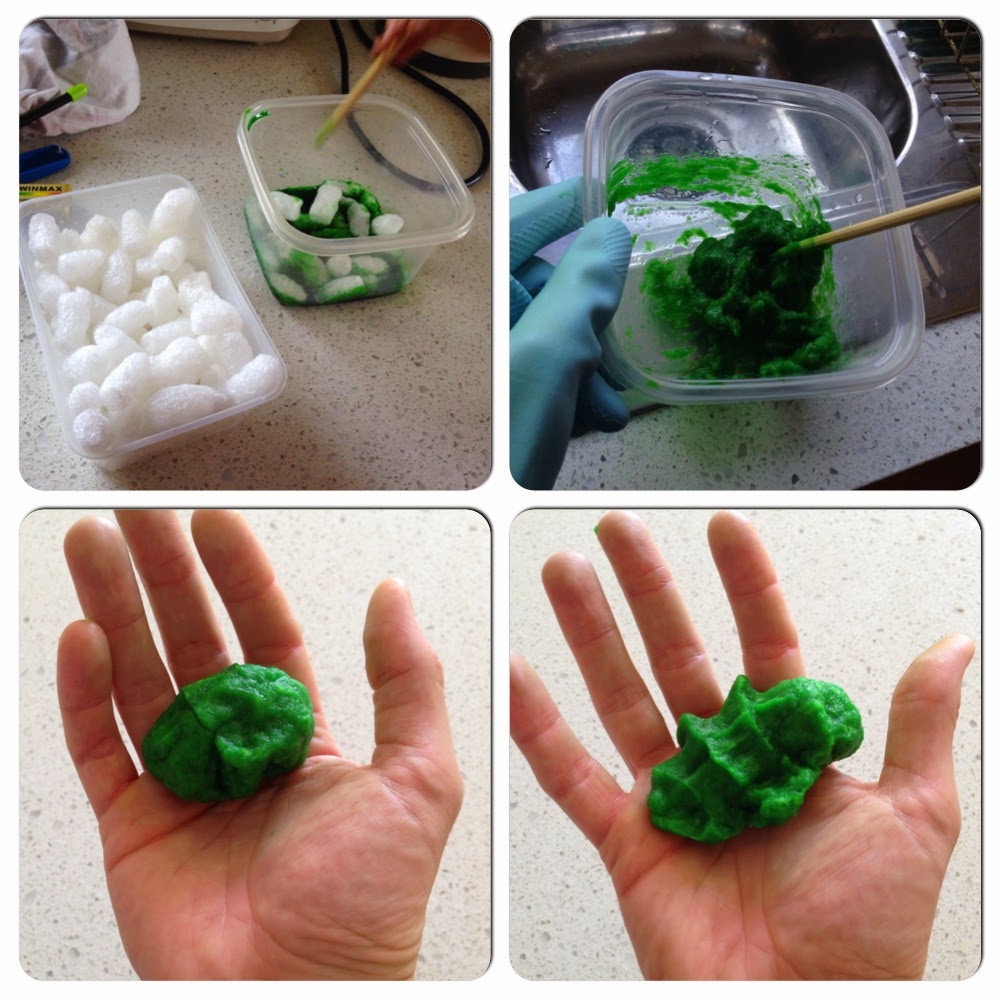
      A less cool, but nonetheless fun to make, slime is made from packing peanuts - the stuff used to protect fragile objects when you mail them, move house etc. Packing peanuts are generally made from starch but also contain PVA - polyvinyl alcohol. Place about 5 mL of water in a cup and add about 8 packing peanuts and stir. They will start to dissolve. Continue to add the peanuts until it starts to become thick, and then some food colouring.

      At this point, you need to have gloves on (and eye-wear if you have some). Add 1 mL of 4% sodium tetraborate solution (borax) and stir. You may have some in your laundry as it is used for cleaning clothes. Your goo will now start to become slimey. Once you can make a solid ball out of it, start to wash it with water to wash away any extra borax. After doing this, you can handle it with bare hands.


      Polyvinyl alcohol is a polymer - a long molecule with repeated subunits (monomers). The borax cross-links the polymer chains; that is, it bonds one polymer chain to the next. As you add more borax, more crosslinking occurs making the slime thicker.

      There is a similar slime you can make with PVA glue, although in this case the PVA stands for polyvinyl acetate as opposed to polyvinyl alcohol. The process is the same - the borax provides the cross-linking between the PVA polymers, except in this case the monomer contains an acetate (CH3COO) rather than an alcohol (OH). More on this slime here.

      Saturday, 10 January 2015

      Science for kids - Elephant Toothpaste

      Gooey stuff is always pretty exciting for kids. This is called elephant toothpaste because, well, that's what it looks like. The experiment is fairly simple. The ingredients are:
      • 125ml 6% Hydrogen Peroxide (ask at the chemist)
      • 1 Sachet Dry Yeast (powder) + a few tablespoons of warm water
      • Detergent
      • Food colouring
      • Empty bottle
      • Funnel
      You might want to wear gloves and goggles when handling the hydrogen peroxide. Add the hydrogen peroxide, a few drops of food colouring and a good squirt of detergent to the empty bottle, then swirl the mixture. Separately, combine the yeast with a few tablespoons of warm water and stir until mixed. Put the funnel in the top of the bottle, add the yeast mixture and watch the foam. The bottle will get a little hot (the reaction is exothermic).


      The reaction occurring is hydrogen peroxide decomposing into water and oxygen:
      2H2O2 → 2H2O + O2

      The bubbles are caused by the detergent capturing the oxygen. The foam is water and the colouring is made by the food colouring. The yeast is acting as a catalyst. The first few times I tried this, I was using yeast well past its used by date, and it didn't work very well, so make sure your yeast is relatively fresh. Yeast contains an enzyme called catalase. Catalase is found in nearly all organisms exposed to oxygen, and helps prevent cell damage caused by the by-products of oxygen metabolism. It actually catalyses this hydrogen peroxide reaction in living organisms.

      I did this outside on our grass, and as the by-product is water, it is safe to have on the lawn. If you are inside, make sure you have a tray to capture the toothpaste as it squeezes out. Wearing gloves minimises the chances of your skin coming in contact with hydrogen peroxide. 

      If you want to make the reaction more vigorous - in which case you have to wear proper safety gear - then you can use potassium iodide as the catalyst. But you might not have that lying around the house. There is some more info here.

      Science for kids - detergent powered boats

      This is an easy one, assuming you occasionally clean your dishes. You just need some bread ties, water and detergent. The video is a little unimpressive, but you could dress the bread ties up to make them look like boats.


      Essentially, the detergent is breaking the surface tension of the water, and if you break the surface tension behind the bread tie, the tension in front of the tie pulls it forward. Detergents are surfactants, which means they have a polar end (which is attracted to water) and a non-polar end (which is attracted to oil and grease). This is how detergents (and soaps) bond to both oil and water and hence wash your dishes. Water, without detergent, has a strong surface tension, which is created by the water molecules bonding to each other through Hydrogen bonds. The polar end of the detergent breaks the water surface tension by interfering with the hydrogen bonds at the surface - interestingly, the non-polar ends of the detergent, being hydrophobic, stick up into the air.

      Science for kids - Water Rocket

      Water rockets are one of the classic science demonstrations for kids - exciting, a bit of danger and some interesting science. Make sure you have plenty of space - making this video, I managed to get the rocket to hit the road, a swing set (with no one in it, thankfully) and some trees. We moved to the middle of a cricket field as the rockets can really go a long way. You can buy water rocket kits at toy or sciencey-styled stores. You need to provide a drink bottle, a bike pump and some water.


      The science is quite simple. Using the bike pump, you pump air into the bottle (which already contains some water), increasing the pressure of the air (storing potential energy) until the seal on the rocket bursts. The high pressure air forces water out the bottom of the rocket, which propels the rocket forward. This is an example of Newtown's third law of motion (commonly known by the expression: for every action, there is an equal and opposite reaction).  

      Thursday, 8 January 2015

      Science for kids - Coloured flowers

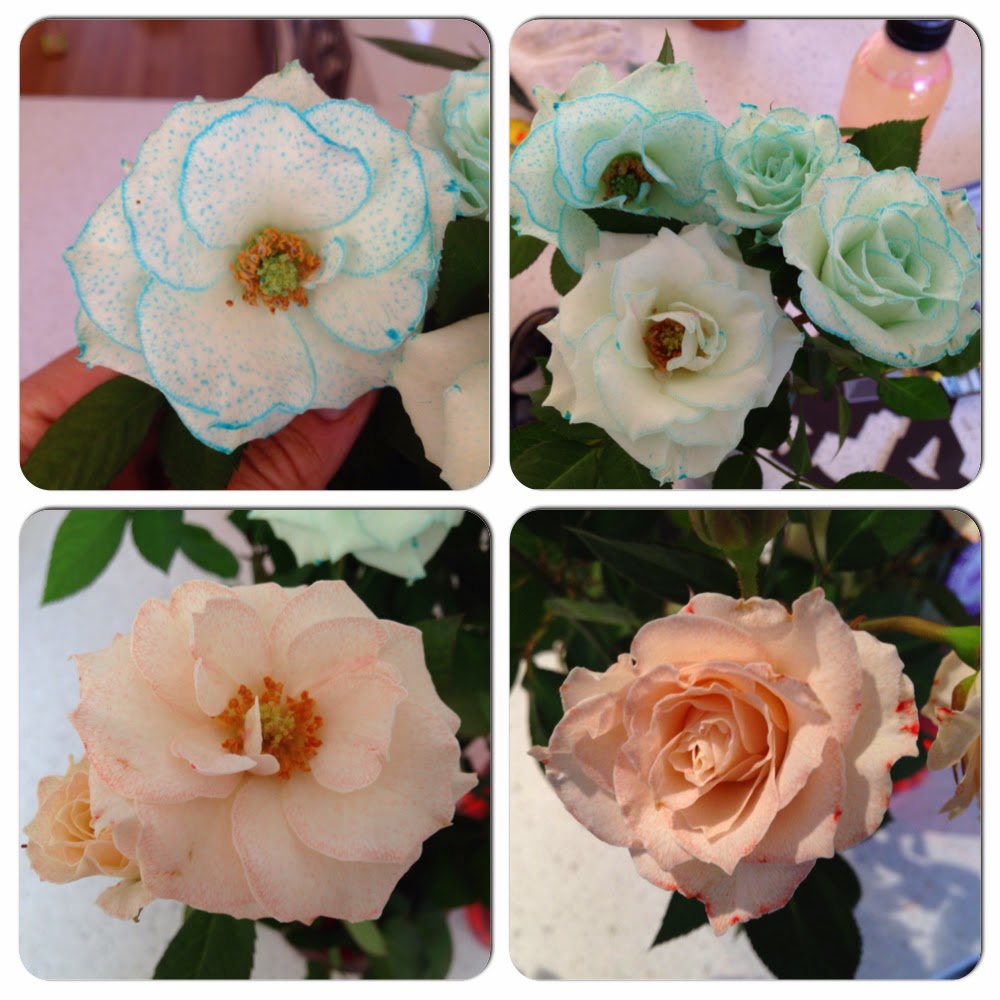
      This is quite a simple one. Grab some carnations (or other white flowers), a vase, some food colouring and water. Add a generous amount of colouring to the water (20-odd drops), add the flowers, and wait. It can take longer than a day, especially if you haven't quite added enough colouring, so be patient. Here are some shots we took of our red and blue flowers (I reckon you can be more impressive than this!):


      The flowers turned blue quicker than red for me, and others have seen similar things (anyone know why?)

      The science on display is the capillary action of the water - that is, how the flower drinks even without its roots. This ability draws water against the force of gravity up the stem and into the petals. It works because the water evaporating from the petals and leaves of the plant "pulls" water up the narrow tubes in the stem (the xylem) to replace that which is lost. The tubes need to be narrow so that the combination of the surface tension of the water (caused by cohesion in the water - how well it sticks to itself) and the adhesive forces between the water and the walls of the xylem are strong enough to lift the water against the force of gravity. The adhesive forces are proportional to the diameter of the tube, whilst the weight of the water is proportional to this diameter squared - hence a smaller diameter favours the adhesive forces.

      Something funky to try is to split the stem and put one half in blue and the other in red. You can get multi-coloured flowers.

      Tuesday, 6 January 2015

      Ep 156: Science for kids - home-made lava-lamp

      This Christmas break, I have been mucking around with science experiments for my kids. Here is the first of a few easy experiments you can try at home.

      The following videos show you how to make a home-made lava lamp. It is very simple - grab a clear cup (or bottle or vase or flask), fill it about a third full of water and two thirds full of oil. The oil floats on the water as it has a lower density. Add some food colouring (you can do this at the start directly to the water, or after you have added the oil - this has the added benefit of showing that the food colouring does not dissolve in the oil, so it drops through the lower density oil to the water below).

      You may already have Alka Seltzer in your medicine cabinet - it is an over-the-counter pain reliever containing Citric acid and Sodium bicarbonate (also known as baking soda). Split the alka seltzer tablets into about 4 bits, and add them to make your lamp. See the videos below for what happens.

      Shorter version:

      Longer version:

      The reaction that is occurring is:

      Citric Acid + Sodium bicarbonate → Sodium citrate + Carbon dioxide + Water
      C6H8O7 + 3NaHCO3 → Na3C6H5O7 + 3CO2 + 3H2O

      Or more simply:
      3H++ 3HCO3-  → 3CO2 + 3H2O

      Note, if you don't have alka seltzer, you can try baking soda, but add some vinegar to the original water mix, as vinegar is acidic and provides the H+.

      When you add the alka seltzer to the water, the citric acid and sodium bicarbonate start to dissolve, which allows the reaction to start and is why they don't react in solid form in the tablet.

      The reaction produces gaseous carbon dioxide, which has a lower density than both water and oil, and hence rises through the layers. When the gas bubbles exit the water into the oil, they trap and pull up a small amount of water with them. When the bubbles reach the surface, they burst and the water falls back through the oil. It's worth looking at this closely, as you will observe coloured water droplets that don't have quite enough CO2 stuck to, or dissolved within, them to make it all the way to the surface, and so they float around, buffeted from side to side by other, more vigorously moving, droplets.

      Here's some more over at CSIRO.

      Sunday, 13 July 2014

      Ep 155: Fact or Fiction with ANSTO


      The Australian Nuclear Science and Technology Organisation undertakes research and development in nuclear science and technology. This has wide application including nuclear medicine, atmospheric monitoring, materials engineering, neutron scattering and climate change research.

      ANSTO is also very active in science communication, and one of their major community engagement projects is Fact or Fiction, a 90 minute show where the audience watch clips of classic sci-fi hits before voting on whether the technology featured is actual science fact or pure science fiction. Once the audience voting has been conducted, an ANSTO scientist critiques the science featured in the film. They have also run a Fact or Fiction Survey, the results of which are illustrative of the general public understanding of science in everyday life. Another effort ANSTO is conducting is Neural Knitworks, where knitted neurons join together to create a textile brain installation.

      I spoke with Rod Dowler from ANSTO's Discovery Centre about their science communication efforts, and in particular, Fact or Fiction. Listen to this show here:


      In the podcast, we mentioned a song about hoverboards. I would have loved to have put it in the show, but that wouldn't be legal. So if you'd like to hear it, stream it  below or buy it from iTunes right here:


      Songs in the podcast:

      Friday, 20 June 2014

      ABC Radio - June - Mars One

      I've been doing quite a bit of regular radio with the ABC recently (ABC Riverina and ABC Central West), so I thought it would be a good idea to put up a post each month on what we've spoken about.

      The main topic this month was the Mars One project, which plans to establish a permanent human settlement on Mars. This is an incredibly optimistic project, made even more interesting by the fact that it is going to be funded by a reality TV show, which will track the training and lives of the astronauts, and presumably follow them into space. A number of Australians are still in the running to be part of the final four who make it.


      There are seemingly innumerable ethical issues with this project, notwithstanding the fact that at $6 Billion, it seems unbelievably cheaper than NASA estimates (~$100 Billion) for similar projects. Check out the company's FAQs - they have addressed a number of questions that immediately come to mind (food, air, fuel etc). The one outstanding question for me is - what if it goes wrong? Does the company abandon the astronauts on Mars? Does NASA have an obligation to go back to get them? What if everyone stops watching the reality TV show? I watched (well, glanced at) Big Brother One but can't tell you a lot about the following umpteen seasons...

      One thing we do know is that long distance space travel is no place for extroverts. Unsurprisingly, a NASA-funded study has found that extroverts will probably drive their space companions bananas if kept in confirmed quarters for too long.

      Saturday, 31 May 2014

      Some life analysis with Twitter

      There was a great post recently on Flowing Data, The Change My Son Brought, Seen Through Personal Data. It got me thinking about what my life looks like through personal data, and probably the best source of data since the advent of smartphones is Twitter. Twitter recently made it possible to download your personal archive and it makes for some interesting analysis. Along with RSS feeds, Twitter is my major source of online news, education and entertainment, and it is also useful for personal communications and microblogging.

      Downloading your personal archive is easy, but you need to do a little manipulation before you can play with it. My tweets were time-stamped in UTC time (I'm not sure why - perhaps by default, perhaps because of my location settings) so I had to adjust this for time zone changes due to day-light savings and overseas trips (I didn't bother with domestic trips as I don't have an easy record of them, and they don't make too much difference - an hour here and there).

      The following has a dot for every tweet I've written since the end of 2010. Take note that the x-axis is quite long (3.5 years) and the dots are quite large (bigger than a day). I haven't annotated it, but it is interesting to spot life events - the birth of my children, various periods of leave and holidays, over-tweeting during The Ashes etc. There are auto-tweets that came out at the same time each week (which I've now stopped as they're annoying). There was a definite shift in the time I rise in the morning after December 2010 when my son was born and a surge in late-night tweets after my daughter was born in 2013.


      Breaking it down is a little more interesting. The following shows tweet frequency for work days and non-work days (weekends, leave) since the start of 2013. On a work day, I tweet in the main on the train. I usually catch a train around 7 or 8am in the morning and the return train around 5 or 6pm. During work hours there is a trickle through coffee breaks and lunch, and after dinner is another peak. This type of profile aligns somewhat with the findings of other social media studies (Yellow Social Media Report – 2014 - thanks @problogger), although the amount I tweet on the train is more than the norm, whilst the amount I tweet at work is less (although it is a great way to horizon scan the various fields of science in which I work, once you follow the right people).

      Non-work days follow a different profile, at least until after dinner. There's a slightly later rise in the morning, dips when we would be attempting to get out of the house, a dip at an earlier dinner time and a large peak in the evening once the kids are in bed. This peak is higher than a work day, in which time I might be preparing for the next day or falling asleep on the couch. By about 10pm it is basically the same till 6am the next day.


      I'm posting this at about 9am on a weekend, having written it at about 10pm last night - that fits the curve pretty well. If you are a social media marketer (of which, at last count, there are 1,083,645,638 on Twitter), target my work trips (although I'm sure you know this from all that stunning big data analysis you do). The downside of this is that the train trip is too short to read anything of any length, which would explain why the 140 characters of Twitter spikes at these times.
      Saturday, 26 April 2014

      Ep 154: Blogging, podcasting, royal jelly and using chocolate to determine the speed of light


      Over the Easter break, I spoke with Lish Fejer on ABC 666 Canberra on her Experimentarium segment. We spoke on various things to do with science blogging and podcasting, and matters Easter related including:
      • Royal Jelly (the Royals were in town, a great link if ever I've seen one),
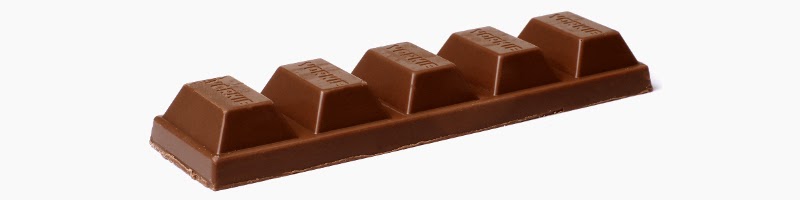
      • Determining the speed of light using your microwave and left-over Easter chocolate.
      To learn more about Royal Jelly, tune into Episode 137: Can your environment change your DNA in which I spoke at length with Professor Ryszard Maleszka from The Australian National University’s College of Medicine, Biology and Environment about the molecular differences in over 550 genes in the brains of worker and queen bees that are a result of the queen bee eating royal jelly at a young age.

      On determining the speed of light using a microwave, see the post Instascience by Tom Gordon in which he uses paper. We used chocolate and it worked pretty well, albeit very messily. You will enjoy trying this at home, and failing just gives you another shot! Note in the broadcast I mentioned that the speed of light was 2.97 x 10⁸ when it's actually 2.99792 x 10⁸ (please forgive such a grievous error...)

      Listen to this show here - the audio is courtesy ABC 666 Canberra:


      Here is a nicely produced video on how to do this - I started out making one and made a mess of my kitchen.

      Thursday, 20 February 2014

      instascience

      #instascience is a project by @kip_stewart and @kickstartphysics which involves short, sharp science videos on instagram. Here are a couple of videos, it's worth checking out.

      Sunday, 14 July 2013

      Ep 150: Bryan Gaensler at 20 years of the Sydney University Science Talented Student Program

      I recently attended the 20 year anniversary of the Sydney University Faculty of Science Talented Student Program. That was an intimidating event! The evening was hosted by Adam Spencer and featured an in-conversation with Professor Bryan Gaensler, Dave Sadler (Bryan's former mathematics high school teacher) and Alison Hammond, a current TSP student. The kind people at the Sydney Uni Faculty of Science have allowed me put the audio up here, so a big thanks to them - all attribution, love and praise should be sent their way. It was a very interesting evening to hear what encouraged one of Australia's most well-known scientists into astrophysics, along with the always witty Adam Spencer. Tune in to this episode here.


      The two songs used in this episode are by Keytronic / CC BY-NC 3.0 and Jeris / CC BY-NC 3.0

      Wednesday, 25 July 2012

      Broadcasting on ABC Riverina

      I have recently been doing a science segment with Chris Coleman on the morning show of ABC Riverina. If you are interested in listening to what we had to say, check out the following links:
      We also done a couple of Olympics shows, which will be online soon. Listen in at about 9.45 am each Monday.

      Friday, 25 November 2011

      My favourite Sesame Street science videos

      I'm stranded at Adelaide airport with my flight delayed for four hours, so what better way to get back onto the blog than by sharing my favourite Sesame Street science videos (Sesame Street having recently resumed it's exalted position in my life). The other day they were using the scientific method to deconstruct fairy tales - how would you tell the difference between the Big Bad Wolf and Grandma? Those videos aren't up online yet, but let's kick this off with comedian Craig Ferguson helping to define the word "experiment".


      Here's Elmo and a Justin Bieber look-alike singing "Measure, Yeah, Measure," to the tune of Bieber's song "Never Say Never." I like his hair flicks. Elmo measured it, yo.


      This is pretty cool, a Cookie Monster interactive video teaching us about experiments and things that float:


      In this one, Emma Stone balances stuff on her head:


      Here's Ernie showing all the curiosity of a good scientist:


      And this is not sciencey, but it's the best Sesame Street video. Cutest thing you will ever see!

      Sunday, 17 July 2011

      Ep 143: TedxSydney - Bryan Gaensler

      TED is a US based not-for-profit enterprise devoted to the propagation of Ideas Worth Spreading. TED started out in 1984 as a conference bringing together people from three worlds: Technology, Entertainment and Design. TedxSydney was a Sydney-based TED event, bringing people together to share a TED-like experience. I ducked out to Carriage Works to catch some of the event, and you can see all the talks over at the TedxSydney youtube channel. Many of these talks were science based, so I'm going to put up some of my favourites over the next few posts.

      The following video is from Bryan Gaensler, former Young Australian of the Year, NASA Hubble Fellow and Harvard professor, Australian Laureate Fellow at The University of Sydney, and Director of the Centre of Excellence for All-sky Astrophysics. His talk was entitled A new way of looking at the sky.


      Ted Copyright
      TEDTalks are distributed under a Creative Commons (CC) license. Anyone is free to download the videos from TED.com; share them with friends; republish or embed them on their website or blog. But this use must be made within the terms of the CC license "Attribution -- NonCommercial -- NonDerivative."