Sunday, 28 February 2016

Ep 161: 2016 Pulses and Pulsars


Happy 2016! This week, I spoke on ABC Radio Central West about some of the science we can expect in 2016:
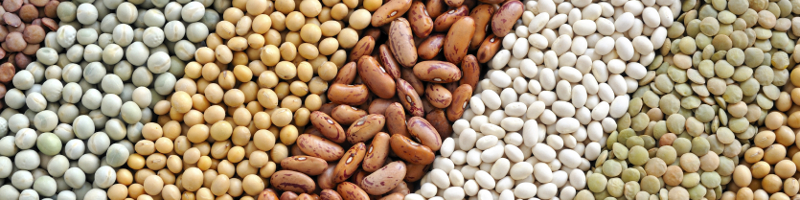
  1. 2016 is the International Year of Pulses, which aims to heighten public awareness of the nutritional benefits of pulses as part of sustainable food production aimed towards food security and nutrition. The Year will create a unique opportunity to encourage connections throughout the food chain that would better utilize pulse-based proteins, further global production of pulses, better utilize crop rotations and address the challenges in the trade of pulses.
  2. 2016 will also see some interesting astronomical events, although it will be hard to beat 2015. My favourite upcoming events are:
    • The Juno mission to Jupiter 
    • The continuing Akatsuki mission to Venus. This mission is a testament to the usefulness of maths: originally, the orbiter could not get into orbit around Venus due to on-board failures, and orbited the Sun for 5 years, until the mathematicians got together and figured out how to get the craft back into orbit around Venus using the remaining working thrusters. After 5 years!
Listen in to this show below on ABC NSW's soundcloud page, or grab the mp3. As always, thanks for Kia!

Thursday, 24 December 2015

Ep 160: 2015 The year of light


2015 was a magnificent year for physics. Not only was it the International Year of Light and light-based technologies, it was an outstanding year of astronomical achievement, culminating with the magnificent New Horizons photos of Pluto. It was also 100 years since the Theory of General Relativity was published, and 50 years since the Cosmic Background Radiation was discovered.

Australia also broke a couple of astronomical world records: The most people stargazing across Australia, and in a single location at ANU. One of the organisers of this world record was Tom Gordon, a science communicator at The University of Sydney who runs Kickstart Physics (Instagram), which are physics workshops aimed at year 12 science students and teachers. Tom, along with Christie McMonigal and Shane Hengst, runs the STEMPunk podcast, chatting about science communication and Science, Technology, Engineering and Mathematics (STEM): Communicating scientifically with science communicators.

Who better to talk to about this splendid year in Physics than Tom?

Listen in here:


Songs in this episode (in order of play - all Creative Commons Attribution Noncommercial (3.0)):
  1. Sharks with Lasers by spinmeister;
  2. Red Giant by Fireproof_Babies;
  3. Fate of the Sun by Fireproof_Babies;
  4. Beyond Jupiter - Instrumental by Ivan Chew;
  5. Spaced Invaders 2011 (90 BPM) by coruscate
     

Wednesday, 26 August 2015

Science Week 2015

National Science Week has come and gone for another year. This year, I spent a lot of it down at Canterbury Public School where I am their tamed scientist as part of CSIRO's Scientists in Schools program. It was a lot of fun, and we walked away with a world record - more on that in a bit. Here's some of the cool stuff we did:


Above is my box of household products for various experiments, and the results of cabbage indicator. Cabbage indicator is made by simply boiling purple cabbage. The resultant solution contains a chemical called anthocyanin which exists in an equilibrium of three forms depending on the ph, allowing a wide range of colours. We used mould remover (strong base), window cleaner (mild base), lemon juice, vinegar and tartaric acid (mild acids).


We've made corn flour slime before, but if you make it with tonic water, it will fluoresce under UV light and glow in the dark. Tonic water contains quinine, which apart from fluorescing, is also a preventative for malaria (which is why it was put in tonic water in the first place). And here's some phosphorescence:


None of the kids had seen an overhead projector before. This demonstrated some basic optics regarding mirrors and light travelling in a straight line, as well as how old I now am. The food colouring / milk / detergent experiment works in the same way our detergent-powered boat works, noting that the fat in the milk helps keep the food colouring separate (it doesn't readily dissolve until the soap is added).


Liquid nitrogen is always good (as was the liquid N2 ice cream we made), as is entertaining your local MP and making a homemade periscope.


And on that world record, we participated in the world record stargazing attempt for most number of people gazing at the stars at once across many sites. And we got there (unofficially at the time of writing anyway). It was dark, I didn't get many shots, but I did get this one of our planetarium and star demonstrator...


Friday, 20 June 2014

ABC Radio - June - Mars One

I've been doing quite a bit of regular radio with the ABC recently (ABC Riverina and ABC Central West), so I thought it would be a good idea to put up a post each month on what we've spoken about.

The main topic this month was the Mars One project, which plans to establish a permanent human settlement on Mars. This is an incredibly optimistic project, made even more interesting by the fact that it is going to be funded by a reality TV show, which will track the training and lives of the astronauts, and presumably follow them into space. A number of Australians are still in the running to be part of the final four who make it.


There are seemingly innumerable ethical issues with this project, notwithstanding the fact that at $6 Billion, it seems unbelievably cheaper than NASA estimates (~$100 Billion) for similar projects. Check out the company's FAQs - they have addressed a number of questions that immediately come to mind (food, air, fuel etc). The one outstanding question for me is - what if it goes wrong? Does the company abandon the astronauts on Mars? Does NASA have an obligation to go back to get them? What if everyone stops watching the reality TV show? I watched (well, glanced at) Big Brother One but can't tell you a lot about the following umpteen seasons...

One thing we do know is that long distance space travel is no place for extroverts. Unsurprisingly, a NASA-funded study has found that extroverts will probably drive their space companions bananas if kept in confirmed quarters for too long.

Sunday, 30 March 2014

arXiv trawl: March 2014 - Astrobiology

This month's arXiv trawl brings us to astrobiology.

The Habitable Epoch of the Early Universe

In recent weeks, the world of cosmology has been buzzing with the news that gravitational waves - remnants of the Big Bang - may have been detected by the BICEP2 experiment. But did life come not long afterwards?

Abraham Loeb from Harvard University has posited in his paper The Habitable Epoch of the Early Universe that conditions were rife for life just 10 million years after the Big Bang. Life on Earth is about 3.5 billions years old, and it took about 1 billion years to first appear after the Earth was formed. So to think that life could have formed only 10 million years after the Big Bang - a blink of the eye in cosmological terms - certainly goes against conventional thinking.

To come to this conclusion, Loeb looked at the conditions needed for life to take hold. Astrobiologists talk of the Goldilocks zone - an orbit around a star where a planet is not too hot or too cold to have liquid water, just like here on Earth. On Earth, we are aided by an atmosphere that keeps temperatures mild. But there are other ways that a planet can stay warm enough for liquid water - tidal heating, for example, is thought to maintain a liquid ocean under the surface of Jupiter's moon Europa.

Loeb postulates another mechanism, one that I presume wouldn't be particularly good for your health if we could replicate it, but nonetheless would keep water in liquid form. In fact, he proposes that the whole Universe would have had these conditions. The cosmic background radiation is the afterglow of the Big Bang, fills the Universe and these days has a temperature of about 3K. But it wasn't always this cold, and moments after the Big Bang it would have had a temperature of billions of degrees (more actually). It has been cooling since then, and around 10-17 million years after the origin of the Universe, the cosmic radiation would have made the Universe nice and balmy with liquid water.

But even if the temperature was right, is 10-17 millions years long enough for rocky planets to form on which life can live? And were there enough heavy elements around to get the chemistry of life going? Loeb thinks maybe. Matter was pretty evenly spread around the Universe at this age, but some areas would have been more dense than others. Where the matter was more or less dense than the average, this is called a perturbation. Assuming these perturbations had a Gaussian distribution (the classic bell-shaped normal distribution), massive stars of Hydrogen and Helium could have formed at the very edge of the distribution - 8.5 standard deviations from the mean. This is pretty unlikely; if you've done management courses you'll know that 6 standard deviations from the mean (that is, Six Sigma) is what you are aiming for when detecting defects. If you're making a product, a Six Sigma event would happen roughly every few hundred million products. A 8.5 sigma event would occur less than once every few hundred trillion products.

What this means is that if the density of the early Universe had Gaussian perturbations (and it's not settled science that it did), it's not very likely such stars could have formed and in the process created heavy elements, but the Universe is a big place!

Imagine then that there were rocky planets formed from exploding first generation stars that contained the elements of life in this temperate Universe. Could there be life? 10 millions years is not a long time for life to form - it took a billion years on Earth, and then longer to evolve. But let's say it did. Could it still be out there? Well, the issue with having cosmic radiation as life's heat source is that it cooled down over time and when the Universe was 17 million years old, it wouldn't have been warm enough for liquid water. So the planets on which life resided needed to have their own heat source, and then perhaps life could have escaped through panspermia. Loeb recommends that astronomers look for biosignatures in really old stars to further investigate, something that is now technically possible as we discover more early generation stars.

Loeb also makes a more philosophical point. Some proponents of the anthropic principle claim that various fundamental physical constants are what they are - some say "fine tuned" - because they must be those values to bring about life. Loeb argues that anthropic arguments are weak, at least with regards the cosmological constant, which describes the density of energy in the Universe, as this habitable epoch would have existed for various values of the constant.

I was actually going to post a few other astrobiology arXiv papers, but I think this is enough for one Saturday! I'd be interested to hear what others think of this idea that life could have existed so early in the Universe's life.

References:
  1. Abraham Loeb (2013). The Habitable Epoch of the Early Universe arXiv arXiv: 1312.0613v2

Sunday, 17 July 2011

Ep 143: TedxSydney - Bryan Gaensler

TED is a US based not-for-profit enterprise devoted to the propagation of Ideas Worth Spreading. TED started out in 1984 as a conference bringing together people from three worlds: Technology, Entertainment and Design. TedxSydney was a Sydney-based TED event, bringing people together to share a TED-like experience. I ducked out to Carriage Works to catch some of the event, and you can see all the talks over at the TedxSydney youtube channel. Many of these talks were science based, so I'm going to put up some of my favourites over the next few posts.

The following video is from Bryan Gaensler, former Young Australian of the Year, NASA Hubble Fellow and Harvard professor, Australian Laureate Fellow at The University of Sydney, and Director of the Centre of Excellence for All-sky Astrophysics. His talk was entitled A new way of looking at the sky.


Ted Copyright
TEDTalks are distributed under a Creative Commons (CC) license. Anyone is free to download the videos from TED.com; share them with friends; republish or embed them on their website or blog. But this use must be made within the terms of the CC license "Attribution -- NonCommercial -- NonDerivative."

Wednesday, 8 June 2011

Total lunar eclipse across Australia (or what is a syzygy)


Today I learnt a new word.

Syzygy.

A syzygy is a straight line configuration of three celestial bodies (such as the Earth, Sun, and Moon), and on Thursday 16 June, if you can get yourself up before dawn, you will witness a syzygy - in this case a total lunar eclipse - above the western horizon as the Moon passes through Earth’s shadow. This syzygy ends at sunrise in all states but Western Australia. It has been something of a star and planet watcher's dream recently, with four planets having lined up in the sky during May.

The eclipse begins at 3:25am AEST and enters its darkest phase at 05:22am AEST when the transformation to a blood-red Moon should begin. The colour of the eclipse depends on the amount of dust in the Earth's atmosphere. The red colour comes about because sunlight reaching the Moon passes through the Earth’s atmosphere where it is scattered. Shorter wavelengths (blue) are scattered more by  air molecules and dust particles than longer wavelengths (red), and so by the time the light has passed through the atmosphere, the light is mainly red. In extra-solar planets - planets in other solar systems - lunar eclipses can be used to determine the content of the planetary atmosphere. You might remember back to 2009 when Sydney was covered in dust and turned red to gauge a feeling for what the colour could be like - check out that article for a fuller description of the physics involved as it is similar.

If you are keen enough to not only get out of bed but to leave your house, Sydney Observatory is hosting a special breakfast viewing which includes tea, coffee, croissants and “blood-red” jam. Book at the Sydney Observatory website.

This material came from the Sydney Observatory.

Sunday, 15 May 2011

How the planet alignment worked (and why astrology does not)


Did you get up at 5am and brave the cold to see the planets align? If you had, you would have seen something like this. Venus and Jupiter were very bright, Mercury was fainter and eventually fell behind some clouds, and I couldn't see Mars at all with the naked eye. It was only with this long exposure shot that I could see what I think to be Mars. I've put up a bunch of photos on flickr.

All four planets over Canterbury, Sydney

The reason we were treated to this early morning light show was because of a rare alignment of the planets. It's not rare due to being unexpected - it's completely predictable - it just doesn't happen all that often. The next time these four planets will get together will be in 2056.

The following images have been made using the excellent Solar System Live by John Walker. The site shows the positions of the planets around the Sun, and in the sky, either live or at a time of your choosing. On May 13, the four inner planets were all in a straight line and from Earth you could view the other three clumped together in the sky. The images show the solar system from above, with the orbits spaced equally for ease of viewing. From this viewpoint, the Earth spins counter-clockwise on its axis, and counter-clockwise around the Sun. The alignment of planets is not seen until just before dawn, however as the Earth continues to rotate and the Sun comes into view, the light from the Sun becomes too strong to see the planets (you rarely see stars or planets during the day). Unseen, they continue to track overhead during the day. By the end of May, as the various planets move at different orbital speeds around the Sun (a year is different on each planet), they will be in different parts of the sky and the light show over.

Inner Planets

If you take a closer look at the figure below, you'll notice that besides the aligned planets, there are actually six planets visible in the dawn sky - all planets except Saturn can be spotted if you find a dark enough area, although you'll need binoculars to see Uranus and Neptune. Even Pluto, if you still maintain it to be a planet, might be found with a small telescope - the Solar System live site still has Pluto in its diagrams. A crescent Moon will reappear near the end of May to add to the scenery.

All planet line up

For more information, this video from ScienceCasts gives a great overview of the phenomenon, showing how the planets move in the sky throughout May. It's also a geometry lesson before breakfast. Check out science.nasa.gov for more.


Astrology
The alignment of the planets has various meanings in astrology and some astrologists maintain that there is science behind their beliefs, often claiming the precise positioning of the planets and stars at your birth effects you through gravity. Whilst these effects may be small, some claim they're enough to influence your developing brain and therefore your personality. Let's test the theory. To find out the gravitational force between two masses, we use Newton's law of universal gravitation:


where:
  • F is the force between the masses,
  • G is the gravitational constant,
  • m1 is the first mass,
  • m2 is the second mass, and
  • r is the distance between the masses.
We can use this to examine the gravitational force between a one kilogram mass on the surface of the Earth and the distant planets. The distances the planets were from Earth on May 13 were obtained from Solar System Live, and their masses from NASA. I've also included the gravitational effect of my car if you were standing 50 cm from it.
gravity
As you can see, the gravitational effect of my 1.5 tonne car is greater than all the planets put together.

It is also important to note that on May 13, the pull of the Moon on our 1kg object was 199 times bigger than that of Jupiter's at the Earth's surface. The Sun's pull was 178 times bigger than the Moon's, and the pull of the Earth itself was 1656 times bigger than the Sun's. Essentially, the pull of the planets on an object at the Earth's surface is negligible. The calculations can be explored in this spreadsheet. Read more over at Bad Astronomy debunking the claims of astronomy, especially with regards to gravity and the tides.

So, don't blame Jupiter if luck doesn't favour you this month - blame my car. Oh Marc, that is such a Taurian thing to say...

Wednesday, 11 May 2011

Four planets align over Sydney at dawn Friday 13 May


When the moon is in the Seventh House
And Jupiter aligns with Mars
Then peace will guide the planets
And love will steer the stars.

The age of Aquarius has arrived! Well, it will, this Friday 13th May.

In a rare planetary event, Mercury, Venus, Mars and Jupiter, will appear together (within around 2 degrees of each other) in the eastern sky just before dawn this Friday. The event will be particularly spectacular for Sydneysiders. From 5am, the four planets will be clearly seen just above the horizon in the east. The brightest planet will be Venus sitting in the middle of the group. Just above and to the left of Venus and almost as bright is Jupiter. To the right of Jupiter and slightly fainter will be Mercury. Sitting below these three planets and fainter again will be Mars. The four planets are quite bright, so if you are up early enough, you will see them over city lights.

If you have been up early recently (I had the pleasure of a 5am start today for work...) you will have already noticed Venus and Jupiter together. The last time these four planets came together was in 1910, but the planets were too close to the Sun to observe. The next close grouping of these planets will not be until 2056.

“The close grouping of these particular four planets only happens every 50 to 100 years. We are hoping for a clear autumn morning for this unique sight in the southern sky,” said Sydney Observatory’s acting curator, Andrew Jacob. The event will be visible to the naked eye and Sydney Observatory is holding a breakfast viewing. If you are interested in getting along, there is more information at www.sydneyobservatory.com.au, and check out the Observatory's blog.

The last cool astrological event that we've seen in Sydney was back in 2008 when the Moon, Venus and Jupiter aligned to form a smiley face in the sky. I was a bit late for the happy face but managed to capture a grainy celestial sad face. Time will tell whether I manage to drag myself out of bed at 5am for this latest viewing - with a new born bub, you never know...


Addendum: Here's an explanation of how the alignment gave such a great view from Earth, and why my car is more likely to influence your personality - astrologically speaking - than this rare alignment.

Tuesday, 28 September 2010

How close could an average spaceship get to the Sun before melting?


I must start by apologising for being so lax in posting articles and podcast episodes over the last month. We've recently bought a house and moved in, and this process has taken up nearly all my time, given me multiple headaches and left me without the Internet at home.

A while back we put a call out for your burning science questions, and plenty of great questions came in on this site, via email, on twitter (@westius) and over at facebook. I apologise for my delays in publishing these questions and their answers - you can follow the questions that have already been answered in the podcast or on the blog using the Science Week tag.

One interesting question that came in was How close could an 'average' spaceship get to the Sun before melting? Here is an answer from a much more intelligent person than I, Physics PhD holder and all round good bloke, David Bofinger.

An old-fashioned spaceship would probably be made of aluminium, a more modern one might be made of a mixture of aluminium, graphite fibre and polycyanate. Assuming you want the spaceship to actually melt, rather than just fall to bits because a few bits melted, then you probably want to raise it to the melting point of aluminium, which is 933 Kelvin. Of course it will take a lot less than that to kill any crew and cook any electronics on the ship. But melt you asked for and melt we shall give.

We'll assume for the moment that the spaceship is a simple sphere and that we haven't done anything clever to keep the spaceship cool. It will heat up to a temperature such that it's radiating away as fast as it's absorbing heat from the sun. The closer it gets to the Sun the more it absorbs, the more it needs to radiate so the higher its temperature will get.

If we put it in orbit around the Earth, then it's about 150 million kilometres from the Sun and the temperature it reaches is 279 Kelvin, i.e. about 6 degrees Centigrade. (Earth is mostly warmer than this because it has greenhouse gases in its atmosphere.) To melt the aluminium in the spaceship we need to take it into 13 million kilometres, about a twelfth of the distance from Earth and four times closer than Mercury.

Of course there's all sorts of tricks we can play to get closer. We can make the spaceship silvery on the side facing the Sun and black on the side facing space. That will make it absorb less and radiate more. If we made it as white as snow on the Sun side and black as coal on the space side then we could get in as close as 6 million kilometres, about eight times closer than Mercury and twenty-five times closer than Earth. If we made the spaceship long and thin and pointed it toward the sun we could maximise our ability to dump heat compared with how much we absorbed. That might get us in a little close yet. If we pull out all the stops we might do as well as NASA's planned solar probe, which intends approaching within 6.6 million kilometres of the sun while staying cool enough to have functional electronics and cameras.

The moral is that if you want to go close to the sun you don't want an average spaceship, but something built to take the heat.

If you have an alternate opinion, I'd love to hear it.

Tuesday, 6 July 2010

An egg in space - or an egg in a vacuum - what would happen?

This is a question that has been bugging us at work.

What would happen to a chicken egg in space? Equally interesting is the question what would happen to a chicken egg if placed in a vacuum chamber?

Eggshells are able to withstand quite large forces from the outside because of their dome structure, but are not so strong from the inside. This makes sense - they need to be strong enough to withstand the force of the mother chook sitting on them, but need to be fragile enough from the inside for the baby chick to escape. If placed into a vacuum, would the pressure of the small amount of air inside the egg be enough to break the shell? Let's assume for the sake of argument that the egg was laid at normal atmospheric pressure.

Other things to consider include temperature. Would the egg white and egg yolk freeze and therefore expand? This could break the shell. Is there enough empty space inside the egg into which the mainly water interior could expand? Or would this happen too suddenly? Is temperature actually a factor?

Or perhaps a sudden change in pressure might cause the interior to rapidly boil, exploding the egg? Water only boils at 100 degrees at normal atmospheric pressure - the more you lower the pressure, the lower the temperature that water boils at. For instance, at the top of Mount Everest, the boiling point of water is 69 degrees. Human blood would boil in space except for the fact that our skin is strong enough to protect our blood from the rapid drop in pressure. Is an eggshell similarly strong, or is it too permeable?

Is there a difference between the scenario where the egg is in space - let's say at about the Earth's orbit - and so is heated by the Sun (or at least half of it), and in a vacuum chamber where there is no heat source?

As much as we like to ponder these questions, we don't have an answer. What do you think? Please feel free to speculate and throw ideas into the mix.

For extra reading, check out the references for work conducted on hatching chickens in low gravity, and also hypergravity.

References:
SUDA, T., ABE, E., SHINKI, T., KATAGIRI, T., YAMAGUCHI, A., YOKOSE, S., YOSHIKI, S., HORIKAWA, H., COHEN, G., & YASUGI, S. (1994). The role of gravity in chick embryogenesis FEBS Letters, 340 (1-2), 34-38 DOI: 10.1016/0014-5793(94)80168-1

Jones SM, Warren LE, Shukla R, Browning A, Fuller CA, & Jones TA (2000). The effects of hypergravity and substrate vibration on vestibular function in developing chickens. Journal of gravitational physiology : a journal of the International Society for Gravitational Physiology, 7 (3), 31-44 PMID: 12124183

Tuesday, 8 June 2010

Visualising the Music Universe

Every now and then I like to post data visualisations, and this one comes from one of my favourite web applications, Last.fm. Last.fm remembers what songs you play on your iPod (or whatever music player you use). Given that we now have an electronic device ban in our workplace, I'm giving their online streaming radio a go. (Ask me what I think about this ban and I'll give you a forthright answer, offline...) In any case, last.fm is a data lovers dream. The following visualisation shows my listening habits in 2009. The planets represent the top tags given to songs I listened to throughout the year - generally, these tags are song genres. Planet size is proportional to how much of that tag I listened to. The moons represent my top artists of 2009, with the light side showing how much I listened to the artist this year and the dark side showing last year's listening. Moons that are clustered together suggest that those artists are similarly tagged. The orbits show the correlation between the artist and the tag - artists with a closer orbit are more strongly associated with that tag than artists on the outer orbits.


Very funky, even if sometimes the moon is larger than the planet, and the small planet "Old People" appears in my solar system - you'll need to check out the high resolution picture to make out the smaller planets and moons.

Wednesday, 5 May 2010

Ep 128: Another demotion for Pluto? Or is it about to become King of the Dwarfs?

Is Pluto is set to become an also-ran in the astronomical world?

Already demoted from the exalted planet club, Pluto could be joined by up to 50 other objects in the ever-expanding "dwarf planet" club if the new definitions of dwarf planet, recently proposed by Australian scientists Charles Lineweaver and Marc Norman, are accepted by the International Astronomical Union.

On the other hand, perhaps you would rather regard Pluto as the leading player in the astronomical second division. Rather than being the smallest of the planets, Pluto is set to become the charismatic king of the dwarfs.

The research, entitled The Potato Radius: a Lower Minimum Size for Dwarf Planets, suggests that the number of objects in the solar system classed as dwarf planets could grow by more than a factor of ten. One of the definitions of dwarf planet relates to its ability to exist in hydrostatic equilibrium - that is, the body must have sufficient mass for its self-gravity to pull it into a round shape. This is generally accepted to happen at a radius of around 400 km. Lineweaver and Norman found that the point at which a body loses its rugged and unshapely 'potato' appearance and becomes round depends on what the material that the body is made from. Icy objects form spheres at roughly 200 km radius, whilst rocky spheres form at 300 km. As these radii are considerably less than the generally accepted minimum radius for a dwarf planet - 400 km - the researchers believes that a whole new crop of trans-Neptunian objects should be classified as dwarf planets.

I had a fascinating chat with Dr Lineweaver about how they went about deriving these numbers, and also about their work defining the shape and mass of other astronomical bodies. To listen to this show, tune in here (or press play below):


Lineweaver derived these radii from first-principles physics, and compared the results to astronomical observation. Bodies are held together by gravitational and electronic forces, and the research showed a strong correlation between the mass and shape of astronomical objects. For example, at a radius of ~ 200 km - 300 km, moons and rocky asteroids transition from a rounded potato shape to a sphere.

The work also looked at other shapes in the Universe, and Lineweaver divided these into five basic shapes - dust, potatoes, spheres, disks and halos. Each of these shapes correlates with the size and mass of the object.


Most of the new dwarf planets will be out past Neptune – these are called trans-Neptunian objects. Pluto has a radius of 1,150 km, but it is not the largest known trans-Neptunian object - Eris has a radius of ~1,250 km.

The International Astronomical Union General Assembly, which makes the decisions re astronomical nomenclature, next meets in Beijing in August 2012. No matter what they decide, some people will always call Pluto a planet.

Tuesday, 13 April 2010

Life and the cosmos with Astronomer Royal, Lord Martin Rees (via SlowTV)

Lord Martin Rees is UK Astronomer Royal and President of the Royal Society. He was also appointed to the House of Lords in 2005, is Master of Trinity College, Cambridge, and is the author of about 500 research papers and several books. I recently came across these videos of Lord Rees on SlowTV, a free internet TV channel delivering interviews, debates, conversations and public lectures about Australia's key political, social and cultural issues. It is produced by The Monthly and there is an impressive amount of science content. You can subscribe via podcast.

In the inaugural Derek Denton lecture in Science and the Arts at University of Melbourne, Lord Rees discussed current ideas on cosmology and how the universe evolved from a simple Big Bang to its present complexity. He also talked about the possibility of life elsewhere in the cosmos. I had quite an enjoyable afternoon listening to this talk in the background. It is clear why he is regarded as one of the world's foremost science communicators.

Part 1:


Part 2:


If you can't see the embedded videos, check out the talk at SlowTV. For more on the topics addressed in this talk, check out our Astronomy and Space and Science Communication tags, and particularly:
  • Astrobiology and the search for extraterrestrial life;
  • Astrobiology is a fascinating and complex field of science. It is the study of the origin, evolution, distribution, and future of life in the universe, and is a relatively new field of science incorporating astronomy, biology, geology, palaeontology, physics, mathematics and other disciplines. I spoke to Dr Carol Oliver, a science communication researcher working for the Australian Centre for Astrobioligy, whose key goals include contributing to the understanding of the orgin of life on Earth and to set an Australian life-seeking instrument on the surface of Mars. 

Thursday, 10 December 2009

Ep 119: Alien Vox Pop and (re)introducing The Beer Drinking Scientists

The Beer Drinking Scientists are back! It's been two and a half years since our last episode, but Darren Osborne, editor of ABC Science Online, and I have got back together over a beer in Sydney to chat about the pressing scientific issues of the day - in this case, alien life. We chat about the latest scientific research and discoveries in areas such as astrobiology, SETI and exoplanets, and also to others in pub to hear their opinions.

In this episode, you can hear the vox pop from the BDS episode - including from one person who swears she has seen not only one UFO, but a UFO release a baby-craft, and another who thinks that Jesus might be an alien...

For the full episode, get over to The Beer Drinking Scientists homepage. If you have the iphone app, you will also get this BDS ep as bonus audio. To bring some sanity to the proceedings, Marc chatted to Dr Carol Oliver from the Australian Centre for Astrobiology before the show and clips from this interview are played throughout. For the full interview with Carol, see the podcast Ep 118: Astrobiology and the search for extraterrestrial life.

We'd love to hear ideas for future BDS episodes, so feel free to leave comments, or let us know on twitter - @bdscientists. We'll release new shows about every 2 months.

Tune in to the podcast here (or press play below):

Friday, 20 November 2009

Ep 118: Astrobiology and the search for extraterrestrial life

pictures of alien on hillAstrobiology is a fascinating and complex field of science. It is the study of the origin, evolution, distribution, and future of life in the universe, and is a relatively new field of science incorporating astronomy, biology, geology, palaeontology, physics, mathematics and other disciplines. It is even more fascinating given that we have never actually discovered life anywhere else in the universe!

Dr Carol Oliver is a science communication researcher working for the Australian Centre for Astrobioligy, whose key goals include contributing to the understanding of the orgin of life on Earth and to set an Australian life-seeking instrument on the surface of Mars.

I spoke to Carol about astrobiology and the SETI Project - the search for extraterrestrial life. Tune in to the podcast here (or press play below):


We covered a number of topics in our chat including:
  • How does SETI actually look for extraterrestrial life?
    SETI searches for electromagnetic signals from civilizations elsewhere in the universe - but where should they look? It turns out there is a handy hole in the electromagnetic spectrum coined The Water Hole - a band of radio frequencies between 1420 MHz and 1640 MHz. This is the band between the hydrogen line and the strongest hydroxyl spectral line, and is a very quiet region - there is little radio noise from space between these frequencies. It is theorised that alien communications could be found in this range because of its quietness and also because the combination of hydrogen and hydroxyl yields water, something considered vital for life. It is therefore a likely place for other life, which needs water to survive, to try and communicate. 
  • The Fermi Paradox - The Fermi paradox asks the question, if there are other civilisations in the universe, why haven't we seen any evidence of their presence?
  • Where is the best candidate for life in our Solar System? Is it Mars (more likely for microbial life) or perhaps a moon of Jupiter, like Europa? Was there life on Mars at any stage of its history?
  • The concept of panspermia - that life on Earth may have originated elsewhere in the universe before coming to Earth, perhaps on an asteroid;
  • The Kepler mission - this mission uses a space telescope to look for Earth-like planets and was launched in March 2009;
  • The Drake equation - can we predict whether there are other civilisations out there using maths?
You can participate in the search for extraterrestrial life in the SETI@home project. In 1995, David Gedye proposed analysing radio signals from space using a virtual supercomputer composed of large numbers of Internet-connected computers - this is known these days as grid computing. The idea is to use the combination of many networked computers rather than a single supercomputer, and because of the vastness of space, the width of the electromagnetic spectrum and the fine resolution required, there is an awful lot of data to analyse! You can download the software needed at the SETI@home homepage.

Tune in to the podcast here (or press play below):

Sunday, 30 August 2009

Ep 112: Jon Lomberg, the Voyager Gold Record, and the movie Contact

Jon Lomberg is one of the world's most distinguished space-artists. Lomberg was Carl Sagan's principal artistic collaborator for more than twenty years and in 1998, the International Astronomical Union officially named Asteroid Lomberg in his honour.

In 1972, Sagan asked Lomberg to illustrate The Cosmic Connection, after which they worked on NASA's interstellar Voyager Golden Record, a record included in the two 1977 Voyager spacecraft. It contains sounds and images that portray the various life forms and cultures on Earth. The record is intended for any intelligent extraterrestrial life that may find it. It also contains information about our mathematics and science, as well as a way of decoding the record. As aliens may not see colours as we do, if they see at all, a method of decoding the information was included in the spacecraft, as well as an explanation of mathematics from its most simplistic level - one dot means the number one, two dots mean two, etc. From this point you can denote addition, multiplication and so on. The Voyager spacecraft are not heading towards any particular star, and Lomberg thinks that as the craft are unlikely to crash into a planet, if they are spotted, it will be by alien life that has mastered interstellar travel.

Lomberg also designed the original cover art for Sagan's novel Contact, and the opening sequence for the Contact film. Lomberg gave a talk at the Ultimo Science Festival and I was lucky enough to grab him for a chat afterwards. Listen to this podcast here:


For some more information on Jon, check out his website and have a read of the 10daysofscience story of his recent meeting with 1999 Young Australian of the Year, astronomer Professor Bryan Gaensler. This is a lovely story - Gaensler just happened to be sitting next to Lomberg at the Eureka Awards, and also had a tutorial scheduled for the next day on the challenges of portraying science and astronomy in film, using Contact as his primary example. Naturally, Gaensler asked Lomberg, “What are you doing at noon tomorrow?” See the 10daysofscience story for more information and videos from the tutorial.

To get you in the mood, here is the opening sequence for the movie Contact (on youtube here if you can't see the embed). It takes the journey of a spacecraft starting at Earth and hearing the sounds that Earth is currently pumping out into the Universe in the form of radio waves. As we pan out from Earth and journey further and further away, we hear older and older sounds to represent the idea that the sounds broadcast by the first radios are still travelling through the Universe - the further away we go, the older the music sounds, until we have left the solar system, and then the galaxy.

Saturday, 22 August 2009

Ep 111: The Ultimo Science Festival, and sending text messages to aliens

This week's podcast celebrates the start of the Ultimo Science Festival - ten days and nights of science fun for families, schools, and people of all ages. The festival is presented by the Powerhouse Museum, the Australian Broadcasting Corporation, The University of Technology Sydney and TAFE NSW. It runs mainly in the Ultimo precinct near Central Station and Harris St - see the map on Google maps here. Most events are free and held from Friday August 21 through to Sunday August 30, 2009.
In this show, I chat to Festival Director Tilly Boleyn about how the festival started, what to expect, and what fun can be had. Some of the events we chatted about include Why the mind matters, The Dark Side of Science, Mathematics and Sex, The Science of Cocktails, and The Science of Coffee. I also chat to Jacqui Hayes from Cosmos Magazine about the Hello From Earth project. The project collects text messages on its website to send to Gliese 581d which is an exoplanet, or extrasolar planet, which means it is in orbit around a star other than the Sun. The Gliese 581 system is thought to be one of the best candidates for life outside our Solar System of the more than 350 systems with exoplanets so far discovered.

Listen to this podcast here:


After message collection closes on Monday 24 August 2009 - hurry!! - all the messages will be collected as a text file and sent to NASA's Jet Propulsion Laboratory, where it will be encoded into binary code. This system of beeps and pauses will be sent back to the Canberra Deep Space Communication Complex at Tidbinbilla, near Canberra. The signal will reach the solar system of Gliese 581 around December 2029 having travelled 20.3 light-years (192 trillion km). The soonest we could hope to receive an answer is in 42 years time in 2051. For more on the technical details, check out the Hello From Earth homepage. And check out the following youtube video:


To read more on National Science Week and the Ultimo Science Festival, see our recent blog post on the topic. Hope to see you at the Festival!

Thursday, 6 August 2009

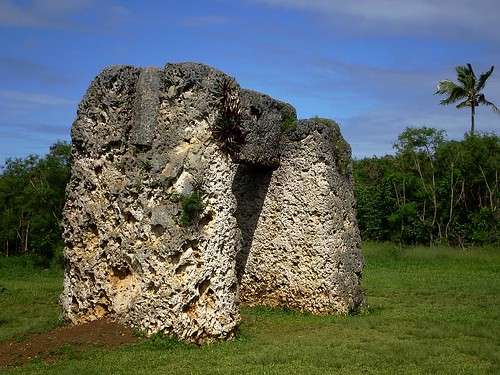
Ep 110: Coral, the Stone Henge of the Pacific, and more of the sights, sounds and science of Tonga

This week's podcast takes us back across the ocean to discover more of the sights, sounds and science of Tonga - see our previous episode for more on Tongan blowholes and whales.

On location in Tonga, we tackle the topics of:
  1. Haʻamonga ʻa Maui - otherwise known as The Stone Henge of the Pacific. This is an ancient 12-tonne stone trilithon whose purpose is not exactly known, much like that other Stone Henge in the UK. A previous King of Tonga, Tāufaʻāhau Tupou IV, once claimed it had an astronomical significance as it can determine the position of sunrise at solstices and equinoxes. As it was said by the King, it is the accepted explanation for what is an odd stone construction, at least in Tonga anyway.
  2. How did people get to Tonga in the first place? The generally accepted history is that the Lapita people came down through Papua New Guinea into Melanesia and Polynesia. However, Norwegian explorer Thor Heyerdahl had other ideas based on the fact that the sweet potato (kumera) is found in both South America and Polynesia. To prove that it was at least possible that Tongans came from South America, in 1947 he sailed the Kon-Tiki raft across the Pacific Ocean from Peru to Tuamotus. Heyerdahl showed that, by using only the materials and technologies available at the time, there were no technical issues that prevented South Americans coming to Polynesia. Whilst the evidence suggests that people came through South East Asia and Papua New Guinea to reach the Pacific, one school of thought suggests that Polynesians may indeed have travelled to South America and picked up the kumera from there.
Back here in Australia, I spoke to Lachlan Whatmore about coral - what is it, how does it form, and what life does it support. Lachlan is a diving enthusiast and the golden tonsils of Australian community radio - as well as a qualified Marine Biologist. In short, coral is an Anthozoan marine organism that lives in colonies of polyps. Corals build reefs in tropical oceans - the reefs are made up of their calcium carbonate skeletons. Listen in for more.

And tacked onto the end of this show, we have a Correlation of the Week - this week discussing the relationship between eclipses and the stock market - see our previous story on the topic for more.

Listen to this podcast here:


Stay tuned for our final edition on Tonga in a few weeks.

Friday, 24 July 2009

Correlation of the Week: Eclipses and the economy

In the paper Dark Omens in the Sky: Do Superstitious Beliefs Affect Investment Decisions?, Gabriele Lepori from Copenhagen Business School has correlated the occurrence of solar and lunar eclipses with four American stock indices: the Dow Jones Industrial Average, the S&P 500, the New York Stock Exchange Composite, and the Dow Jones Composite Average.

This is possibly the most fun, and most mathematically rigorous, Correlation of the Week we have had. I love it!

Lepori's idea was to test whether superstitious practises could be picked up in the stock-market. His theory was that individuals are more likely to resort to superstitious practices when operating in environments dominated by uncertainty and high stakes. The stock market is therefore an ideal place to test this theory.

Eclipses are regarded as "unlucky" in many Western and Asian societies, and as they are worldwide events occurring over a short period of time, the effects of such unlucky events should be seen in stock trading - if there is an effect, that is.

Lepori took the dates of all 362 lunar and solar eclipses that had been visible anywhere in the world between 1928 and 2008, and computed the four stock indicies on the day of the eclipse. The results suggest that in the three days around the date of an eclipse, three of the four stock indices exhibited statistically significant lower-than-average returns. If an eclipse took place on a weekday (when the stockmarkets were open), its effect was larger than if it occurred on a weekend. And the greater the magnitude of the eclipse, the more likely it would influence stock returns!

On the days following the eclipse, Lepori showed that markets reverse the eclipse-related dip, suggesting that the market realised the drop was irrational. Here is a perfect opportunity for astute investors to make some money - buy stocks at the eclipse maximum and sell a few days later! Or sell a few days before the eclipse and buy back at its maximum. This is known as arbitrage. Indeed, Lepori found that an investor who had bought the Dow Jones Industrial Average at the end of 1928 would have multiplied their money 37 times by now. However, one who sold before each eclipse and bought back straight after would have multiplied their money by 55.

Lepori's theory is consistent with the idea that at the time of an eclipse, there is less buying pressure coming from the superstitious. Trading volume also decreases. These patterns are inconsistent with Efficient Market Theory, which states that traded assets reflect all known information, and instantly change to reflect new information. This means that it is impossible to consistently outperform the market by using any information that the market already knows - eclipses are perfectly predictable events and so even if they did influence stock prices, this should already be built into the price.

I recommend a read of the original paper - check out the mathematical rigour and the lengths to which Lepori went to control for other variables such as day of the week, media coverage of the eclipse and even the weather! Fantastic stuff!

I'm not sure whether this gives me a more positive or negative opinion of the stock market. On one hand, it shows how complex the market is and why we must employ smart people (and pay them loads) to understand it. On the other hand, this study shows that completely irrational beliefs and behaviours can influence how we price things. This surely undermines the system. In the modern globalised world, everything is governed by finance, and allowing irrational thought to influence world affairs scares me! But maybe that shouldn't surprise me - wars are started over personal disagreements, politics is dominated by petty arguments and some people still doubt evolution - I guess the world just ain't rational!