Tuesday, 30 March 2010

Ep 125: The Sailors' (syphilis detecting) Handshake

It may be an apocryphal tale, but here's an interesting story about how sailors of yore determined if a potential suitor had syphilis.

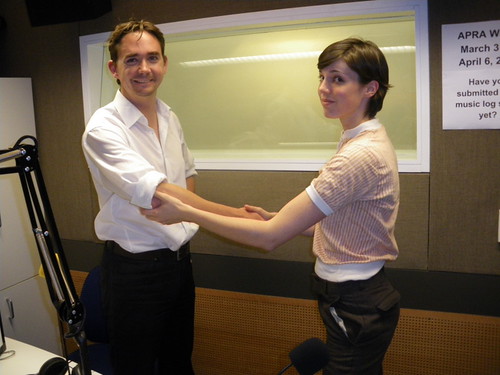
As demonstrated by Victoria Bond and myself in the image on the right, Victoria is feeling my right elbow whilst shaking my hand. The epitrochlear lymph nodes in the elbow get swollen with syphilis.

The story goes that when sailors arrived in a new port, they would greet the girls in this manner to determine if they had syphilis. Another story goes that they did this whilst dancing. Whatever the case, it is true that the nodes swell when suffering from syphilis, although it's not fail safe as there are a number of things that could cause the swelling, including infection.

We made the following short video demonstration of the handshake when recording Diffusion Science Radio. The movie was produced by Ian Woolf. You can download the video as an mp4 here and find all my videos on youtube here.


While we're on the topic of syphilis, reports out of the UK this week are laying the blame for a rise in syphilis cases at the feet of social networking site Facebook. This story is the up there with the dangerous cookie story as one of the more stupid 'science' stories I have read. The Telegraph reported Facebook 'linked to rise in syphilis', however The Sun takes the cake with Sex diseases soaring due to Facebook romps.

The articles are based on an NHS news release titled Warning as syphilis cases increase. The news release does not mention Facebook, but does mention "social networking sites":

Professor Peter Kelly, Executive Director of Public Health for NHS Tees said syphilis has risen sharply in the last year.

"There has been a four fold increase in the number of syphilis cases detected with more young women being affected," he said. "Syphilis is a devastating disease which can lead to serious health problems to the infected individual, their sexual contacts and an unborn child (in pregnant women). It is easily preventable and treatment is simple and effective. Unprotected sex, especially with casual partners, is the biggest risk for syphilis. Social networking sites are making it easier for people to meet up for casual sex. It is important that people avoid high risk sexual behaviours and practise safe sex to protect themselves from sexually transmitted infections."

Syphilis cases have increased fourfold in Sunderland, Durham and Teesside. The UK newspapers, independent of the NHS press release, found that Facebook is very popular in Sunderland. The problem here of course is our old friend "correlation vs. causation" - it is in no way clear that Facebook (or more broadly online social networking) is connected to the rise in syphilis. Syphilis cases have been on the rise for some time now. And even if Facebook is increasing casual sex in these regions, should we really blame it for someone's sexual habits? Other problems include the fact that the sample size is tiny (30 people), there is no mention of other sexually transmitted diseases, and no actual evidence to connect social networking to syphilis is presented - it is a merely a comment. There is a good discussion of this at Bad Science.

Thursday, 4 March 2010

Ep 123: Remote Medicine

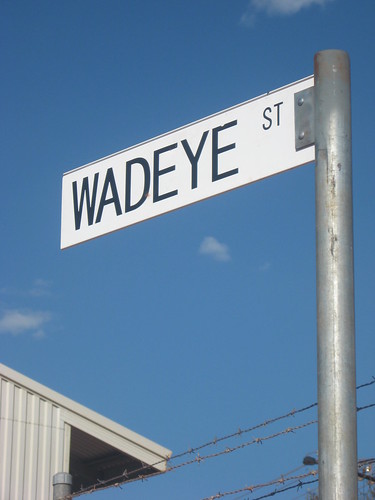
Wadeye is a remote town in Australia's Northern Territory. It has a population of roughly 2500 people, 2200 of whom are Indigenous Australians, and as such is one of Australia's largest indigenous communities. The town is over 200 km southwest of Darwin, and during the wet season the only way in and out of the town is by air, as the roads are completely cut off.
Uploaded onto flickr by sarah_brooke00
The town has a number of social issues, with gang violence making international headlines in 2006. On average there are 16 people per house and the median age at death is an astoundingly low 46 years. This compares to the medium age at death of a non-indigenous person in the Northern Territory of over 70 years, and over 80 in other states (data here).

Wadeye's remoteness, social issues and cultural differences present a considerable challenge to the provision of quality health care. There is only one general practitioner in town with serious cases referred to Darwin. Victoria Bond (who you may have heard as a regular contributor to the Diffusion Science Radio Show) has taken a posting in Wadeye as part of her medical degree. I chatted to Victoria about the unique medical issues that have arisen in Wadeye, and what it's like as an American student in such a remote place.

To listen to this show, tune in here (or press play below):

Thursday, 19 November 2009

Swimming with Whales - video from Tonga

A few months back, I spoke to Scott Portelli about his experiences diving with whales in Tonga - see Ep 109: Tongan blowholes and whales. Scott has recently returned from Tonga, and took from breathtaking footage of the whales. Enjoy the video below.

Thursday, 6 August 2009

Ep 110: Coral, the Stone Henge of the Pacific, and more of the sights, sounds and science of Tonga

This week's podcast takes us back across the ocean to discover more of the sights, sounds and science of Tonga - see our previous episode for more on Tongan blowholes and whales.

On location in Tonga, we tackle the topics of:
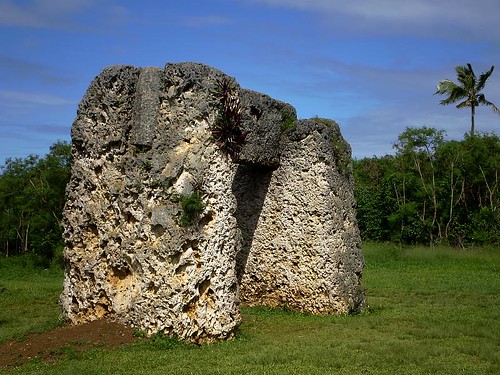
  1. Haʻamonga ʻa Maui - otherwise known as The Stone Henge of the Pacific. This is an ancient 12-tonne stone trilithon whose purpose is not exactly known, much like that other Stone Henge in the UK. A previous King of Tonga, Tāufaʻāhau Tupou IV, once claimed it had an astronomical significance as it can determine the position of sunrise at solstices and equinoxes. As it was said by the King, it is the accepted explanation for what is an odd stone construction, at least in Tonga anyway.
  2. How did people get to Tonga in the first place? The generally accepted history is that the Lapita people came down through Papua New Guinea into Melanesia and Polynesia. However, Norwegian explorer Thor Heyerdahl had other ideas based on the fact that the sweet potato (kumera) is found in both South America and Polynesia. To prove that it was at least possible that Tongans came from South America, in 1947 he sailed the Kon-Tiki raft across the Pacific Ocean from Peru to Tuamotus. Heyerdahl showed that, by using only the materials and technologies available at the time, there were no technical issues that prevented South Americans coming to Polynesia. Whilst the evidence suggests that people came through South East Asia and Papua New Guinea to reach the Pacific, one school of thought suggests that Polynesians may indeed have travelled to South America and picked up the kumera from there.
Back here in Australia, I spoke to Lachlan Whatmore about coral - what is it, how does it form, and what life does it support. Lachlan is a diving enthusiast and the golden tonsils of Australian community radio - as well as a qualified Marine Biologist. In short, coral is an Anthozoan marine organism that lives in colonies of polyps. Corals build reefs in tropical oceans - the reefs are made up of their calcium carbonate skeletons. Listen in for more.

And tacked onto the end of this show, we have a Correlation of the Week - this week discussing the relationship between eclipses and the stock market - see our previous story on the topic for more.

Listen to this podcast here:


Stay tuned for our final edition on Tonga in a few weeks.

Sunday, 19 July 2009

Ep 109: Tongan blowholes and whales

The Kingdom of Tonga is an archipelago in the South Pacific Ocean comprising 169 islands stretching over a distance of about 800 kilometres. It is the only sovereign monarchy in the Pacific and takes pride in its claim that it was never colonised.

I recently spent a wonderful two weeks in Tonga - the islands completely live up to their billing as the Friendly Islands - Captain Cook gave Tonga this moniker after his first visit in 1773 when he was treated to various festivals. It was only later that it was revealed local chiefs wanted to kill Cook but could not agree whether to attack by day or night.

This is the first in a series of podcasts about Tonga that include my own recordings from Tonga and also interviews with experts in the scientific areas we tackle. In this show, we look at:

  1. The Mapu a Vaea blowholes - these blowholes are created by the ocean pounding into the coastal rock and moving through natural tunnels creating a fountain;
  2. Tongan singing - not much science here, but it's beautiful!
  3. Whale behaviour and migration - I chat to Scott Portelli, an award winning photographer and diver who runs whale-watching tours in Tonga. Scott recently won the prestigious Scuba Diver AustralAsia - Through the Lens Underwater Photography Competition with an outstanding photo from Tonga - see more of Scott's photos on his webpage. Scott runs Swimming with Gentle Giants, a company which conducts whale diving tours each year between August and October off the islands of Vava'u in northern Tonga. I chat to Scott about:
    • his experiences swimming with whales,
    • when to swim with whales,
    • whale behaviour and migration patterns,
    • the oceanic animals of Tonga,
    • a little bit of whaling politics,
    • the threats to whales, including whaling, global warming and pollution, and
    • the fact that I once ate whale...
There are very few places left so get booking if you would like to swim with whales this year.

Stay tuned for more on Tonga in upcoming podcasts, in which we will talk about, and experience, the intoxicating drink Kava, the Stone-Henge of the South Pacific, the effects of global warming and rising sea-levels on Tonga, the local animals and more on whaling science and politics.

Listen to this podcast here:


And see below for some very cool traditional dance (also here if you can't see the video):

Sunday, 31 May 2009

Biometrics - Securing the Border

Back in 2007 I interviewed Associate Professor Stephanie Schuckers from Clarkson University for the Spoofing Biometric Security Systems article and podcast. Last week I attended the 2009 Border Security Conference in Melbourne and one of the major topics discussed was the role of biometrics in securing the border. It reminded me that I never actually published my full article on biometrics on Mr Science, so without further ado, here is an intro to biometrics, the role it plays in border security, and some of the controversies associated with it.

Can you control everything that is carried through an airport or onto a plane? Most of us are familiar with metal detectors, and the long queues that accompany checking-in. But new technologies are hoping to not only decrease the time you wait before jetting off on holiday, but also more tightly control what, and who, is taken onboard.

However, whilst this sounds like a marvellous plan, appealing to every world-weary explorer, business traveller or family with screaming kids, there is a certain amount of debate associated with the technologies at the core of the strategy.

The approach is founded on the evolving concept of biometrics, the study of methods for identifying people based upon their physical or behavioural traits. The concern is that, to be identified by these means, there must somewhere be a database of our personal traits. The technology could potentially allow us to be identified out of a crowd without our consent. Is this storage of information a breach of our civil liberties? Should we always be being watched? Or is this technology simply too crucial for law enforcement not to pursue?

Old and New Technology:

The word biometrics comes from the Greek words bio and metric, meaning “life measurement”. It is the study of methods for identifying people based on their behavioural or physical characteristics and includes well-known methods such as fingerprint analysis, which is used on every visitor entering the US, as well as retinal and iris scans, facial and voice recognition techniques, and behavioural recognition procedures that can identify you by your walk.

Airports have always been very concerned about their security. Let's have a look at some of the technologies currently being used, and investigate the progression from old-fashioned x-ray machines, to modern biometric tools.

Metal Detectors and X-Rays:
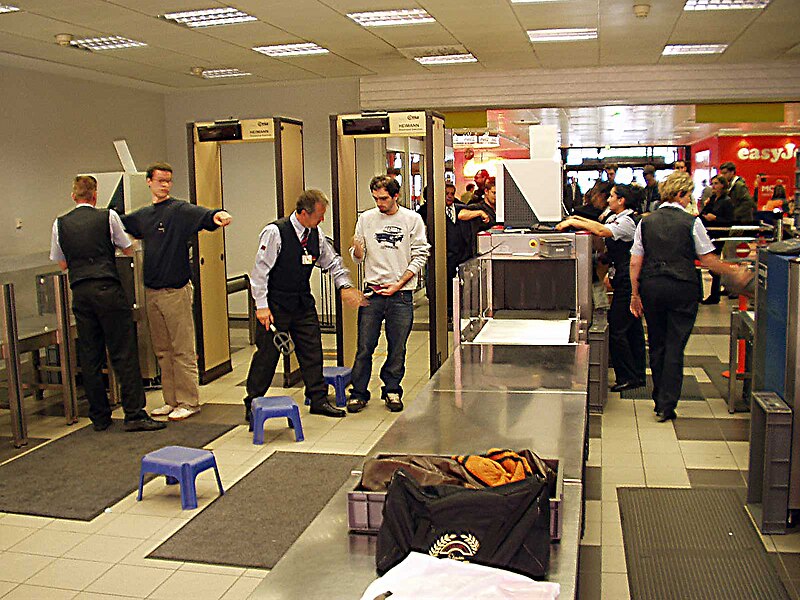
On checking in, every traveller in every airport around the world walks through a metal detector. Metal detectors work by electromagnetic induction – changing magnetic fields cause changing electric fields in metals, and vice versa. When a piece of metal is near the changing magnetic field being produced by the detector, electrical currents are induced in the metal, which then produces an alternating magnetic field of its own. This new magnetic field can then be detected and is why you need to remove metal objects like your belt when you walk through airport security.

Whilst you are walking through the metal detector, your bags are passing through an X-ray machine. As they move along the conveyor belt, X-rays, which are electromagnetic waves like light but much more energetic, are shone on the luggage. Many of the X-rays pass through unblocked by your suitcase and its contents, and detectors on the other side of your luggage measure how many of these X-rays make it through. By knowing that different things absorb different energy X-rays, a picture of your bag’s contents can be built up.

Explosives and Drug Detection:

Dogs have been used to sniff for explosives and drugs for many years, but it was only in 2003 that Explosive trace detection was introduced at Sydney airport. This system employs Ion Mobility Spectrometry. Firstly, a sample is taken by wiping a swab on your luggage or clothes. The swab is placed in the detector, and the sample is ionised – converted from its molecular form into its ionic (charged) form. The ions are separated by an electric field – different mass ions move at different speeds towards the detector, and so the time taken to arrive at the detector tells us if the telltale explosive, or drug, signature is present.

Another new method of explosive detection is terahertz spectroscopy. This technique uses radiation with a frequency between microwave and infrared, and can be more useful that X-rays as, although both X-rays and terahertz radiation can see through material, terahertz rays are non-ionising and so harmless to humans. They can also probe for chemical information, rather than just physical shape information, as many molecular excitations are within the terahertz frequency band.

Andrew Burnett, terahertz spectroscopy expert at the University of Leeds, says that the information obtained from terahertz spectroscopy is more sensitive than other radiation:

“This information is very specific, even allowing us to differentiate between different forms of the same drug… The aim is to eventually produce a system that gives us chemical specific information through clothing.”

Fingerprint analysis:

Fingerprint analysis is the oldest form of biometric identification, and is still regarded as one of the most reliable. Every visitor to the US has his or her fingerprint read on entry through an airport.

A fingerprint is an impression of the raised areas of epidermis – called friction ridges – on your finger, and everyone’s fingerprints are unique. You leave your fingerprints behind on things you touch by depositing the natural secretions – mainly water – from the eccrine glands in the friction ridge skin. These are called latent, which means hidden, fingerprints. If contaminants on the skin are also left behind, such as dirt, then they are called patent fingerprints. Patent fingerprints are easily seen by the human eye and so can be photographed and then identified as they are. Latent fingerprints are made visible by electronic, chemical and physical processing techniques such as “dusting” a crime scene.

Fingerprint analysis was traditionally completed manually by comparing the fingerprint with ink fingerprints on paper. As you can imagine, this was a very time consuming task. Modern day techniques are able to match fingerprints by using computerised databases.

An interesting fact is that the koala is one the few mammals that also has fingerprints.

Iris and Retina Recognition:
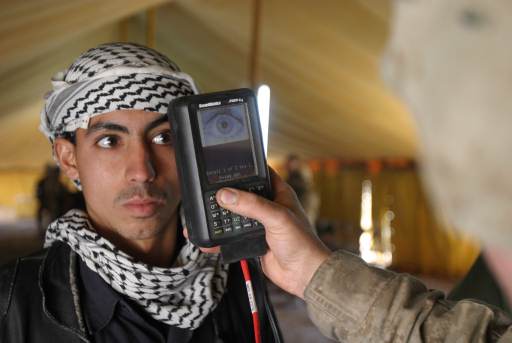
Iris scans look for patterns based on high-resolution camera images of the iris, whose intricate structure is unique to the person. Identification is unambiguous and as long as you do not damage your eye during your life, your iris scan will not change. The technology has been employed at Schiphol Airport in the Netherlands since 2001 to allow passport-free travel. The United Arab Emirates has such systems at all 17 air, land and seas ports.

Retinal recognition is slightly different, as the scan maps the capillaries feeding blood to the retina. These blood vessels absorb light more readily than the surrounding tissue, and when a ray of low-energy infrared light is shone into the eye, the reflection of the light, which depends on the capillaries, is measured. Even identical twins have different retinal scans, and like iris recognition, your retinal scan will stay the same throughout your life.

Facial Recognition:

Facial Recognition is a relatively new technology that compares facial features in the live image with those in a database. The Australian Customs Service’s SmartGate system compares the face of the examined with their image on their ePassport microchip, and replaced manual passport checks for Qantas staff in 2003.

Facial recognition is the way forward for the aviation industry, with the International Civil Aviation Organisation issuing a resolution endorsing the use of face recognition as the:

“globally interoperable biometric for machine assisted identity confirmation with machine-readable travel documents.”

Voice Recognition:

These days, it seems every time you call up your phone company or book a cab, you talk to a machine. These systems are based around voice recognition technology.

Clive Summerfield, biometrics and voice recognition expert, and CEO of Three S Holdings Pty Ltd in Canberra, thinks that over the next five years, voice biometrics will eclipse iris and facial scans and become second only in market share to fingerprinting systems.

“Voice recognition, when configured correctly, is 10 times more accurate that face, 2-3 time more accurate than fingerprint and approaching the performance of iris.”

Passports:

A new Australian passport, the biometric ePassport, was introduced in 2005 and has an embedded microchip that stores the holder’s photograph, name, gender, date of birth, nationality, passport number, and expiry date. European countries are currently issuing passports that have the owner’s photograph and fingerprints on the chip. The US passport has a chip that is big enough to store additional biometric information such as facial recognition and retinal scan information.

Will biometrics really shorten airport queues?

Even if these new technologies work perfectly inside the airport, they will not shorten check-in queues if the public does not like them or cannot use them. M. Angela Sasse, Professor of Human-Centred Technology at University College London, researches the usability of security systems and concludes that even if a system works well, it will not gain approval if it is not easy to use or looks unpleasant. A recent iris scan trial at Heathrow airport, in which participants could not adjust the height of the scanners, and a recent US airport trial, in which dirty fingerprint readers were used, are examples of poorly designed systems.

“You should design all the processes the traveller encounters to be as easy and pleasant as possible … Make sure the system is clean and pleasant to use.”

The ethics and future of biometrics:

Identity theft is one of the fastest growing crimes in the world, and estimates have valued identity-related crime as a $2 trillion problem. Biometrics is seen as a potent weapon in the fight against identity theft, however the concern surrounding biometrics is that there must somewhere be a database of your traits. Could someone steal this information? The common fear is that once your fingerprint or retinal information is stolen, it is compromised for life, as these patterns never change.

What differentiates biometrics from other forms of security is that there must be a match between the “live” biometric scan, and the “stored” information. Unless an identity-stealer has recreated your facial expressions or other biometric information to the minutest detail, they will not be able to pass through security.

Mathew James, Managing Director of UK Biometrics Ltd., says that the fingerprinting technology used by UK Biometrics is ethically sound as a biometric thief is likely to just end up with a bunch of useless numbers:

“We do not store fingerprints and it is impossible to recreate a fingerprint from the data we store. Our scanners register up to 17 minutiae points on a fingerprint, convert these into data which is then encrypted for future comparison. Even if this data were stolen, the thief would have a lot of meaningless numbers, useless without the scanner and its attendant technology.”

Whilst biometric technologies may tightly safeguard information, desperate thieves can, however, always find a way. In 2005, Malaysian car thieves cut off the finger of a Mercedes-Benz S-Class owner when attempting to steal his car so that they could use his fingerprints to start the vehicle. And the popular television show MythBusters broke into a secured building with a photocopied fingerprint.

Stephanie Schuckers, Associate Professor of Electrical and Computer Engineering from Clarkson University, conducts research into how to prevent fingerprinting systems from being spoofed by creating fake fingerprints out of such materials as Play-Doh, and thinks that biometric security systems are an improvement on traditional methods, even if there may be some vulnerabilities.

“I try to caution people to ask, what is your security question and what is your solution now, and does biometrics improve this in terms of whatever your goals may be – convenience, improved security. Just because there is a vulnerability – well all security systems have a vulnerability – it doesn’t mean it’s not necessarily a technology that might (not) be useful.”

Schuckers raises the example of a passport, and says that by adding a biometric element, you take a step forward to improved security.

“The current state of passports is a photo that may be 10 years old and a guy looking at you to see if it matches. Would adding a fingerprint improve the security at the borders? I would argue that that would be a step above the present technology. Can someone somehow slip a thin fake finger over their hand? Sure. That’s the state of the technology now, but you’ve made steps to improved technology.”

She believes that whilst there may be some vulnerability in biometric systems, they can be overcome by a combination of systems that would make it extremely difficult for the identity stealer to be successful.

“You can make it more difficult for someone to spoof the system by combining say a fingerprint, a card, and a PIN. So now your potential identity stealer would have to have all of those items to access the bank account… There are very simple steps that you can take now with commercially available devises that would minimise the risks”

Whether or not identity theft is likely or even possible, biometric systems are more and more being within society, with facial recognition software used in Closed Circuit Television (CCTV) all over the UK. Is this a breach of our privacy? Should Big Brother track our every move?

Schuckers believes that these are serious questions that need to be addressed by society, but that they also open up research areas to maintain the security of your personal information.

“I think those are reasonable questions that we need to ask as a society. What applications are meaningful that you would take the trade-off between privacy and the extra security you might get using the biometrics? I also see it as a research avenue. There are a lot of people researching ways to use biometric information in such a way that doesn’t actually give up your private information.”

Clive Summerfield sees the issue as a legal one, revolving around privacy and storage of sensitive personal information, as opposed to the technical challenge of safeguarding the information.

“At the end of the day, I think this will become a legal issue, where the privacy, protection and confidentiality of such information becomes legislated and that senior executives of organisations collecting, using, communicating and storing biometric information will become legally responsible for any breaches, along with biometric systems developers, implementers and vendors, who will be required to certify that their system implements the functions necessary to protect the biometric information.”

He draws a parallel with the postal service, in which stealing a letter is a federal crime, and thus protects the confidentiality of the contents of letters. There is a similar law regarding eavesdropping on telephone conversations, and these systems are widely accepted by society, despite the fact that there is little or no technological protection of information conveyed in these ways.

“Similar legal protection needs to be in place for biometrics for the mainstream of society to start to access biometrics… Anyway, I’m no legal expert – so how you go about implementing such laws, I’ll need to leave to the legal experts!”

Another concern is the storage of personal information on a single chip in your passport. Data on the chip can theoretically be stolen using wireless technology, and even if the information is encrypted, experiments in the Netherlands showed that the Dutch passport encryption could be cracked within two hours. Whilst you would never be able to set up the sensitive equipment to steal the information in our ever-more secure airports, the same could not be said about hotels and other places where you need your passport.

Mathew James thinks that in any situation in which there is a need to make sure of a person’s identity, there is a future for biometrics:

“Think of the number of keys, swipe cards, prox fobs and PINs that keep a modern airport secure. They can all be replaced by the one key which cannot be lost, stolen, forged or hacked – the human fingerprint. People can be added to, or deleted from, the system in seconds. Security staff can ‘access all areas’ without carrying a bunch of keys and passengers need only ever register once.”

As for biometric passports?

“We see a future where the only passport you will ever need will be your fingerprint, registered once in your home country.”

Tuesday, 14 October 2008

Japan and the Sumo Diet

Travelling Japan and Korea was a wonderful experience - magnificent sights, great food, interesting people and of course, of interest to this blog, science.

I have finally put together the Japan / Korea podcast, which you can listen to here. It was recorded whilst we travelled from Tokyo to Fukuoka on the shinkansen (bullet train), Fukuoka to Busan in Korea on the JR Beetle (ferry), and Busan to Seoul on the KTX (high-speed train) - all fantastic methods of transport that put Aussie transport links (and for that matter UK ones) to shame.

The first topic we tackled was the Sumo Diet - how do Sumo Wrestlers get so big? And why? We were lucky to catch the September Grand Sumo Tournament in Tokyo and I was astounded by how big and strong these guys are. What's their secret to rapid weight gain? Well, here's what you need to do:
  1. Skip breakfast. Often people who try to loose weight skip breakfast, but it's actually the worst thing you can. After 8 hours of sleep, your body craves food. By depriving your body of food, you keep your metabolic rate low;
  2. Exercise on an empty stomach. If you exercise with no food to burn off, your metabolic rate lowers even more in order to conserve the energy you have. This helps increase your muscle but not burn off too many calories. This point is rather open to debate as to whether it works;
  3. Sleep after eating. After a massive lunch or dinner, have a sleep. This means you wont burn off all those calories you just ate. This is a major factor;
  4. Eat big in the afternoon and evening. Going to bed with a full stomach makes your body release a rush of insulin, storing some of your previous intake as fat instead of in muscles and organs;
  5. Eat in a social atmosphere. An unreferenced report says that when you eat with others, you eat more than 44% more than when alone. I'd believe that.
You can find more info on this diet here.

At the heart of the diet is a hearty stew called chankonabe. It is a communal one-pot simmering stock-based casserole, into which you dip chicken, pork, mushrooms, carrots, potatoes, radish, lotus root and onions as if it were a massive meaty fondue (which I guess it is). You can drink the left over stock. Now this doesn't actually sound unhealthy - indeed it actually sounds pretty nutricious, but if you eat a lot of it, and then have a sleep, you can get very big. And they do eat a lot. A wrestler named Takamisugi was revered for eating 65 bowls in a single sitting.

We tackled a number of other topics in the podcast, so tune in. And feel free to leave any comments you like - I would love to hear from you, especially if you have tried the Sumo Diet...

Listen to his podcast here:


Tuesday, 9 September 2008

Reflections on the London Science Blogging Conference

With the London Science Blogging Conference finished up, it was time to reflect on the good, the bad and the ugly of science blogging.

I chatted to Lisa Bailey, who blogs about science at Bridge 8, about what we learnt at the conference, how blogging can be used effectively to communicate science, the challenges laid down at the conference - including the challenge to get senior scientists to blog - and where science blogging might be going from here.

For more from the conference, check out the Mr Science podcast from our evening in London science pubs.

This is my last post and podcast for a couple of weeks as I travel home to Sydney after an absolutely wonderful 18 months in London. I will miss all the new friends I have made, and all the old friends I have met again. London, it's been emotional. See y'all in Sydney and if any one wants to sponsor a visa for me to come back, just get in contact!

Listen in to my conversation with Lisa here:


Friday, 29 August 2008

Crawl of London Science Pubs

Last night I attended the most interestingly themed pub-crawl I have ever been on. It was a science crawl of London pubs.

The pub crawl was held in association with the inaugural science blogging conference, Science Blogging 2008: London, hosted by Nature Network, in collaboration with the Royal Institution. The aim of the conference is to bring together science bloggers from around the world to discuss the pressing issues in science, science communication, publishing and education. What role does blogging play? I am going tomorrow, so come and say hi!

We went to four different pubs, starting with the Jeremy Bentham, then moving to the Museum Tavern, the Ben Crouch Tavern and the John Snow.

Our tour guide for the evening was Londonphile and editor of the Nature Network, Matt Brown. On this week's podcast, I chatted to Matt about the four pubs we attended. A few other science bloggers also pop up in the podcast, and they are:

Listen here:


Wednesday, 30 July 2008

Tanneries and water - meandering through Morocco

Morocco is a hot, dry place. We were lucky enough to visit the town of Marrakech last week, and apart from being stunning to look at, it was 40 degrees and chaotic! This latest post is not meant to be a travel blog - there are plenty of them out there - but instead we are going to take a look at some of the science from this most recent trip abroad.

Tanneries

To work in a tannery in Marrakech is to work under some of the harshest working conditions there are. Not only are you exposed to the blazing sun, but you are are soaked in blood, animal bodily fluids and parts, pigeon poo, and get paid appallingly.

But there is some science to the ancient Moroccan tannery tradition.

Legend has it that the tanners are descended from demons who lived under a black king. As they didn't obey his rules, they were condemned to work in the tanneries. They use hundreds of concrete vats to process animal skins which are bought locally in the souks. The skins (mainly sheep and goat although cow and camel are sometimes used - lions are no longer used as they were hunted to extinction in the region around 1900) are treated far differently to the way leather is treated in other parts of the world as the process clings to its ancient traditions. Hair and flesh are removed by soaking the skins in quicklime (Calcium Oxide formed when limestone - calcium carbonate - decomposes) and water. After this, the skins are placed in a vat of water and blood, then separated and rung out, before being coloured using a few natural products:
  • Pomegranate for yellow;
  • Olive oil for shininess;
  • Bark for various colours, presumably brown;
  • Saffron for golden yellow;
  • Henna for red/orange;
  • Poppy for many other colours including white, pink, yellow, orange, red and blue.
The skins are stretched out and left to dry for over 20 days in little piles that look rancid. Pigeon poo is used to soften the leather, and if anyone knows why, I would love to know. Presumably the poo is slightly acidic. Pigeon poo has actually been reported to be quite dangerous, with people almost dying after ingesting it. The poo adds to the smell of the place, with there being large pigeon coups near the top in which you could wade knee deep in the brown-smelly stuff.

Our guide, apart from ripping us off ridiculously, did give us some mint to hold under our noses to mask the smell.

If you want to be a tanner, you need to be born into it, and only men are allowed. Many suffer from arthritis and are forced into an early retirement. And it has been reported that in Bangladesh, half a million people are at risk of serious health issues due to their tanneries emitting toxic chemicals such as sulphuric acid. Not a place I would like to work.

Water

Morocco has a massive water problem. It rains about a third of that in Canberra, Australia, which is considered in severe drought. The average rainfall in a summer month is 3 mm, and there are increasing demands on the scare water-supply by a massive push to increase tourism and reduced rain-fall, presumably due to global warming. The period in which crops woudl grow in the 1960s was about 180 days per year. Now it is 110, and most of the country still live off the land. Add to this food shortages and there will be a problem in the years to come.

It has not always been this way. When Marrakesh was originally settled by the Almoravids, who had lived in the desert all their history, water management was done well. The Almoravids built massive underground piping systems called khettaras which brought water from melted snow from the Atlas Mountains, a few hundred kilometers from Marrakech. It was quite an engineering project, but unfortunately western irrigation techniques, developed in places where there is lots of water, are now being used and water is running out. There are still magnificent oases in Marrakech, such as the Palmeraie and the Majorelle Gardens, but these are irrigated using modern methods.

I took my recording gear to Marrakech, so listen up to the podcast here. You will also here some commentary from the local lads on Australia, east and west coast America, and north and south England, and some of the sounds of Marrakech.

Listen here:


More of my Marrakech photos can be found on my flickr site.

Tuesday, 20 May 2008

Biofuels debate - The UK Report in The Helix

Here is another UK report I wrote for The Helix, Australia's premier science education magazine since 1986.

UK Biofuel Debate:

The UK has embarked on an audacious new scheme to lessen the country’s fossil-fuel dependency and to minimise climate change. But not everyone is in favour.

From April 15, all petrol and diesel sold in UK pumps must contain at least 2.5% biofuel. The target is set to rise to 5% by 2010, with the motive to make Britain's 33 million vehicles greener. But critics argue that the benefits from the scheme may be outweighed by the negative effects of biofuel production, which results in forest clearing, the loss of habitat, and may indeed speed up climate change.

Biofuels are made from renewable biological sources such as sugar cane or maize, and can have advantages over traditional fossil fuel sources as, when they are burnt, they only release the carbon dioxide they absorbed from the atmosphere during their lifetime. In contrast, fossil fuels release massive quantities of carbon locked out of the Earth’s carbon cycle for millions of years.

Whilst burning biofuels adds less carbon to the atmosphere than burning fossil fuels, biofuels require extensive land clearing. This could involve cutting down established forests that absorb much more carbon dioxide than the newly planted biofuel crops. Additional carbon dioxide may escape from the soil or peat, where it was trapped by the roots of trees.

Researchers at the University of Minnesota published a study in February arguing that converting Brazilian, Southeast Asian and US rainforests, peatlands, savannas, and grasslands to produce biofuels will release 17 to 420 times more carbon dioxide than the fossil fuels they replace.

Apart from the climate change implications, there may be catastrophic conservation consequences for not only virgin forests, but also animal species. In South America, sugar cane production for biofuels has wiped out the habitat of the large Alagoas curassow, making it extinct.

The other major problem with the move towards biofuels is food security. Poorer countries are now switching land previously used to grow food crops to more profitable biofuel crops. The UK, which sources much of its produce from overseas, has already seen food prices rise.

Motor Neuron Disease Breakthrough - The UK Report in The Helix

Since living in the UK, I have been reporting in a regular column in The Helix. The Helix is one of CSIRO's magazines and has been Australia's premier science education magazine since 1986.

The column deals with the science stories that have been featured in the UK media. I have written about some of them here on the blog - for example the UK Wi-Fi scandal.

Here is a story I wrote about breakthroughs in Motor Neuron Disease research:

British and Australian scientists have made an incredible breakthrough in the understanding of motor-neuron disease.

The international effort between King's College London and the ANZAC Research Institute at Sydney's Concord Hospital has identified an inherited genetic mutation believed to be associated with the underlying source of the crippling condition.

Motor-neuron disease is caused by the death of nerves cells – motor neurons – that connect the spinal cord and brain with muscles. 2 in every 100,000 people develop the condition each year, with life expectancy after onset between 2 and 5 years. One notable exception is Professor Stephen Hawking, who has remarkably lived with the disease for 45 years.

The research suggests that a genetic abnormality produces a toxic protein known as TDP-43. Sufferers of the condition were previously known to have high levels of the protein in dying nerve cells, but it was thought this was caused by the damaged cells trying to repair themselves. Now however, the researchers think that it is the protein itself doing the damage.

Lead researcher Professor Chris Shaw from Kings College says that this is the most significant breakthrough in motor-neuron disease research in 15 years, however considers a cure a long way off.

"It is a new biological tool to understand the disease and develop treatments… However, a cure for any neurological disease is a long way off. It's really hard to say how far off it is, but this is certainly a major leap forward in that direction."

Saturday, 26 April 2008

Iceland in G Magazine

This travel/science article of mine about Iceland was recently published in G Magazine, the world's only monthly environmental publication.

Read the article here.
And you can read more on this site on Iceland in this Iceland article and in this Iceland video.

Many of my photos of Iceland can be found here.

Thursday, 17 January 2008

Bosnian Ear Aches

Being hospitalised when overseas is always difficult. But being hospitalised in a building fresh with bullet and shell holes from a war only a few years ago, where the signs are in Cyrillic, and where patients are literally spilling out from the doors, is something different altogether. I've had the pleasure of Hong Kong and Indian hospitals, but the Bosnian hospital was not only unexpected, but unexpectedly pleasurable.

Not only were the Mostar hospital staff friendly in tolerating my lack of local language skills, but the owner of the hotel in which we were staying escorted me to a local doctor and translated, and then took the specialist referral form from the doctor, with me in tow, to the hospital, negotiated our way through the masses of people following signs I could not read to the audiology specialist, where she again translated for me. She even helped me out with some KM as I only had Euro! As was the case in Hong Kong and India, the specialist was brilliant and spoke better English than me.

So, to the science of the problem. Once again I found myself with an ear infection - most likely from swimming in Dubrovnik. Otitis externa is an inflammation of the ear canal and outer ear, and something that some people, like myself, are sensitive to. For me, it came with total deafness in my right ear, and some blood. It can be a mixture of fungal and bacterial infection that attacks the skin after it has had some trauma - perhaps you cleaned your ear with a cotton bud, which you should never do.

Otitis externa usually begins with an itchy ear, after which pain and deafness can follow. The deafness may be caused by wax covering the eardrum, or in bad cases, from the external ear swelling so much that the ear cavity completely shuts. This is a dreadfully painful experience and did not happen to me this time, but has in the past. Often there is some discharge from the ear, often foul-smelling - in my case blood from the aggravated outer ear. I had tried some over-the-counter medication to dry up the wax, but that can worsen swelling if you have an infection.

I was prescribed something that was written in Cyrillic, so I didn't actually know what it was. However, a few questions and a little research led me to the following ingredients:

Dexamethasone is a corticosteroid that is used for reducing inflammation. Corticosteroids are naturally produced in the body by the adrenal gland, and dexamethasone is a synthetic adrenal corticosteroid. Inflammation can be caused by infection and is an attempt by the body to remove the injurious stimuli and start the tissue healing.

Neomycin is a aminoglycoside antibody. Such antibiotics are broad-spectrum, and so can defeat a wide variety of bacteria by binding to the bacterial cell and producing abnormal proteins. Such proteins can not keep the bacteria alive.

Acetic acid makes the ear acidic, which is difficult for the bacteria to survive in.

So there you go, more health problems that you can experience whilst travelling!

Listen to this show here (contains some great Eurovision music too!)
For more information, see netdoctor

Tuesday, 16 October 2007

How maths can save your life, Euler and Plus Magazine

I have recently become an editor of Plus Magazine, a free, award winning online mathematics magazine that has articles written by the world's great mathematicians and science communicators, including Stephen Hawking and Marcus du Sautoy. This is why I have been a bit slack on Mr Science...

This week's podcast is again from the York Science Festival, and the interview is featured on an upcoming episode of the new Plus podcast. I talk to Professor Chris Budd about all sorts of interesting maths from Euler, Maths Communication, modelling Santa getting around the world, how maths can save your life, climate modelling and how mathematicians can pick up at parties. Professor Budd loves his maths! If you like the maths podcast, get over to Plus and subscribe!

The mp3 can be found here.


We have recently launched a writing competition. The Plus new writers award is trying to find people who can bring mathematics to life. The competition is open to new writers of any age and from any background who can explain a mathematical topic or application they think the world needs to know about. The winning entries will be read by an international audience of over two hundred thousand in the June 2008 issue of Plus, and the winners will receive an iPod and signed copies of popular maths books by some of the best science writers today, and a subscription to the journal Nature, kindly donated by its publisher. The closing date is March 31st 2008.

The competition is kindly supported by the Maths, Stats and Operational Research Network, a Subject Centre of the Higher Education Academy, and the London Mathematical Society. More info can be found on the website

Thursday, 27 September 2007

York Science Festival Episode 1

This week's podcast comes from the BA Festival of Science, the UK's foremost celebration of science, engineering and technology and its impact on our society. This is the first of a series of podcasts.

We talk to Sue Hordienko from the organising committee to find out what it's all about, and have a chat to the following researchers presenting their work at the Festival:
  1. Clare Chandler - Factors affecting clinical decision making in northeast Tanzania
  2. Marco Columbo - University of Edinburgh - Mathematical Optimisation
  3. Simon Blamey - University of South Hampton - Modelling railway station usage
  4. Alice Courvoisier - University of Leeds - Solar Physics and Sun Spots
  5. Fiona Jordan - University College London - Cultural Evolution in the Pacific
This show can be found here

Friday, 6 July 2007

UK Wi-Fi Scandal

Wi-Fi in the UK is prominent, offered by cafes, bars, book stores and very often found in schools.

Commonly used to wirelessly connect to the Internet, Wi-Fi hit the headlines when the BBC programme Panorama found that radiation levels from Wi-Fi in one school was up to three times the level of mobile phone radiation, and implied that this was very dangerous to your health, without any evidence to support it.

Panorama’s classroom experiment was hardly scientific, and indeed provided the students a great lesson in how not to do a science experiment. The school even banned the TV crew when it found out about the bad science being conducted.

So what was wrong with this experiment? Well, in order to make sure that they could obtain the very highest Wi-Fi signal possible, the Panorama team started downloading the biggest file they could, despite the fact that the students are never allowed to download such files, and only use their laptops a couple of times a week.

As the readings were being taken, the teacher googled the name of the man who designed the equipment being used. Turns out that the equipment was built by Alasdair Philips, a man who campaigns against Wi-Fi and sells protective equipment against it. Not surprisingly, the readings were “well into the red”, but never explained!

One of the experts presented was Associate Professor Olle Johansson, awarded Misleader Of The Year 2004 in Sweden for his scaremongering regarding electromagnetic fields!

The peak readings were 600 times below the government’s safety limits, and UK experts in the field have spent much of their time recently denouncing the show and distancing themselves from the findings.

Form your own opinions by watching the show below, and the BBC News Watch (like Media Watch in Australia) take on the program.


There is a nice take on it all at Bad Science

Listen to this show here

Saturday, 23 June 2007

Short little video about Iceland

Here is the promised video from Iceland - a spectacular place that the video in my still camera, or the quick time in which I edited this together, does not do justice to.

You can watch the youtube video here:


If you can not see this, it is at this link:
http://uk.youtube.com/watch?v=BMivvyA8JIA

The mp4 for downloading in itunes is here

Tuesday, 19 June 2007

Iceland - The coolest place on Earth

There is a sure fire-way to cure yourself of boredom, joblessness and that nagging feeling that you should possibly be doing more with yourself and engaging with reality, and that's by doing the exact opposite of that and escaping reality.

And for an Australian, there really isn't anywhere further away you could go than Iceland - actually, from this cool little page, the exact opposite side of the Earth to Sydney is in the middle of the Atlantic - the opposite to Iceland is down near Antarctica below New Zealand - but my point remains... It has been a dream of mine to go to Iceland for many years - partially because of this escapism, but also because everything I had heard of this place suggested that I may like it - forward thinking, a little bit socialist, very clean (although ironically, because it only has around 300 000 people and a large aluminium industry, it has one of the largest carbon foot-prints per capita in the world), attractive and reserved Nordic people, stunningly beautiful and interesting scenery, as well as a bit of a science novelty. For me, I find it fascinating that of the 103 000 square kilometres of land that makes up Iceland, 11% is covered in glaciers, 64% in wasteland (cooled lava flows mainly, giving it a desolate "moon-like" appearance) and 2% by lakes, leaving only around 23% for vegetation. This fact, and its isolation, mean that there are relatively few people living in Iceland.

Perhaps it is a virtue of the amazing geothermal activity in the country, mainly due to its position straddling the Eurasian and American plates which are slowly moving apart, but Iceland has very progressive policies regarding energy usage. Perhaps it is also because if our worst fears of global warming come true, then it wont be long before the massive Icelandic glaciers melt (within 200 years our tour guide mentioned), which would not only be an environmental catastrophe in itself but could cause unknown flooding, avalanches and displacement for Icelanders.

The country is setting itself up to be "Carbon Neutral". Renewable energy makes up 72% of Iceland's energy portfolio, well ahead of the next best in the world, New Zealand, on 57%. The importation of coal stopped more than 50 years ago after the 2nd World War. The energy economy is based around hydroelectricity and geothermal power plants, and whilst it is fortunate that Iceland is in a position to take advantage of its geography for this purpose (perhaps things would be different if they were on top of oil like Norway or the Middle East, or Coal and Uranium like Australia - although Australia does also have a lot of sun for solar power...), at least it is aiming to be a world leader in other renewable sources. In a world where oil security is becoming more and more important, firms such as Icelandic New Energy Ltd are aiming to create the world's first hydrogen economy, with a number of buses in the country's capital Reykjavik already powered by the renewable source. The aim is eventually to power the country's large fishing fleet with Hydrogen, and this is quite difficult as many of the ships are quite old. As the technology is new, it is also quite expensive, and being a small, isolated country, it may be difficult for the Icelandic Hydrogen industry to compete internationally, and so therefore it will take a while before the costs reduce enough for Hydrogen power to be common place.

The government even offsets each of its overseas trips by planting trees to soak up the CO2 through the Iceland Carbon Fund. Can you imagine how many trees the Howard Government would have to plant to offset all the Prime Minister's trips to the UK to see the cricket at Lords? Imagine how many trees Tony Blair would have to plant to offset his recent farewell tour to Africa?

Iceland are aiming to minimise their carbon footprint through renewable energy developments, and through programs such as the "Green Flag Program" in which schools are awarded prizes for meeting their own environmental goals. One primary school on the Snaefellness peninsula - a day trip from the capital Reykjavik - built a dam to generate electricity to provide renewable power for local greenhouses. They also built windmills and captured solar energy. I think the most environmentally conscious thing that my primary school did was plant a couple of trees in a new garden - but this was after it lost half of its area for a new motorway.

87% of Iceland's heating comes from geothermal energy, and the exportation of geothermal know-how is one of the largest ways that Iceland contributes to foreign aid. The slight smell of sulphur in the bathrooms is the only downside.

One of the really fascinating developments in Iceland in recent times has been the interest Internet giants such as Yahoo! and Google have shown in moving server farms to the country, due to the fact that the energy is cheap and renewable. Server farms use up enormous amounts of energy, mostly because the computers consume ridiculously large quantities for cooling. This is a real problem, as if the servers go down, this has the potential to produce catastrophic results for world business and commerce. With the world linked up through the Internet, there would be no problem locating server farms in Iceland, although a new submarine cable will need to be laid. The fact that much of the land is not occupied also helps. This is being seen by locals as a much more environmentally friendly way of making money and creating jobs compared to the aluminium industry which currently generates much of Iceland's wealth and creates the surprising effect that per capita, Iceland is one of the world's largest carbon emitters.

Iceland was not always so forward thinking. Studies have shown that at the time of settlement, around 1000 years ago, the country was 30% covered in forest. These days, due to erosion, farming, grazing and other human uses, the figure it closer to 1%. However, around 1 million trees are being planted each year through the Icelandic Forestry Commission.

Another really interesting feature of the landscape is the presence of geysers - the English word actually comes from Geysir - an erupting spring in Iceland. A geyser is a hot spring that erupts periodically, shooting a column of hot water and steam into the air. About 1,000 exist worldwide, and they are formed by surface water gradually seeping down through the ground until it meets rock heated by magma. The heated water then rises back toward the surface. As the geyser fills, the water at the top of where the water is reaching the surface cools down and presses down on the hotter water beneath. This superheats the water at the bottom due to the pressure from the top, and eventually temperatures near the bottom of the geyser rise to a point where boiling begins and the steam rises explosively to the top, giving us the geyser show.

It is not quite as cold as you might expect for somewhere very high up in the North. The North Atlantic Current keeps temperatures high. When I was there, the sun was going down at around 2 am and rising again at 4 am, and I had the very strange experience of buying ice-cream at midnight with the sun still out! I have some Iceland video that I will put up the site once it has all been edited.

OK, that's about it for now on Iceland, but I am hoping to do some more stories on this fascinating country and will post some video soon. Something for a future story is the absolutely fascinating island of Surtsey, an island that was formed when a volcano off the coast of Iceland and 130 metres below sea-level started to erupt. We might also tackle the hot springs, Gulfoss waterfall, I'm sure we'll think of something!

Many of my photos of Iceland can be found here

The podcast can be found here and the individual episode here

Thursday, 7 June 2007

Time for a Bath

One of the next stops along the way was the ancient and beautiful Roman town of Bath, in the south-west of England. It is famous for its geothermally heated hot-springs - the only naturally occurring hot springs in the UK, and is a world heritage site.

Andrews et al. report that the Bath springs originate from the Mendip Hills, which are limestone hills south of in Somerset. A maximum subsurface temperature of 80plusminus16 °C is found between 2.7 and 4.3 km underground within the limestone, and the water spends less than 10,000 years in the limestone. Atkinson and Davison report that the average surface temperature is between 44 and 47 °C.

Colours in hot springs are often caused by thermophilic microorganisms. These are organisms that, as the name suggest, love heat. They have provided such intrigue that there have been conferences devoted to the topic. Cyanobacteria, a common thermophile, grow in large colonies called bacterial mats that form the slime on the edges of the springs. Different coloured organisms prefer different temperatures, and so the colour of the bath can tell you its temperature - yellow is 70 °C, brown is 60 °C and green is 50 °C or lower.

The Bath springs were known to early settlers from about 7000 BP, and the legend of their discovery is attributed to the Celt Bladud who, having seen his pigs cured of leprosy in the mud that surrounds the springs, thought that the waters must have healing properties. The springs came to be associated with the Celtic goddess Sul, and when the Romans came, they were dedicated to the goddess Sulis Minerva.

The great Roman engineers were the first to harness the springs for their heat, with Bath becoming the first example of the use of geothermal energy for heat in Britain. It is only very recently that the locals and tourists have been able to do any more than touch the venerable waters with the opening of a brand new complex allowing you to bathe, as the Roman’s did, in the spring waters. At something like 50 pounds for 20 minutes and with my train due very soon after, unfortunately I missed out.

Listen to this show