Monday, 2 March 2009

Ep 100: Your Top 10 Science Stories from 2008

With 2008 done and dusted, it is now time to look back and reflect on the science year that was. It is also our 100th podcast episode, so I would like to say thanks very much to all my subscribers, whether you get your Mr Science fix via the podcast, email, in an RSS reader, however you do it, thanks! If you have, by some chance, listened to all 100 episodes, then I'd love to hear from you as not even my parents have listened to them all....

The winner of our 2008 year in science competition is... Dr Steven Farrell from Cork in Ireland. Congratulations Steven! Steven won the random draw for suggesting the Large Hadron Collider as his favourite science story from 2008. Thanks to everyone who entered the competition and suggested stories - each story listed below was entered by at least one person. Steven has won the book The Open Laboratory: The Best Science Writing on Blogs 2008 - the book will be published very shortly and will feature one blog by me - I'll put out a post about this when the book comes out, but in the meantime, check out the 2007 version.

Listen to his podcast here - includes short snippets from the music of 2008, plus a couple of shout-outs from friends of the show (thanks Brains Matter and Jacqui Hayes from Diffusion):


Now to the countdown....

10. Weird Animals

2008 was a year for weird science emanating out of Europe:


9. Weird Research (impacting our sex lives...)

Two bits of weird science that made the news in 2008 will have quite an impact on our sex lives:
  • But the researchers from California who confirmed that the humble roll of sticky tape is a source of x-rays should perhaps concern us. The researchers admit that Soviet scientists had found something along these lines in the 1960's, but still don't know how it works. We should all think twice about wrapping Christmas presents with the tape dispenser close to our nether regions...


8. The Kakeya conjecture

And now for some difficult science, and the work of Zeev Dvir and Australia’s own Terence Tao on the Kakeya conjecture is mind-blowing, if you understand it.

The Kakeya conjecture is part of geometric measure theory and stems from the Kakeya needle problem posed in 1917:

What is the least area in the plane required to continuously rotate a needle of unit length and zero thickness around completely (i.e. by 360 degrees)

For instance, you can rotate a unit needle inside a unit disk, which has area π/4. By using a deltoid one requires only π/8 area. See here for an animation of that rotation.

In 1928, a bloke by the name of Besicovitch showed that in fact you can rotate this needle in an arbitrarily small amount of area – that is, essentially zero area. This seems unintuitive, but is not too difficult to picture. Imagine you have a needle and you slide it along the direction it points for some distance (which costs zero area - remember the needle has zero width). Then turn the needle slightly, which costs a small amount of area, slide it back and turn it slightly again. Then slide up, turn, slide back, turn etc. At each turn you rotate in the opposite direction to the last. If you keep doing this until the needle has completed 360 degrees, the amount of area that has actually been used to turn the needle gets smaller and smaller for smaller and smaller turns at the end of each needle slide. Check out this animation to see this idea in action.

The Kakeya conjecture concerns the fact that you can make this needle turn through arbitrarily small amounts of area, and takes it into higher dimensions (that is, not simply 2 dimensions). Zeev Dvir, who according to Terence Tao produced a “beautifully simple argument”, proved a special case of the conjecture, the finite field Kakeya conjecture.

Perhaps this should have made my mathematics highlights of 2008


7. The creation of artificial bacteria by Craig Venter

Scientists have discovered a more efficient way of building a synthetic genome that could one day enable them to create artificial life. The method is already being used to help develop next generation biofuels and biochemicals in the labs of controversial US scientist Craig Venter.

Venter has hailed artificial life forms as a potential remedy to illness and global warming, but the prospect is highly controversial and arouses heated debate over its potential ramifications and the ethics of engineering artificial life. The J. Craig Venter Institute succeeded in synthetically reproducing the DNA of a simple bacteria last year.


6. Chandrayaan moon landing by India
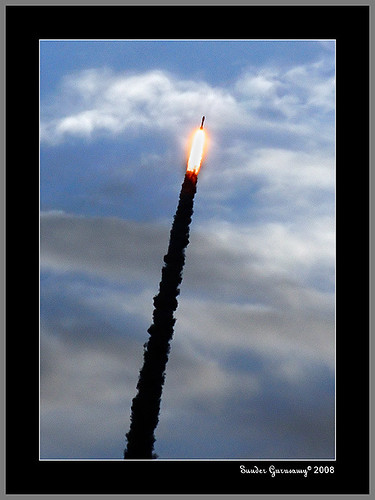
India became the first country outside the US and the old USSR to land a spacecraft on the moon. Its lunar orbiting spacecraft Chandrayaan 1 released the Moon Impact Probe, which reached the surface of the Moon on Nov 14 2008. This date was chosen to commemorate the birthday of Jawaharlal Nehru, the first Indian Prime Minister who initiated India's space program. Developed in India by the Indian Space Research Organisation, the MIP had the Indian flag painted on its exterior. Although Japan and Europe had previously commanded their orbiters Hiten and SMART-1 to crash on the Moon's surface at the end of their lifetimes, India's MIP was the first probe designed specifically for a trip to the lunar surface since the Soviet lander Luna 24 in 1976.

The Indian MIP-1 probe did not include braking rockets and was destroyed upon impacting the lunar surface at its planned speed of 3,100 miles per hour.


5. Stem Cell Fraud

One of the less savoury aspects of science is fraud. In 2006, South Korean Hwang Woo-suk fabricated stem-cell results in two academic papers, and in 2008, stem-cell fraud again hit the headlines.

Morayma Reyes, a former member of one of the highest-profile teams in stem-cell biology, was found to have falsified results. In 2007, the work of Catherine Verfaillie and researchers from the University of Minnesota became mired in controversy, after magazine New Scientist pointed to irregularities in their published results. An expert panel was examined and it was found that PhD student Morayma Reyes had falsified data.

The fraud is significant as in 2002, the team published a paper in Nature suggesting that a rare type of adult stem cell from bone marrow could give rise to all of the body's tissues. Such versatility had previously been seen only in embryonic stem cells. This was an astounding result and opened the door to creating cell-lines in a more “ethical” manner than using embryos.


4. The Story of HM

The most moving science story from 2008, and certainly some of the best science writing, comes from the New York Times and concerns the life and death of Henry Gustav Molaison, known as HM.

HM knew his name, that his father’s family came from Louisiana and his mother’s from Ireland. He knew of the 1929 stock market crash and World War II, but not much more. He could not remember anything of his life before 1953, when he underwent an experimental brain operation to correct an epileptic seizure disorder. He emerged from the operation with profound amnesia and had lost the ability to form any new memories.

For the next 55 years of his life to 2008, everything he did, from meeting someone, to going for a walk, eating dinner and watching TV, in his mind, it was the first time he had ever done it. And throughout those 55 years, he was recognised as the most important patient in the history of brain science. He took part in hundreds of studies and contributed immensely to our understanding of learning, memory and what it means to be human. HM died in 2008.


3. Discovery of water ice on Mars

I love the fact that it was a Mars Phoenix twitter status update that confirmed what many of us had always hoped, that there is water ice on Mars.

Water-ice has been found in vast quantities just below the surface across great swathes Mars. Some people are now arguing that NASA should now commit itself to a manned landing within 20 years. The discovery was made by the Mars Odyssey spacecraft and now seems to answer a long-unanswered puzzle, where did all the water on Mars go? We’ve known for a while from valleys on Mars that water once flowed and we used to ask whether all the water evaporated into space because of the lack of atmospheric pressure on the surface. Now it seems it all froze underground. If it all melted, Mars would be completely covered in a planet-wide ocean!

Incidentally, the Mars Phoenix Lander won a Shorty award for twitter its efforts.


2. Climate Change

Climate change will feature in every top 10 of science from now until the year 3000, if we’re still here and writing blogs and recording podcasts - and it's making its third appearance on this blog after topping the 2006 list and coming in 9th in 2007. The hole the in ozone layer was the second largest in history, the Arctic experienced its second smallest cover of ice, and after remaining flat for a decade, methane levels started to rise again.

The Australian government let nearly everyone down with its soft carbon targets, and concerns have mounted over the global production of biofuels which have been grown in place of food crops.

Watch this space, I’m sure climate change will feature again in 2009.


1. The Large Hadron Collider
In the words of Dr Steven Farrell, our competition winner...

I loved the LHC for a couple of great reasons. Firstly, growing up in the age of Bond villains who were intent on gigantic technological pieces capable of destroying the earth, I loved the idea that the collider might possibly generate a black hole and consume the earth thus destroying all evidence of human existence. Awesome. I don't care if any number of physics associations came out and said it wouldn't happen. They couldn't be 100% sure that it wouldn't. Fantastic. And the second reason is obviously that this rather expensive piece of technology that took a fair bit of time to put together broke. And pretty darn quick too. So yeah, that's my highlight.

It cost approximately US$10 billion to build, and almost 20 years to complete, got everyone excited, then it broke. For about week, everyone was an expert on the Higgs boson and fearful that the LHC might create a mini-black hole, which would not only swallow the Earth, but the whole Universe! After a few tests and no black holes, a small fault in one of the magnets caused the LHC to be shutdown. Watch this space in 2009.


......................


So there you have it, the top 10 science stories from 2008 as contributed by Mr Science Show lovers. Thanks to all who contributed and we'll do it all again next year! Please let me know of any stories you would have liked to have seen - and please write and say hi if you're a long-time listener of the show!

Listen to his podcast here:

Tuesday, 13 January 2009

Favourite Fictional Scientist - End of Poll

A little while back we ran a poll to find your favourite fictional scientist. I've decided to close this poll, and the winner is ...

Doc Emmett Brown from Back to the Future. Doc Brown came in with 23% of the vote, ahead of Beaker and Honeydew from The Muppets with 13%.

If you'd like to see the full results, get over to the original poll post (simply click View Results on the poll). There you can also hear the podcast I put together with "The Ordinary Guy" from the Brains Matter podcast about fictional scientists.

Thanks for voting!

Friday, 12 December 2008

What are your scientific highlights from 2008?

As we are nearing the end of 2008, and closing in on 100 podcast episodes of the Mr Science Show, I thought it time to ask you the reader/listener about your scientific highlight of 2008. Is it the opening - and closing - of the Large Hadron Collider? Is it the discovery of water ice on Mars? Or perhaps breakthroughs in cancer treatment?

Whatever it is, let us know and everyone that writes in will go into the running for a prize. It'll be a good prize too - either some science magazines or books, something from the Mr Science store, or whatever I can get my hands on. Fill in the form below, leave a comment, or send us an email, and your thoughts will be included in an upcoming podcast reflecting on the science year that was.

THIS COMPETITION IS NOW CLOSED

Saturday, 16 August 2008

Your favourite fictional scientists - the podcast


Emmett Brown vs Dr Who
Professor Honeydew vs Beaker
Q vs Dr. Evil

And Mr Science vs The Ordinary Guy?

This week the podcast has joined forces with the Brains Matter podcast to discuss the topic of our favourite fictional scientists. We looked at the poll and at your suggestions, then chatted at length over Skype about what turned out to be quite an interesting topic. There is certainly scope for more of these joint podcasts - especially if I get my recording gear together, unfortunately my computer overloaded a bit so some of my bits are a bit clipped.

I will leave the poll open (see right) for a while so please continue to vote (if you can't see it, follow this link). Also see our original story on fictional scientists, and if we have left someone off that you like, please leave a comment.

This podcast also exists in a slightly different form on the Brains Matter website, and you can never have too many Australian science podcasts (although The Ordinary Guy is from Melbourne, but we wont hold that against him...), so check it out.

Listen here:


Friday, 18 July 2008

Who is your favourite fictional scientist?


Who is your favourite fictional scientist? I've come up with my top 14 covering my favourites from my formative years, including Doc Emmette Brown and his flux capacitor, the parapsychology-studying ghostbusters and the crazy muppet scientists Beaker and Honeydew.

Have a vote in the poll and once we get enough responses, we'll close it off and write detailed profiles of those scientists who top the list.

If you can't see the poll (perhaps you are viewing in a feed reader that doesn't like flash), then follow this link: View Poll. Or check out the poll in the right sidebar of our homepage.

To get you in the mood, have a look at Forbes Magazine's Top 15 richest fictional characters, topped by Scrooge McDuck. This list features two characters who are arguably scientists - Tony Stark (from Iron Man) and Monty Burns (from The Simpsons). But I prefer to classify them as businessmen who work in scientific industry.

If we have missed anyone off this list, then please leave a comment.

Tuesday, 8 July 2008

The 118118 Challenge

118118 is a directory enquiries phone number in the UK that has recently expanded to "answer any question you put to us, no matter how big or small."

So we thought we might test them out with some of the unsolved questions from our show, and then some maths.


Listen here, with the voice of 118118 played by the AT&T Text-to-Speech synthesiser.


Marc: Can you recycle condoms?
118118: In general, condoms are made of latex and are not recyclable. It is probably better to dispose of your used condoms in the rubbish. Thank you!
Verdict: Pretty much what we came up with too. To read more about recycling condoms, see the Mr Science article Recycling Condoms.

Marc: How many colours to do you need to colour a political map of the world such that no two bordering countries are the same colour?
118118: Four colour theorem: any plan separated into regions, the regions may be coloured using 4 colours in such a way that no 2 adjacent regions receive the same.
Verdict: Pretty good. The four colour theorem is correct, although it is just a theorem and so no one has conclusively proven that you only need 4 colours to colour the map. See the Plus article The origins of proof IV: The philosophy of proof.

Marc: Is there a formula for solving quintic equations, like there is for quadratic equations?
118118: There is no formula for general quintic equations over the rationals in terms of radicals. Some can be solved by factorising into radicals. Thank you!
Verdict: Correct. For more on the quintic, see the Plus article The equation that couldn't be solved.

Marc: Is the Mandelbrot set locally connected?
118118: The Mandelbrot set is a set of points in the complex plane. It is a compact set, contained in the closed disk of radius 2 around the origin. Thanks!
Verdict: Well, that's correct but not an answer. That the Mandelbrot set is locally connected is an outstanding conjecture. To read more about the Mandelbrot set, see the Plus article Unveiling the Mandelbrot set.

Then I got my Plus co-editor Marianne involved, and she was less forgiving...

Marianne: Can any even number bigger than two be written as the sum of two primes?
118118: Every even number bigger than 2 can be written as a sum of two
primes. Thank you.
Marianne: But that's wrong!
118118: 2 is the only even prime.
Marianne: But that's got nothing to do with the question.
118118: Every even number bigger than 2 can be written as a sum of two primes.
Marianne: Still wrong.
118118: No charge. Please direct any questions to our customer service
department.
Verdict: It was a bit harsh asking 118118 an unproven conjecture. The Goldbach conjecture postulates that all even number greater than 4 can be written as the sum of two odd primes. To read more about the Goldbach conjecture, see the Plus article Mathematical mysteries: the Goldbach conjecture.

Finally, a couple of big questions.

Marc
: Can science disprove God?
118118: It's a personal decision for you to make. Everything was "created", therefore decide if you believe it was by someone, some being or a metaphysical force.
Verdict: Nice answer!

And an even bigger one...


Should you have sex the night before a big sporting event? (see map)

Yes - Good for your performance:
(32%)
No - Bad for your performance:
(25%)
I'll take it when I can get it:
(24%)
Only if you're married:
(5%)
Makes absolutely no difference to your performance:
(15%)
Total Votes: 199
Powered by Blog Flux Polls

Marc: Should you have sex before sport?
118118: Various studies have been carried out to examine the possibility that intercourse before a sporting event drains an athlete of their physical ability.
Verdict: Well, not an answer. So let us turn to readers of this site, and as you can see, 32% of voters say sex before sport is good for your performance and 24% will take it when they can get it, whilst 25% think it is bad for performance and 15% think it makes no difference. Only 5% thought you should be married. So from our poll, you definitely should have sex before sport, even just to get it when you can.


Listen here:


Wednesday, 22 August 2007

Sex before Sport?


It is the virile sports-person's eternal question - should one abstain from a little bit of nookie before a big sporting event?

The question has again been raised, this time with regard to the 2007 Rugby World Cup. Favourites New Zealand have vowed to go without special cuddles for however long they remain in the tournament. The All Blacks have conspired methods to lose each World Cup since 1987, despite being indisputably the best team in the world throughout most of this period. It pains me to admit this being an Australian, but despite brief periods of dominance by the Wallabies and the Springboks, and a very timely peak by England in 2003, the All Blacks are always the team to beat.

So, the latest Kiwi strategy to grab hold of the Cup is to lay off the loving. But is there any scientific basis to this? Does sex really have an effect on your physical sporting performance, or is this a psychological tactic to have the players' minds ready on game day?

It is certainly not a new theory. Before the Olympics in Athens 2004, hundreds of athletes pledged not to indulge, however even more took the opportunity to do the exact opposite. 130,000 condoms and 30,000 packets of lubricant were made available to the athletes, and in Sydney, athletes had a quota of three condoms a day - and this did not meet demand! This is no real surprise if you think about the Olympic village atmosphere - thousands of very fit, attractive, young and confident males and females from all over the world, probably up for anything without a care in the world once their events were over. Perhaps this was something like a massive backpacker hostel where everyone was rich and attractive without the dodgy old local trying to pick up the Contiki tourists.

Do those who do abstain have a performance advantage? Love him or hate him (I think he's great), WBA Super-Middleweight champion Anthony Mundine is one of Australia's best athletes. However, Mundine abstained for 10 weeks before his first world title fight against Sven Ottke, and we know what happened (Mundine was knocked out in the 10th round). I can not find any reports of Ottke abstaining.

One of the more amusing sex/sport anecdotes is the banning of former US 100 m champion and 1992 Olympic Bronze Medallist, Dennis Mitchell for showing high levels of testosterone. He had originally escaped ban within the US after claiming that his high levels were a result of having sex at least four times the night before and drinking five bottles of beer. The IAAF overturned this decision and banned him for 2 years.

There is no conclusive evidence that sex the night before an event can have an effect either way on your physical sporting performance, despite what Rocky Balboa's trainer Mickey said, "Women weaken legs."

"There are two possible ways sex before competition could affect performance," said Ian Shrier, a sports medicine specialist at McGill University in Montreal, Canada to National Geographic.

"First, it could make you tired and weak the next day. This has been disproved. The second way is that it could affect your psychological state of mind. This has not been tested."

There is a common perception that ejaculation draws testosterone from the body. Actually, it seems the reverse may be true, as testosterone levels rise in men during sex. Higher testosterone levels are good for explosive sports such as boxing or 100 m sprinting - perhaps Mitchell was telling the truth, and perhaps Mundine should rethink his strategy.

Most scientists also now think that the actual act of sex does not really tire you out physically - it only burns around 50 calories, depending on how you do it of course. What might be bad for you is if you stay up all night and deprive yourself of sleep, or if it was getting drunk that got you into bed in the first place.

Sex can also be relaxing, but the actual physical relaxation post-sex does not last into the next day. Indeed, perhaps sex with the wrong person could make you more agitated the next day. And whether or not being relaxed is a good thing for sport is another question. Certainly, some elite athletes take caffeine pills before a match, and this caused quite a stir in Australia when the then Wallabies captain George Gregan admitted as much. The effects of "legal drugs" such as caffeine would far outweigh the much milder effects of sex the night before.

I suspect the effect, if there is any, is physiological and differs greatly from athlete to athlete. By locking out partners from their hotel rooms, the All Blacks are creating a very tight team environment which may raise their performance. It is not so much the banning of sex, more the banning of non-team members, from their lives. That said, the partners are permitted to stay in the same hotel, if not the same room, and so there may be much sneaking through hallways at midnight. The strategies concerning partners on team trips varies from team to team, with the Australian cricket team now allowing partners to stay with the players. Different levels of personal autonomy work better for different teams.

There may be some difference here between the sexes. Israeli scientist Alexander Olshanietzky has said that women compete better after orgasm, especially high jumpers and runners. So if you are a female competitor, you can always use the argument on an unwilling partner, "it's for good of the country!"

For what it's worth, I'm no international sportsman, but I found that my cricket performance was always best after having enough coffee to make Alex Watson's effort look tiny (I somehow didn't realise my peculator was making my coffee 6 times the normal strength...). I was a fair shire batsman with a hundred and a couple of fifties under my belt in my late teens before sex - and more to the point, late nights and beer - played any part in my life. Nowadays, I struggle! But sport is a mind game, and as you get older, different factors weigh more heavily in your life, and standing around all day in the Australian sun doesn't quite hold the excitement that it used to! I suspect that all sport is like this. If you think that sex before a game is going to help you, then it will. The physical effects are most likely negligible, but if you are happy and confident, or feel loved by a partner, then you will perform better. This is how much of alternative medicine works. And if you are ensconced in your team environment before the game, as all professional teams are, and going through the physical preparations, then the physical effects of sex the night before are non-existant.

If, however, it made you happy and confident, or cranky and disappointed, that's when the effects might kick in.

The podcast can be found here - included are some very candid opinions from sports-people.

And now you can vote in the poll - let me know what you think.

Edit: Here are the results


Should you have sex the night before a big sporting event? (see map)

Yes - Good for your performance:
(32%)
No - Bad for your performance:
(25%)
I'll take it when I can get it:
(24%)
Only if you're married:
(5%)
Makes absolutely no difference to your performance:
(15%)
Total Votes: 199
Powered by Blog Flux Polls


Listen to this show here.