Wednesday, 1 June 2016

Ep 162: Pulsating Pulses


2016 is the International Year of Pulses, which aims to heighten public awareness of the nutritional benefits of pulses as part of sustainable food production aimed towards food security and nutrition. I spoke to Daniel Tan from the University of Sydney's Faculty of Agriculture and Environment about his research into pulses, including genetic resistance to heat waves and climate change, plant physiology and genetics, crop modelling and why he is known throughout the University as "The Hot Scientist".

Feel free to leave your favourite pulse recipe below in the comments! Some good ones are here.

Listen below:


Songs in this episode (all Creative Commons Attribution Noncommercial (3.0)):
  1. Certain Death (Pulse Mix) by Future Boy;
  2. Dj Rkod - Pulse (George Ellinas Remix) by George_Ellinas;
  3. Pulsed Sensations by AudioLogic;
  4. Pulse by Pitx;
  5. Pulse by Psychadelik Pedestrian;
  6. God is hot (feat. MommaLuv SkyTower) by Wired Ant.
     

Monday, 13 June 2011

Ep 142: Beyond Zero Emissions


Beyond Zero Emissions is a not-for-profit, volunteer run organisation whose core goal is to develop blueprints for the implementation of climate change solutions. In partnership with the University of Melbourne's Energy Research Institute, BZE are undertaking the Zero Carbon Australia 2020 Project, which puts together fully costed transition plans for getting Australia to zero emissions in ten years using commercially available technology.

Last year I attended their launch event for the Zero Carbon Australia Stationary Energy Plan which goes into detail about how Australia can reach 100% renewable energy within a decade. Speakers at the launch included former NSW premier Bob Carr, member for Wentworth Malcolm Turnbull, Greens Senator Scott Ludlam and Matthew Wright, Executive Director of BZE. The event was hosted by journalist Quentin Dempster.

In this podcast, with permission from Matthew Wright, I bring you Matthew's speech at this launch which details the science behind their proposal. I also chatted to BZE volunteer Petra Liverani at the recent Say yes to a price on carbon pollution rally in Sydney.

Click play below or listen to this show here:


If you'd like to hear what Turnbull, Carr and Ludlam had to say, check out the full video of the launch below, reproduced here with permission.

Monday, 19 April 2010

Robyn Williams in conversation with Richard Dawkins, or is that Emma Watson?

Richard Dawkins, apart from being the popular face of atheism, is a highly regarded scientist. Recently Dawkins spoke to Robyn Williams about the ideas underpinning his new book, The Greatest Show on Earth, in particular the intricacies, patterns and anomalies produced by the process of evolution. Dawkins then takes further questions from the audience about the theory of evolution, genetic determinism, the climate change denial movement and the place of religion in the world of science.

This video below comes courtesy of SlowTV, a free internet TV channel delivering interviews, debates, conversations and public lectures about Australia's key political, social and cultural issues. It is produced by The Monthly and there is an impressive amount of science content. You can subscribe via podcast. Before taking in the video however, have you ever seen Emma Watson and Richard Dawkins in the same place?


Image courtesy funz.ro.


The rest of the series can be seen at SlowTV. I reviewed Dawkins's book The God Delusion a few years back - I think my thoughts on the topic have probably evolved since then.

Friday, 16 October 2009

Blog Action Day 2009 - Climate Change

October 15 is Blog Action Day 2009 and this year's topic is Climate Change. The idea is to raise awareness of the topic, so I thought I'd get in on the act - it is still October 15 in some parts of the world...

Climate Change is arguably our most pressing human concern. If you are interested in what it is, who’s responsible and why we should care, then an easy way to enter the debate is to have a listen to our 2007 Beer Drinking Scientists episode on the topic. Grab the mp3 here, or listen below:


We recorded this in 2007 over a beer or three, and so some of the more recent discoveries and insights are not included. In the Australian context, John Howard was the Prime Minister and we hadn't signed the Kyoto Protocol. The other Beer Drinking Scientist is the irrepressible Darren Osborne. We took a break from these podcasts when I went overseas and Darren started to breed, but we have plans for the future, stay tuned...

We have talked about climate change a number of times on this blog and on the podcast. To see all our climate change articles, check out the climate change tag. Interesting articles include:
The importance of climate change to humans and to Earth can not be underestimated. Climate Change also featured in our top 10 science stories of 2006, 2007 and 2008. If you have any thoughts on the topic, feel free to share them or participate in Blog Action Day.

Friday, 27 March 2009

Ep 102: Earth Hour

Earth Hour is a WWF initiative where individuals, businesses and governments turn off their lights for one hour to show their support for action on climate change. It is a symbolic event designed to engage people in the climate change discussion in order to send a strong message to political leaders that we want them to take meaningful action on climate change. It claims to be the largest climate event in history and it is hoped that one billion people around the world will participate - not bad for an event that started quite small in Sydney a few years back!

Sign up for Earth Hour


The focus of Earth Hour 2009 is the United Nations Climate Change Conference to be held in December in Copenhagen. This conference will create a post-Kyoto Protocol international agreement to tackle climate change. This year, Earth Hour takes place on Saturday, March 28, 2009 at 8:30 pm-local time. Just like New Years Eve, Earth Hour will travel from time zone to time zone starting at 8:30pm in New Zealand.

This week on the podcast I chat to the Mayor of Willoughby City Council in Sydney, Councillor Pat Reilly, about the Earth Hour activities his council is putting on and how Willoughby is combating climate change. Interesting points include:
  • The Council is launching its ClimateClever campaign at the festival;
  • Willoughby is committed to assisting its community to reduce its carbon footprint by at least 15% from 2006 levels by the end of 2015 - far better than the Australian federal government targets of a reduction of 5% by 2020;
  • The Council itself is aiming to reduce its greenhouse gas emissions by 50% from 1999 levels by the end of 2010.
In the second half of the podcast, I talk to Dr Ben McNeil, a Senior Fellow at the Climate Change Research Centre in the University of New South Wales. This interview is a cut-down version of a longer one I will put out in the coming weeks. Ben is a highly impressive young scientist who, after completing his PhD in 2001, worked as a research fellow at Princeton University before taking up his post at UNSW. In 2007, he was chosen as an expert reviewer for the United Nations Inter-Governmental Panel on Climate Change and briefed his work to the Prime Minister. Ben and I chatted climate change science, policy and energy.

Listen to his podcast here:


I'd also like to make a comment about an opinion piece that came out today in The Australian newspaper Hour of no power increases emissions by Bjørn Lomborg, who is the director of the think tank Copenhagen Consensus Centre. Lomborg is a controversial bloke - check out his wikipedia page - who opposes the Kyoto Protocol and other measures to cut carbon emissions in the short-term, and argues that we should adapt to short-term temperature rises and spend money on research and development for longer-term environmental solutions.

He said in the article:

"Unfortunately, this event - as with many public proposals on climate change - is an entirely symbolic gesture that creates the mistaken impression that there are easy, quick fixes to climate change.... Even if a billion people turn off their lights this Saturday, the entire event will be equivalent to switching off China's emissions for six short seconds.... The campaign doesn't ask anybody to do anything difficult, such as coping without heating, airconditioning, telephones, the internet, hot food or cold drinks."

Well, he is correct in a practical sense, but for me he misses the point of the whole exercise. Of course Earth Hour in itself doesn't much reduce emissions. But by the same token, the 40-Hour Famine doesn't in itself save people living in poverty and starving. Both these exercises are mainly about raising awareness and showing politicians we care about the topic (and to raise some money too). There may be no quick-fix to climate change, but unless we pressure them, politicians and industry representatives won't take the steps needed to develop any solutions at all. In case you haven't noticed, many governments around the world are using the current financial crisis as an excuse not to do anything about climate change. The problem is however, that even if we go into a economic depression for 10 years, climate change is going to be around for hundreds. Governments are so short-sighted and various parts of the community so scared of change that no one is willing to take the plunge to do anything real about climate change. I agree with Lomborg that there are no easy solutions and we must look at longer-term fixes, but unless we get the entire community on-board, then governments have shown that they won't do much - just look at our own Australian government's weak emission targets. Market forces will not solve our climate change problems in time, which is why we need to pressure governments to implement measures such as a carbon-tax and to fund renewable energy projects so that we can make the market work for us, not against us. And we need to convince industry it's nothing to be scared of - various industries were worried that the introduction of OH&S laws in the 1980s would be bad for productivity without seeing that a safe work-place is better for growth as well as staff. Anyway, Earth Hour is about raising awareness and making it impossible for governments and industry to do nothing. End rant.

Monday, 2 March 2009

Ep 100: Your Top 10 Science Stories from 2008

With 2008 done and dusted, it is now time to look back and reflect on the science year that was. It is also our 100th podcast episode, so I would like to say thanks very much to all my subscribers, whether you get your Mr Science fix via the podcast, email, in an RSS reader, however you do it, thanks! If you have, by some chance, listened to all 100 episodes, then I'd love to hear from you as not even my parents have listened to them all....

The winner of our 2008 year in science competition is... Dr Steven Farrell from Cork in Ireland. Congratulations Steven! Steven won the random draw for suggesting the Large Hadron Collider as his favourite science story from 2008. Thanks to everyone who entered the competition and suggested stories - each story listed below was entered by at least one person. Steven has won the book The Open Laboratory: The Best Science Writing on Blogs 2008 - the book will be published very shortly and will feature one blog by me - I'll put out a post about this when the book comes out, but in the meantime, check out the 2007 version.

Listen to his podcast here - includes short snippets from the music of 2008, plus a couple of shout-outs from friends of the show (thanks Brains Matter and Jacqui Hayes from Diffusion):


Now to the countdown....

10. Weird Animals

2008 was a year for weird science emanating out of Europe:


9. Weird Research (impacting our sex lives...)

Two bits of weird science that made the news in 2008 will have quite an impact on our sex lives:
  • But the researchers from California who confirmed that the humble roll of sticky tape is a source of x-rays should perhaps concern us. The researchers admit that Soviet scientists had found something along these lines in the 1960's, but still don't know how it works. We should all think twice about wrapping Christmas presents with the tape dispenser close to our nether regions...


8. The Kakeya conjecture

And now for some difficult science, and the work of Zeev Dvir and Australia’s own Terence Tao on the Kakeya conjecture is mind-blowing, if you understand it.

The Kakeya conjecture is part of geometric measure theory and stems from the Kakeya needle problem posed in 1917:

What is the least area in the plane required to continuously rotate a needle of unit length and zero thickness around completely (i.e. by 360 degrees)

For instance, you can rotate a unit needle inside a unit disk, which has area π/4. By using a deltoid one requires only π/8 area. See here for an animation of that rotation.

In 1928, a bloke by the name of Besicovitch showed that in fact you can rotate this needle in an arbitrarily small amount of area – that is, essentially zero area. This seems unintuitive, but is not too difficult to picture. Imagine you have a needle and you slide it along the direction it points for some distance (which costs zero area - remember the needle has zero width). Then turn the needle slightly, which costs a small amount of area, slide it back and turn it slightly again. Then slide up, turn, slide back, turn etc. At each turn you rotate in the opposite direction to the last. If you keep doing this until the needle has completed 360 degrees, the amount of area that has actually been used to turn the needle gets smaller and smaller for smaller and smaller turns at the end of each needle slide. Check out this animation to see this idea in action.

The Kakeya conjecture concerns the fact that you can make this needle turn through arbitrarily small amounts of area, and takes it into higher dimensions (that is, not simply 2 dimensions). Zeev Dvir, who according to Terence Tao produced a “beautifully simple argument”, proved a special case of the conjecture, the finite field Kakeya conjecture.

Perhaps this should have made my mathematics highlights of 2008


7. The creation of artificial bacteria by Craig Venter

Scientists have discovered a more efficient way of building a synthetic genome that could one day enable them to create artificial life. The method is already being used to help develop next generation biofuels and biochemicals in the labs of controversial US scientist Craig Venter.

Venter has hailed artificial life forms as a potential remedy to illness and global warming, but the prospect is highly controversial and arouses heated debate over its potential ramifications and the ethics of engineering artificial life. The J. Craig Venter Institute succeeded in synthetically reproducing the DNA of a simple bacteria last year.


6. Chandrayaan moon landing by India

India became the first country outside the US and the old USSR to land a spacecraft on the moon. Its lunar orbiting spacecraft Chandrayaan 1 released the Moon Impact Probe, which reached the surface of the Moon on Nov 14 2008. This date was chosen to commemorate the birthday of Jawaharlal Nehru, the first Indian Prime Minister who initiated India's space program. Developed in India by the Indian Space Research Organisation, the MIP had the Indian flag painted on its exterior. Although Japan and Europe had previously commanded their orbiters Hiten and SMART-1 to crash on the Moon's surface at the end of their lifetimes, India's MIP was the first probe designed specifically for a trip to the lunar surface since the Soviet lander Luna 24 in 1976.

The Indian MIP-1 probe did not include braking rockets and was destroyed upon impacting the lunar surface at its planned speed of 3,100 miles per hour.


5. Stem Cell Fraud

One of the less savoury aspects of science is fraud. In 2006, South Korean Hwang Woo-suk fabricated stem-cell results in two academic papers, and in 2008, stem-cell fraud again hit the headlines.

Morayma Reyes, a former member of one of the highest-profile teams in stem-cell biology, was found to have falsified results. In 2007, the work of Catherine Verfaillie and researchers from the University of Minnesota became mired in controversy, after magazine New Scientist pointed to irregularities in their published results. An expert panel was examined and it was found that PhD student Morayma Reyes had falsified data.

The fraud is significant as in 2002, the team published a paper in Nature suggesting that a rare type of adult stem cell from bone marrow could give rise to all of the body's tissues. Such versatility had previously been seen only in embryonic stem cells. This was an astounding result and opened the door to creating cell-lines in a more “ethical” manner than using embryos.


4. The Story of HM

The most moving science story from 2008, and certainly some of the best science writing, comes from the New York Times and concerns the life and death of Henry Gustav Molaison, known as HM.

HM knew his name, that his father’s family came from Louisiana and his mother’s from Ireland. He knew of the 1929 stock market crash and World War II, but not much more. He could not remember anything of his life before 1953, when he underwent an experimental brain operation to correct an epileptic seizure disorder. He emerged from the operation with profound amnesia and had lost the ability to form any new memories.

For the next 55 years of his life to 2008, everything he did, from meeting someone, to going for a walk, eating dinner and watching TV, in his mind, it was the first time he had ever done it. And throughout those 55 years, he was recognised as the most important patient in the history of brain science. He took part in hundreds of studies and contributed immensely to our understanding of learning, memory and what it means to be human. HM died in 2008.


3. Discovery of water ice on Mars

I love the fact that it was a Mars Phoenix twitter status update that confirmed what many of us had always hoped, that there is water ice on Mars.

Water-ice has been found in vast quantities just below the surface across great swathes Mars. Some people are now arguing that NASA should now commit itself to a manned landing within 20 years. The discovery was made by the Mars Odyssey spacecraft and now seems to answer a long-unanswered puzzle, where did all the water on Mars go? We’ve known for a while from valleys on Mars that water once flowed and we used to ask whether all the water evaporated into space because of the lack of atmospheric pressure on the surface. Now it seems it all froze underground. If it all melted, Mars would be completely covered in a planet-wide ocean!

Incidentally, the Mars Phoenix Lander won a Shorty award for twitter its efforts.


2. Climate Change

Climate change will feature in every top 10 of science from now until the year 3000, if we’re still here and writing blogs and recording podcasts - and it's making its third appearance on this blog after topping the 2006 list and coming in 9th in 2007. The hole the in ozone layer was the second largest in history, the Arctic experienced its second smallest cover of ice, and after remaining flat for a decade, methane levels started to rise again.

The Australian government let nearly everyone down with its soft carbon targets, and concerns have mounted over the global production of biofuels which have been grown in place of food crops.

Watch this space, I’m sure climate change will feature again in 2009.


1. The Large Hadron Collider

In the words of Dr Steven Farrell, our competition winner...

I loved the LHC for a couple of great reasons. Firstly, growing up in the age of Bond villains who were intent on gigantic technological pieces capable of destroying the earth, I loved the idea that the collider might possibly generate a black hole and consume the earth thus destroying all evidence of human existence. Awesome. I don't care if any number of physics associations came out and said it wouldn't happen. They couldn't be 100% sure that it wouldn't. Fantastic. And the second reason is obviously that this rather expensive piece of technology that took a fair bit of time to put together broke. And pretty darn quick too. So yeah, that's my highlight.

It cost approximately US$10 billion to build, and almost 20 years to complete, got everyone excited, then it broke. For about week, everyone was an expert on the Higgs boson and fearful that the LHC might create a mini-black hole, which would not only swallow the Earth, but the whole Universe! After a few tests and no black holes, a small fault in one of the magnets caused the LHC to be shutdown. Watch this space in 2009.


......................


So there you have it, the top 10 science stories from 2008 as contributed by Mr Science Show lovers. Thanks to all who contributed and we'll do it all again next year! Please let me know of any stories you would have liked to have seen - and please write and say hi if you're a long-time listener of the show!

Listen to his podcast here:

Wednesday, 7 January 2009

Ep 96: Reflecting on the science year 2008

This week I sat down with a kebab and Darren Osborne, editor of ABC Science Online, to reflect on the science year that was 2008. Darren was immersed in science in 2008 and is across nearly all the science topics that hit the headlines - as well as breaking the science news himself. Topics we discussed include:
I also get Old Man and Woman Science, my Dad and Mum, on the phone to get their opinions on the year that was.

Listen to his podcast here:


And remember to tell us your science highlights from 2008 to go into the running for some sciencey prizes. Answers will also contribute to our year-in-review podcast coming out in a few weeks. Let us know here before the competition closes.

Wednesday, 31 December 2008

Ep 95: Merry Christmas from Mr Science!

Reindeer and Santa Claus are the topic of this week's Mr Science Show. With Christmas here, we thought we'd look at some Christmas news, and this week we take a look at reindeer facts and the problems Santa is having at the North Pole. Due to global warming, and the global financial crisis, Santa has had to put his North Pole residence up for auction and is currently looking for a new place in Lapland.

Merry Christmas from the Mr Science Show!

Listen to his podcast here:


And remember to tell us your science highlights from 2008 to go into the running for some sciencey prizes. Answers will also contribute to our year-in-review podcast early in 2009. Let us know here.

Saturday, 29 November 2008

Climate Change News and closing in on 100 episodes

This week on the podcast, we take a look at the latest climate change news, and start reflecting on the science year that was, as we close in on 100 podcast episodes (this is episode 92).

The news items we discuss this week are:
  1. CO2 build-up in the atmosphere may prevent a coming ice-age. Ice-ages occur roughly every 100,000 years and are possibly due to small shifts in Earth's orbit which change the amount of solar energy hitting the surface. A build-up of CO2 and its associated heating may warm the Earth so much that the next ice-age is skipped. Humanity has burnt about 300 gigatonnes of carbon from fossil fuels during its existence, and even if only 1000 gigatonnes are eventually burnt (from total reserves of about 4000) then it is likely that the next ice age will be skipped, whilst the next five could be skipped if all recoverable fossil fuels were burnt. For more information, see the story at ABC Science;
  2. The bouquet of wine reflects the amount of fossil-fuel derived CO2 in the air at the time and place of the growing of the grapes. Carbon-14, an isotope of carbon, is made when Nitrogen atoms high in the atmosphere absorb neutrons from space (cosmic rays) . Over time, Carbon-14 decays to Nitrogen-14 , and so fossil fuels, made millions of years ago from decaying organic matter, contain almost no Carbon-14. Therefore, when fossil fuels are burned, the resultant CO2 is almost Carbon-14 free. As CO2 is used by plants to grow, the amount of Carbon-14 in the atmosphere at the time of growing is reflected, in this case, in the wine's bouquet. A low level of Carbon-14 means there was a lot of fossil fuel generated CO2 in the atmosphere at the time of growing. More information on Discovery Science;
  3. Wind farms could steer storms. Future mega-wind farms for renewable energy generation could have a massive effect on the weather because the large wind speeds they generate could cause disrupted air-ripples that spread out like waves over massive areas. The waves could even steer storms on the other side of the globe. More information on Discovery Science;
  4. Tibetan glaciers are melting faster than ever seen before. The Himalayan glaciers are melting so fast that the usual techniques for dating glaciers can't be used. Glaciers can be dated by looking for traces of leftover radioactivity from US and Soviet atomic bomb tests in the 1950s and 1960s. In the Tibetan samples, there are no signs at all of these tests, and the exposed surface of the glacier dates to 1944. More information at ABC Science;
If you are gazing at the sky this weekend (Thanksgiving to our American friends), then look to the sky to see Jupiter, Mars and the moon all gathered together.

We also start reflecting on the year that was with my much better-half Eugenia, who had to put up with me recording this here little podcast, and then having to listen to the episodes and smile! Her highlights from the year?
Listen to his podcast here:


Wednesday, 30 July 2008

Tanneries and water - meandering through Morocco

Morocco is a hot, dry place. We were lucky enough to visit the town of Marrakech last week, and apart from being stunning to look at, it was 40 degrees and chaotic! This latest post is not meant to be a travel blog - there are plenty of them out there - but instead we are going to take a look at some of the science from this most recent trip abroad.

Tanneries

To work in a tannery in Marrakech is to work under some of the harshest working conditions there are. Not only are you exposed to the blazing sun, but you are are soaked in blood, animal bodily fluids and parts, pigeon poo, and get paid appallingly.

But there is some science to the ancient Moroccan tannery tradition.

Legend has it that the tanners are descended from demons who lived under a black king. As they didn't obey his rules, they were condemned to work in the tanneries. They use hundreds of concrete vats to process animal skins which are bought locally in the souks. The skins (mainly sheep and goat although cow and camel are sometimes used - lions are no longer used as they were hunted to extinction in the region around 1900) are treated far differently to the way leather is treated in other parts of the world as the process clings to its ancient traditions. Hair and flesh are removed by soaking the skins in quicklime (Calcium Oxide formed when limestone - calcium carbonate - decomposes) and water. After this, the skins are placed in a vat of water and blood, then separated and rung out, before being coloured using a few natural products:
  • Pomegranate for yellow;
  • Olive oil for shininess;
  • Bark for various colours, presumably brown;
  • Saffron for golden yellow;
  • Henna for red/orange;
  • Poppy for many other colours including white, pink, yellow, orange, red and blue.
The skins are stretched out and left to dry for over 20 days in little piles that look rancid. Pigeon poo is used to soften the leather, and if anyone knows why, I would love to know. Presumably the poo is slightly acidic. Pigeon poo has actually been reported to be quite dangerous, with people almost dying after ingesting it. The poo adds to the smell of the place, with there being large pigeon coups near the top in which you could wade knee deep in the brown-smelly stuff.

Our guide, apart from ripping us off ridiculously, did give us some mint to hold under our noses to mask the smell.

If you want to be a tanner, you need to be born into it, and only men are allowed. Many suffer from arthritis and are forced into an early retirement. And it has been reported that in Bangladesh, half a million people are at risk of serious health issues due to their tanneries emitting toxic chemicals such as sulphuric acid. Not a place I would like to work.

Water

Morocco has a massive water problem. It rains about a third of that in Canberra, Australia, which is considered in severe drought. The average rainfall in a summer month is 3 mm, and there are increasing demands on the scare water-supply by a massive push to increase tourism and reduced rain-fall, presumably due to global warming. The period in which crops woudl grow in the 1960s was about 180 days per year. Now it is 110, and most of the country still live off the land. Add to this food shortages and there will be a problem in the years to come.

It has not always been this way. When Marrakesh was originally settled by the Almoravids, who had lived in the desert all their history, water management was done well. The Almoravids built massive underground piping systems called khettaras which brought water from melted snow from the Atlas Mountains, a few hundred kilometers from Marrakech. It was quite an engineering project, but unfortunately western irrigation techniques, developed in places where there is lots of water, are now being used and water is running out. There are still magnificent oases in Marrakech, such as the Palmeraie and the Majorelle Gardens, but these are irrigated using modern methods.

I took my recording gear to Marrakech, so listen up to the podcast here. You will also here some commentary from the local lads on Australia, east and west coast America, and north and south England, and some of the sounds of Marrakech.

Listen here:


More of my Marrakech photos can be found on my flickr site.

Tuesday, 20 May 2008

Biofuels debate - The UK Report in The Helix

Here is another UK report I wrote for The Helix, Australia's premier science education magazine since 1986.

UK Biofuel Debate:

The UK has embarked on an audacious new scheme to lessen the country’s fossil-fuel dependency and to minimise climate change. But not everyone is in favour.

From April 15, all petrol and diesel sold in UK pumps must contain at least 2.5% biofuel. The target is set to rise to 5% by 2010, with the motive to make Britain's 33 million vehicles greener. But critics argue that the benefits from the scheme may be outweighed by the negative effects of biofuel production, which results in forest clearing, the loss of habitat, and may indeed speed up climate change.

Biofuels are made from renewable biological sources such as sugar cane or maize, and can have advantages over traditional fossil fuel sources as, when they are burnt, they only release the carbon dioxide they absorbed from the atmosphere during their lifetime. In contrast, fossil fuels release massive quantities of carbon locked out of the Earth’s carbon cycle for millions of years.

Whilst burning biofuels adds less carbon to the atmosphere than burning fossil fuels, biofuels require extensive land clearing. This could involve cutting down established forests that absorb much more carbon dioxide than the newly planted biofuel crops. Additional carbon dioxide may escape from the soil or peat, where it was trapped by the roots of trees.

Researchers at the University of Minnesota published a study in February arguing that converting Brazilian, Southeast Asian and US rainforests, peatlands, savannas, and grasslands to produce biofuels will release 17 to 420 times more carbon dioxide than the fossil fuels they replace.

Apart from the climate change implications, there may be catastrophic conservation consequences for not only virgin forests, but also animal species. In South America, sugar cane production for biofuels has wiped out the habitat of the large Alagoas curassow, making it extinct.

The other major problem with the move towards biofuels is food security. Poorer countries are now switching land previously used to grow food crops to more profitable biofuel crops. The UK, which sources much of its produce from overseas, has already seen food prices rise.

Saturday, 26 April 2008

Iceland in G Magazine

This travel/science article of mine about Iceland was recently published in G Magazine, the world's only monthly environmental publication.

Read the article here.
And you can read more on this site on Iceland in this Iceland article and in this Iceland video.

Many of my photos of Iceland can be found here.

Thursday, 31 January 2008

Science Year 2007

I'm a bit late in compiling this annual list (its two years old now, so its annual), but here it is, my Top 10 Science Stories of 2007. They are not necessarily the most important science stories from the previous year, more the stories that moved me. Follow the links within the stories for more information. Listen to the show on the podcast here (including some snippets from my favourite songs of 2007).

10. A Strange year for Nobel Scientists

James Watson (pictured) was awarded the 1962 Nobel Prize in Physiology or Medicine for being part of the team that discovered the structure of DNA. However, on October 14, 2007, Watson was quoted as saying he was "inherently gloomy about the prospect of Africa" as "all our social policies are based on the fact that their intelligence is the same as ours — whereas all the testing says not really."

This is obviously not the type of rhetoric one expects from a Nobel laureate. He went on to say that whilst he hoped everyone was equal, "people who have to deal with black employees find this not true." He also said that "there is no firm reason to anticipate that the intellectual capacities of peoples geographically separated in their evolution should prove to have evolved identically. Our wanting to reserve equal powers of reason as some universal heritage of humanity will not be enough to make it so."

Watson issued an apology a few days later saying that he was "mortified" and "cannot understand how I could have said what I am quoted as having said ... To all those who have drawn the inference from my words that Africa, as a continent, is somehow genetically inferior, I can only apologize unreservedly. That is not what I meant. More importantly from my point of view, there is no scientific basis for such a belief."

Whilst one Nobel Laureate was saying unscientific things, a scientific body - the Intergovernmental Panel on Climate Change (IPCC) - and a complete non-scientist in Al Gore won the Nobel peace prize for their "efforts to build up and disseminate greater knowledge about man-made climate change, and to lay the foundations for the measures that are needed to counteract such change". This is just another sign that Climate Change is gradually becoming a very important issue in the eyes of the world, even if the awarding of a peace prize to me seems a little strange.

..........................

9. Global Warming

And whilst global warming really is the number one story of the year, I'm putting it here at number nine, just to be different to every other list that's out there - including last year's top 10 on Mr Science. The IPCC, made up of 3,000 delegates from 113 countries, released its final report in Febuary 2007 and stated, rather definitively, that climate change was man made and here to stay. The report, the first since 2001, was based on much improved data which has led the IPCC to predict that if carbon dioxide levels in the atmosphere rise to double what they were in the pre-industrial world (280 parts per million), temperatures will rise by 3 degrees. In 2005 we had 379 ppm carbon dioxide.

"There can be no question that the increases in these greenhouse gases are dominated by human activity," says Susan Solomon, co-chair of the working group. "Warming of the climate system is now unequivocal. That is evident in observations of air and ocean temperature as well as rising global mean sea level."

"The 2nd of February in Paris will be remembered as the day that the question mark was removed from the idea that humans had anything to do with climate change," said Achim Steiner, executive director of the United Nations Environmental Programme. "The focus of attention will now shift from whether climate change is linked to human activity and whether the science is sufficient to what on earth are we going to do about it."

..........................

8. The extinction of the Yangste Dolphin

One of the great tragedies in modern memory is the extinction of the Yangtze Dolphin. The Yangtze Dolphin is the first large animal in 50 years to be driven from the planet, and only the fourth entire mammal family in 500 years to be destroyed. Having lived on the planet for 20 million years, time of death was called on Wednesday 8th August with the dolphin officially declared extinct by a report in the journal of the Royal Society, Biology Letters. It is the first species of cetacean (whale, dolphin or porpoise) to be killed off by human activity.

The Yangtze Dolphin was no ordinary dolphin, and the extinction was not of the kind that occurs throughout the natural course of evolution. The Yangtze Dolphin is a freshwater dolphin that separated from other species millions of years ago, and had evolved so distinctly that it qualified as a mammal family in its own right.

The extinction is a dangerous warning. An astounding 10 percent of the world’s population – 600 million people – live in the Yangtze basin. Human activity in the region, including shipping and fishing, is to blame for the dolphin's demise. Container ships and the nets of fishermen have killed off the dolphin, otherwise known as baiji or white-fin. The dangerous fact is that the Yangtze has lost its top predator and the ecosystem is in a state of collapse. The collapse of the Yangtze ecosystem could effect the welfare and livelihoods of these 600 million people.

..........................

7. Buried Alive

This is almost my ultimate fear, to be trapped inside in my body without any means of communication. In 2007,
a woman was found to have near-normal brain activity, even though she had been diagnosed as vegetative for five months because she didn't respond to stimuli. Whilst the active core of her brain had lost its connections to her body, she was still very much alive inside her own head. The technique used to uncover this is called Functional Magnetic Resonance Imaging, which tracks blood flow to different parts of the brain. When the doctors asked her to imagine playing tennis and walking through her home, the scan showed blood flow in the brain, which in healthy people, is associated with language, movement and navigation. Indeed, her patterns were exactly the same as the those from healthy people.

Using this technique, electrode stimulation was able to restore consciousness to another man who had been diagnosed as in a vegetative state. Another regained consciousness after 19 years in a coma, and says that he was conscious the whole time. Talk about a nightmare.

..........................

6. A Very Cold War

Russia has claimed one of the most inaccessible areas on Earth with a feat of magnificent science and engineering that tests international law, explores hitherto unexplored geography and territory, and asserts the Kremlin’s power in an old-fashioned land grab.

Two minisubmarines planted a titanium alloy Russian flag on the ocean floor, 4261 m under the Arctic Ocean surface at the North Pole. It is the first time the technical feat of reaching the North Pole sea floor in a manned craft has been achieved and is not only a sign of Russian strength, but a clear indication of the fact that Russia wants to claim the possibly resource rich area. The submersibles were named Mir-1 and Mir-2 – clearly Russia has a penchant for calling their scientific explorer craft Mir.

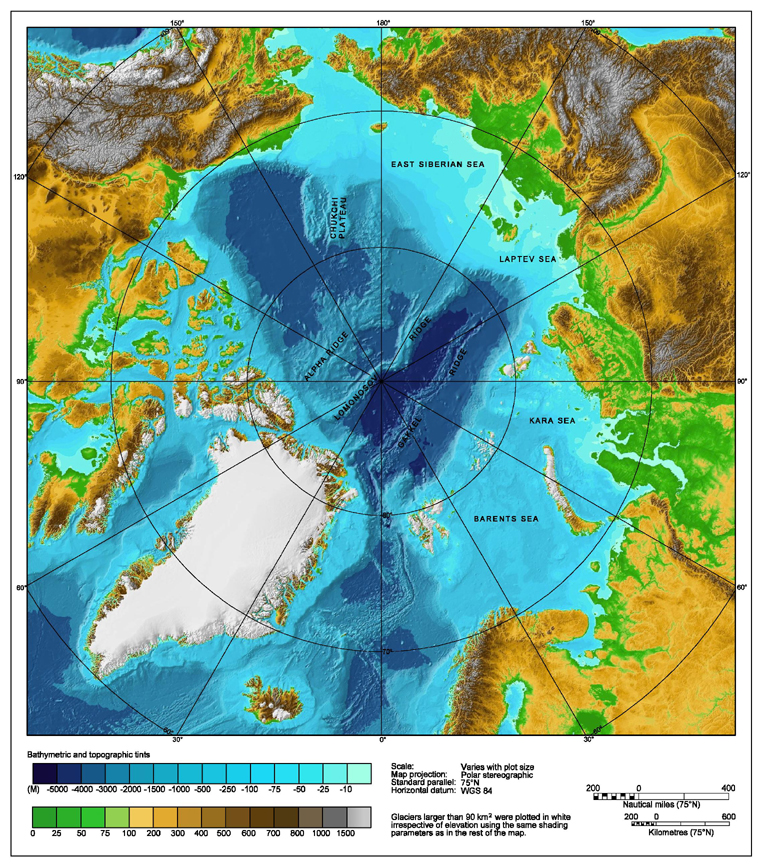
Although politically charged, the trip had a number of scientific aims. Soil and water samples of the seabed were taken during the mission. The mission could also help sort out whether or not the Lomonosov Ridge, which runs between Russia and Greenland and on which the disputed region lies, is actually part of, or connected to, the Russian continental shelf.

..........................

5. Planets Planets Planets

2007 saw the discovery of a spate of new extrasolar planets - planets orbiting other stars. Astronomers identified a small rocky world called "Gliese 581c" which had initially held hopes that it might be like the Earth - astronomers now believe it is more like Venus and has a run-away greenhouse effect. Astronomers also generated the first weather map of an extrasolar planet - HD 189733b - and also found evidence for the presence of water on the planet.

..........................

4. Erasing a Single Memory

Hollywood has long been comfortable with the idea of being able to erase a single memory in your head. It seems now that science may have caught up. Neuroscientist Joseph LeDoux from New York University has erased specific memories from the brains of rats. To conduct this experiement, LeDoux traumatised rats by playing a siren and a beep in association with an electric shock. In this way, they associated the sounds with the shock and "planted" this memory in their brains. When the team administered the enzyme inhibitor U0126 directly into the rats’ amygdala, a section of the brain associated with emotion, rats not given the drug were scared of the sounds, but those who were were no longer fearful of the beep. This suggests that the beep/shock memory had been erased - or perhaps blocked.

It is difficult to find conclusive proof here, as well, rats can't talk.

..........................

3. Robots Robots Robots

2007 was a big year for robots. The First Robot That Walks Like a Human was developed, the first robotic ankle was made, and robots learnt to help and deceive each other.

  • Until 2007, walking robots relied on heavy-duty computational power, calculating the angle of the knees and ankles every moment for each step. RunBot, developed by Florentin Wörgötter of the University of Göttingen, takes a simpler, more human approach by, rather than exerting continuous control over each step, it just falls forward and then reacts - like a human.
  • Conventional prosthetic ankle-foot combinations are just not as good as a natural step - until now. Researchers reported the first robotic ankle that adjusts to the user to the terrain.
  • Dario Floreano of the Laboratory of Intelligent Systems at the Swiss Federal Institute of Technology has found that robots can evolve to communicate - both truthfully and with deception. Floreano designed robots with light sensors, rings of blue light, and wheels. He then put them in ecosystems with “food sources” and “poison” that recharged or drained their batteries. Each of their "brains" had 30 software elements (genes) that determined how much they sensed light and what they did when they did. Initially, the robots just moved randomly when they sensed light, but in the next generation, Floreano recombined the genes of those that proved fittest (those that found the most food), and added some random changes - mutations. This was robot reproduction. Four different families ate, reproduced, and died, and by the 50th generation, the robots had learned to communicate. In 3 families, they lit up to alert the others when they’d found food or poison. In the 4th family, some robots however had evolved to light up to tell others that poison was food, while they took all the actual food for themselves. Other robots were heroes - signalling danger and sometimes dying to save others.
..........................

2. Dark Matter

Early 2007 saw the first map of the Dark Matter in the Universe produced. Dark Matter is a theoretical form of matter that can not be observed directly, but whose presence can be inferred from its gravitational effects on visible matter. Using the Hubble Space Telescope, scientists compiled a dark matter map of a tiny part of the sky - about two square degrees.

The map was published in the journal Nature and confirmed that galaxies form within enormous clouds of dark matter. In the early universe, it is thought that dark matter provided the gravitational scaffolding on which ordinary matter coalesced and grew into galaxies. Mapping it through its gravitation effects - as it does not emit or reflect electromagnetic waves you can't actually see it - is an enormous achievement.

..........................

1. Stem Cell Breakthroughs

And the top story.... 2007 saw two teams of scientists independently discover a method to turn ordinary human skin cells into stem cells with the same characteristics as those derived from human embryos. This could have truly revolutionary implications as it bi-passes nearly all the ethical issues that have prevented research on human embryonic stem cells. It may also allow scientists to make stem cells from someone's personal genetic make-up - in this way, they will not be rejected by their body if implanted or used to grow new organs. Shinya Yamanaka of Kyoto University and James Thomson from the University of Wisconsin have taken out this year's number one spot due to this marvellous discovery.

"Embryonic stem cells can divide forever, and there has never been good evidence for such cells in adults, but this new paper shows a method to make cells essentially identical to embryonic stem cells," said James Thomson. "This will change the ethical debate."

"We are now in a position to be able to generate patient- and disease-specific stem cells, without using human eggs or embryos," added Dr Yamanaka. "These cells should be useful in understanding disease mechanisms, searching for effective and safe drugs, and treating patients with cell therapy."

Research in this area opens up the possibility of curing degenerative and genetic disorders and such discoveries can not be understated.

............

Well, that's it for another year. Let me know if you agree or disagree.
You can listen to this show on the podcast here.

Tuesday, 7 August 2007

A very cold war

Russia has claimed one of the most inaccessible areas on Earth with a feat of magnificent science and engineering that tests international law, explores hitherto unexplored geography and territory, and asserts the Kremlin’s power in an old-fashioned land grab.

Two minisubmarines planted a titanium alloy Russian flag on the ocean surface, 4261 m under the Arctic Ocean surface at the North Pole. It is the first time the technical feat of reaching the North Pole sea floor in a manned craft has been achieved and is not only a sign of Russian strength, but a clear indication of the fact that Russia wants to claim the possibly resource rich area. The submersibles were named Mir-1 and Mir-2 – clearly Russia has a penchant for calling their scientific explorer craft Mir.

Although politically charged, the trip had a number of scientific aims. Soil and water samples of the seabed were taken during the mission. The mission could also help sort out whether or not the Lomonosov Ridge, which runs between Russia and Greenland and on which the disputed region lies, is actually part of, or connected to, the Russian continental shelf.

Under international law, out to 12 nautical miles, a coastal state is free to set laws, regulate any use, and use any resource. Out to 200 nautical miles, a coastal state has an Exclusive Economy Zone and has sole exploitation rights over all natural resources. If there exists a continent shelf beyond this, then the coastal state can claim exploitation rights out to that point.

This is where the debate lies – the North Pole sits nicely between, and off the continental shelves of, Greenland (Denmark), Russia, Alaska (USA), Canada and Norway. Russia wants to establish that the Lomonosov Ridge is an extension of its continental shelf. Indeed, the wording of the United Nationals Law of the Sea is not too clear and allows a country to claim jurisdiction if the geology of the seabed is similar to the nearby continental shelf.

Russia had a claim denied by the UN in 2001, as it appears the ridge is separated from Siberia by a trough. Denmark had their claim rejected for similar reasons. However, the Russian claim looks slightly stronger as the geology on each side of the trough is similar, and it appears that the trough was created by the seafloor moving apart – perhaps the Lomonosov Ridge was once part of Siberia. The 2001 decision did not so much reject the proposition, more that more research needs to be done. Norway also submitted a claim in 2006.

So why bother with the treacherous journey? This was a trip in which the submersibles could easily have missed on return the opening in the ice created by the team’s nuclear powered icebreaker.

The reason, as it so often is these days, is oil and energy. According to the US Geological Survey, around a quarter of the world’s oil reserves are locked up below the icecaps of the Arctic Ocean. In a world where oil could run out sometime in the not too distant future, and alternative energies are not yet solving the world’s energy demands, access to traditional energy sources is vital.

The Arctic floor is also home to massive unexploited gas fields. The Russian Shtokman field has an estimated reserve of 3,200 billion cubic meters of natural gas. Global warming is shrinking the ice that previously covered the surface, and the shrinking pool of global energy resources makes the extremely costly mission of salvaging these resources more profitable. The less ice there is, the easier it is to get at.

Added to the increased energy portfolio is the prospect of controlling a new Northwest Passage across the Arctic year-round.

Norway, Denmark and Canada are also attempting to establish their own sovereignty over the region, whilst the British Navy has increased Arctic patrols. Canadian and Danish scientists are currently mapping the north polar sea on two icebreakers, and Canada recently announced it would spend $7.4 billion Canadian to build up to eight armed ice-breaking naval ships to patrol its Arctic claim.

The Russian voyage is part of the ostensibly science research based Arktika 2007. The crew of MIR-1 comprised the pilot Anatoly Sagalevich, Soviet and Russian polar explorer Arthur Chilingarov, and Vladimir Gruzdev. The crew of MIR-2 comprised pilot Yevgeny Chernyaev of Russia, Mike McDowell of Australia and Frederik Paulsen of Sweden.

The MIR submersibles can dive to a maximum depth of 6000 meters. This makes them two of only five manned submersibles in the world that can dive deeper than 3000 m.

“Our mission is to remind the whole world that Russia is a great polar and research power,” said expedition leader Artur Chilingarov.

Anti-climatically, Gruzdev said:

“There is yellowish gravel down here. No creatures of the deep are visible.”

The mp3 for this podcast is here

Saturday, 23 June 2007

Short little video about Iceland

Here is the promised video from Iceland - a spectacular place that the video in my still camera, or the quick time in which I edited this together, does not do justice to.

You can watch the youtube video here:


If you can not see this, it is at this link:
http://uk.youtube.com/watch?v=BMivvyA8JIA

The mp4 for downloading in itunes is here

Tuesday, 19 June 2007

Iceland - The coolest place on Earth

There is a sure fire-way to cure yourself of boredom, joblessness and that nagging feeling that you should possibly be doing more with yourself and engaging with reality, and that's by doing the exact opposite of that and escaping reality.

And for an Australian, there really isn't anywhere further away you could go than Iceland - actually, from this cool little page, the exact opposite side of the Earth to Sydney is in the middle of the Atlantic - the opposite to Iceland is down near Antarctica below New Zealand - but my point remains... It has been a dream of mine to go to Iceland for many years - partially because of this escapism, but also because everything I had heard of this place suggested that I may like it - forward thinking, a little bit socialist, very clean (although ironically, because it only has around 300 000 people and a large aluminium industry, it has one of the largest carbon foot-prints per capita in the world), attractive and reserved Nordic people, stunningly beautiful and interesting scenery, as well as a bit of a science novelty. For me, I find it fascinating that of the 103 000 square kilometres of land that makes up Iceland, 11% is covered in glaciers, 64% in wasteland (cooled lava flows mainly, giving it a desolate "moon-like" appearance) and 2% by lakes, leaving only around 23% for vegetation. This fact, and its isolation, mean that there are relatively few people living in Iceland.

Perhaps it is a virtue of the amazing geothermal activity in the country, mainly due to its position straddling the Eurasian and American plates which are slowly moving apart, but Iceland has very progressive policies regarding energy usage. Perhaps it is also because if our worst fears of global warming come true, then it wont be long before the massive Icelandic glaciers melt (within 200 years our tour guide mentioned), which would not only be an environmental catastrophe in itself but could cause unknown flooding, avalanches and displacement for Icelanders.

The country is setting itself up to be "Carbon Neutral". Renewable energy makes up 72% of Iceland's energy portfolio, well ahead of the next best in the world, New Zealand, on 57%. The importation of coal stopped more than 50 years ago after the 2nd World War. The energy economy is based around hydroelectricity and geothermal power plants, and whilst it is fortunate that Iceland is in a position to take advantage of its geography for this purpose (perhaps things would be different if they were on top of oil like Norway or the Middle East, or Coal and Uranium like Australia - although Australia does also have a lot of sun for solar power...), at least it is aiming to be a world leader in other renewable sources. In a world where oil security is becoming more and more important, firms such as Icelandic New Energy Ltd are aiming to create the world's first hydrogen economy, with a number of buses in the country's capital Reykjavik already powered by the renewable source. The aim is eventually to power the country's large fishing fleet with Hydrogen, and this is quite difficult as many of the ships are quite old. As the technology is new, it is also quite expensive, and being a small, isolated country, it may be difficult for the Icelandic Hydrogen industry to compete internationally, and so therefore it will take a while before the costs reduce enough for Hydrogen power to be common place.

The government even offsets each of its overseas trips by planting trees to soak up the CO2 through the Iceland Carbon Fund. Can you imagine how many trees the Howard Government would have to plant to offset all the Prime Minister's trips to the UK to see the cricket at Lords? Imagine how many trees Tony Blair would have to plant to offset his recent farewell tour to Africa?

Iceland are aiming to minimise their carbon footprint through renewable energy developments, and through programs such as the "Green Flag Program" in which schools are awarded prizes for meeting their own environmental goals. One primary school on the Snaefellness peninsula - a day trip from the capital Reykjavik - built a dam to generate electricity to provide renewable power for local greenhouses. They also built windmills and captured solar energy. I think the most environmentally conscious thing that my primary school did was plant a couple of trees in a new garden - but this was after it lost half of its area for a new motorway.

87% of Iceland's heating comes from geothermal energy, and the exportation of geothermal know-how is one of the largest ways that Iceland contributes to foreign aid. The slight smell of sulphur in the bathrooms is the only downside.

One of the really fascinating developments in Iceland in recent times has been the interest Internet giants such as Yahoo! and Google have shown in moving server farms to the country, due to the fact that the energy is cheap and renewable. Server farms use up enormous amounts of energy, mostly because the computers consume ridiculously large quantities for cooling. This is a real problem, as if the servers go down, this has the potential to produce catastrophic results for world business and commerce. With the world linked up through the Internet, there would be no problem locating server farms in Iceland, although a new submarine cable will need to be laid. The fact that much of the land is not occupied also helps. This is being seen by locals as a much more environmentally friendly way of making money and creating jobs compared to the aluminium industry which currently generates much of Iceland's wealth and creates the surprising effect that per capita, Iceland is one of the world's largest carbon emitters.

Iceland was not always so forward thinking. Studies have shown that at the time of settlement, around 1000 years ago, the country was 30% covered in forest. These days, due to erosion, farming, grazing and other human uses, the figure it closer to 1%. However, around 1 million trees are being planted each year through the Icelandic Forestry Commission.

Another really interesting feature of the landscape is the presence of geysers - the English word actually comes from Geysir - an erupting spring in Iceland. A geyser is a hot spring that erupts periodically, shooting a column of hot water and steam into the air. About 1,000 exist worldwide, and they are formed by surface water gradually seeping down through the ground until it meets rock heated by magma. The heated water then rises back toward the surface. As the geyser fills, the water at the top of where the water is reaching the surface cools down and presses down on the hotter water beneath. This superheats the water at the bottom due to the pressure from the top, and eventually temperatures near the bottom of the geyser rise to a point where boiling begins and the steam rises explosively to the top, giving us the geyser show.

It is not quite as cold as you might expect for somewhere very high up in the North. The North Atlantic Current keeps temperatures high. When I was there, the sun was going down at around 2 am and rising again at 4 am, and I had the very strange experience of buying ice-cream at midnight with the sun still out! I have some Iceland video that I will put up the site once it has all been edited.

OK, that's about it for now on Iceland, but I am hoping to do some more stories on this fascinating country and will post some video soon. Something for a future story is the absolutely fascinating island of Surtsey, an island that was formed when a volcano off the coast of Iceland and 130 metres below sea-level started to erupt. We might also tackle the hot springs, Gulfoss waterfall, I'm sure we'll think of something!

Many of my photos of Iceland can be found here

The podcast can be found here and the individual episode here

Monday, 5 March 2007

The Beer Drinking Scientists Podcast is now Official!


Originally uploaded by westius.
The Beer Drinking Scientists is now a stand-alone podcast, with a new format from our earlier short pilots (episodes 1, 2 and 3) and its own new website (http://bds.podbean.com).

Join Darren Osborne and myself for a drink and a chat as we take a look at the science issues affecting us all. In each episode, we will have a chat to the locals and see how science influences them, their opinions on the scientific topics of the day and how these topics influence us culturally, politically, and any other relevant way of which you can think.

In the first episode, we tackle the biggest scientific topic at the moment - Climate Change. What it is, who’s responsible and why we should care.

You can subscribe to the podcast here (or add http://bds.podbean.com/feed to itunes or your feed reader). The first episode can be directly downloaded here.

You can subscribe directly through itunes here.

Each podcast episode will come out roughly every 4-6 weeks, be about 30 minutes long and contain interviews, news and views, beer glass chinking, informed and not-so informed opinion and plenty of good fun. You can contact us at beerdrinkingscientists@gmail.com.

Friday, 29 December 2006

The Beer Drinking Scientists - Promo 1

Join myself and Darren Osborne as we bring you a new series called The Beer Drinking Scientists. In these podcasts, Darren and myself talk all things beer and science topics of the day.

In this very first episode, we visit the James Squires Brew House in Darling Harbour, Sydney, sample the local ales, give them a good discussion and rating, before tackling the scientific topic of how humans perceive the temperature.

The theory behind these podcasts is, as Darren says, that the beer might kill off some of the slower brain cells and allow the smarter ones to get down to business on the weightier scientific topics. And, we have a great time talking science in a social context.

Enjoy - listen to the show directly here.

Tuesday, 4 April 2006

Global Warming

What is Global Warming? Are humans creating it and is there anything we can do about it?

Listen to this show here