Wednesday, 10 March 2010

Geek Pop 2010

This year’s Geek Pop festival launches on 12 March. Previously an online-only event, the festival is in its third year and is now adding live music to the programme, with gigs in Bristol and London.

Geek Pop is a celebration of science-inspired music and geek culture, featuring artists from around the globe. More than 30 artists are signed up to perform across its virtual and physical stages in 2010, with music from every set available to download for free.

Sponsored by Computer Geeks and the British Science Association, the Bristol live gig at Cube Microplex will kick off proceedings on 11 March, just ahead of the virtual launch. Geek Pop crew member Jim Bell is organising the Bristol event. “It’s been a huge undertaking this year,” he says. “But we’ve got some great geeky acts booked and there’s no doubt that adding live gigs to the programme has really helped get the word around.”

Many artists involved this year have been writing and recording new material specifically for the festival. Canadian hip-hop artist Baba Brinkman, known for his unique fusion of rap and evolution (or all things...), will be unveiling his rationalist anthem “Off That” at Geek Pop. And returning for the second year in a row, UK-based Spirit of Play will be performing brand new and specially tailored science songs at both the online event and London gig at The Miller on 18 March.

According to Festival Organiser, Hayley Birch, the festival has evolved rapidly since 2008. “In the first year, we only had about ten artists and none of the music was specifically written for us,” she says. “It’s great to see we’re establishing ourselves as an annual event and especially that we’re giving creative inspiration to musicians to make music about science.”

Previous years saw musicians perform online across the Tetrahedron and Reproductive stages, and Tesla Tent. This year, organisers commissioned Bristol-based illustrator Sam Church to re-design the site and have added another stage, The Comical Flask, where acts will be entertaining audiences with nerdy, science-based comedy.

From 12 March, festival-goers can experience the virtual festival from the comfort of their own homes by typing visiting the geekpop homepage. Further details of the Bristol and London live gigs, including how to buy tickets, are available. Given March 14th is pi day, I think the festival's timing is apt!

I spoke to Hayley Birch in 2008 about their inaugural festival - check out that interview in Ep 94: The Geek Pop Virtual Music Festival.


Tuesday, 9 March 2010

Correlation of the Week: Cocaine overdoses and the weather

Next time you head out for a big, expensive, lairy night out, check the temperature.

Amy Bohnert, Marta Prescott, David Vlahov, Kenneth Tardiff and Sandro Galea, in their paper Ambient temperature and risk of death from accidental drug overdose in New York City, 1990-2006, published in the journal Addiction, have found that there is a significant correlation between deaths due to accidental cocaine overdose and the temperature.

Using New York City mortality data from 1990 to 2006, and temperature data from the National Oceanic and Atmospheric Association, the researchers found that accidental overdose deaths due to cocaine in NYC rose significantly when the average weekly temperature passed 24 degrees Celsius.

The study showed no difference in the number of drug overdoses when the average weekly temperature was between -10 and 24 degrees Celsius. However, above 24 degrees Celsius, there were 0.25 more drug overdoses per 1,000,000 residents per week for every two degrees increase.  For New York City, this means that at least two more people per week will die of a drug overdose for each two degree rise in temperature above 24 degrees Celsius. There were approximately 7 weeks a year between 1990 and 2006 that had an average weekly temperature of 24 or above in New York City.

Cocaine-related overdose deaths increase as the ambient temperature rises because cocaine increases the core body temperature, impairs the cardiovascular system’s ability to cool the body, and decreases the sense of heat-related discomfort that ordinarily motivates people to avoid becoming overheated. Cocaine users who become overheated (hyperthermic) can overdose on lower amounts of cocaine because their bodies are under more stress.

Thursday, 4 March 2010

Ep 123: Remote Medicine

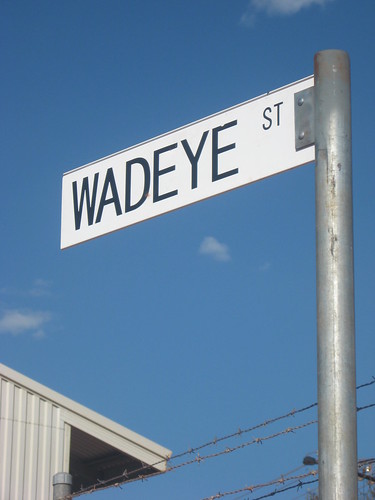
Wadeye is a remote town in Australia's Northern Territory. It has a population of roughly 2500 people, 2200 of whom are Indigenous Australians, and as such is one of Australia's largest indigenous communities. The town is over 200 km southwest of Darwin, and during the wet season the only way in and out of the town is by air, as the roads are completely cut off.
Uploaded onto flickr by sarah_brooke00
The town has a number of social issues, with gang violence making international headlines in 2006. On average there are 16 people per house and the median age at death is an astoundingly low 46 years. This compares to the medium age at death of a non-indigenous person in the Northern Territory of over 70 years, and over 80 in other states (data here).

Wadeye's remoteness, social issues and cultural differences present a considerable challenge to the provision of quality health care. There is only one general practitioner in town with serious cases referred to Darwin. Victoria Bond (who you may have heard as a regular contributor to the Diffusion Science Radio Show) has taken a posting in Wadeye as part of her medical degree. I chatted to Victoria about the unique medical issues that have arisen in Wadeye, and what it's like as an American student in such a remote place.

To listen to this show, tune in here (or press play below):

Wednesday, 24 February 2010

The Open Laboratory 2009 - The best science blog posts of the past year

The Open Laboratory 2009, the best writing on science blogs throughout the past year, has now been published. You can buy the book online in PDF or soft-cover format.

I was pretty chuffed to have one of my articles, A sorry saga - the crumbling cookie, make the final list. This was an article that looked into the misreporting (actually, simply horrible reporting) of science in the UK media, and the notion that apparently biscuit-eating is an extreme sport in the UK. It examined what was a very good example of how not to report science in the newspaper.

The 2009 anthology was edited by SciCurious and you can browse the full list of articles that made the final cut, or if you are up for some heavy reading, have a look at the long list of nominated articles.

This is the second year I've been in Open Labs - in The Open Laboratory 2008, my post for Plus Magazine called United Kingdom - Nil Points about the maths of the Eurovision Song Contest made the cut. Eurovision is such a wonderful mix of maths, pop culture, politics and bad 80s music. I love it!

You can buy previous versions from lulu - 2006, 2007 and 2008.

Wednesday, 17 February 2010

Why I didn't become an actor

This video from 1995 aptly portrays why I followed science and I never went into acting. Not the most sciencey post I've put up recently, but a bit of fun. We made this video about the crime fighters Brad and VD when in Year 11. Those involved have ended up being quite creative - director Nick as a digital producer, and actor Scott as a designer. A good look back on the days of analogue tape. We were clearly influenced by Get Smart.


Thanks to Jason for digitising the video - or should I say, digitally remastering it. Would love to see any embarrassing high school videos you might have.

Saturday, 13 February 2010

Ep 122: Science of Superheroes - Wolverine (Part 2)

This is the second part of our series on the science of Wolverine - specifically, how can we create Wolverine in the lab? Join Dr Boob and myself as we journey through Wolverine's characteristics and how they may be recreated in a human. Read more on Wolverine in part 1 of this series. To listen to this show, tune in here (or press play below):


Specifically in this episode, we tackle the topics of:
  1. What would happen to your bones if you completely covered them with metal? Bones are living parts of your body and make red blood cells, platelets and bone marrow - among other things - that are vital for life.
  2. Would a lack of platelets reduce Wolverine's ability to heal?
  3. Wolverine is likely to be on a cocktail of drugs, including anabolic steroids to beef him up, immunosuppressants so his body doesn't reject the metal coating on his bones, and various drugs to supply red blood cells, bone marrow and platelets.
  4. Could we really harness the healing powers of the sea cucumber for Wolverine, and would they work quickly enough?
  5. Are carrots enough to improve his sight?
  6. What metal could we use to coat his bones? It needs to be able to be injected as a liquid and then harden at body temperature. Most steels have melting points over 1000 degrees Celcius, and this would cause terrible trauma to his body. Dr Boob's suggestion was CerroLOW117, which is 44.7% Bismuth, 22.6% Lead, 8.3% Tin, 5.3% Cadmium and 19.1% Indium. CerroLOW117 has a melting point of 47 degrees Celcius, however lead and cadmium both accumulate in the body and have adverse health effects. It is highly likely CerroLOW117 would not be strong enough to help Wolverine anyway.
  7. And what is a phlebotomist?
For more on superheroes, check out our recurring science of superheroes series. And for more from Dr Boob, check out Chris's other contributions.

Wednesday, 10 February 2010

Tracking Mouse Clicks

Here is another funky app to add some interest to your work day. Anatoliy Zenkov has developed a tool (Mac and PC) to track your mouse pointer during the day. Simply open it up and let it run in the background for as long as you like. 8 hours of mouse tracks from my day today look like this:

My mouse tracks


The big dots are times when the mouse did not move - for example, the bottom right dot is my lunch break. I've added some extra notes to the image on flickr to explain these dots. My movements around the taskbar are clear, as are mouse movements to the top left - I was using Excel for most of the day, and many of the functions I used were located there, as were the open / close file options. I found this tool on FlowingData. I'd be interested to see your tracks.

Monday, 1 February 2010

Ep 121: Science of Superheroes - Wolverine (Part 1)

Wolverine is probably the best known of the X-Men. Commonly known as Logan, Wolverine is a mutant who has animal-keen senses, super bodily strength, retracting claws, and the ability to almost instantly heal himself from injury. And thanks to some evil scientists, he has the near indestructible (and fictional) metal alloy adamantium fused to his bones, meaning that his claws and skeleton are almost unbreakable.

In the second episode of our regular series on the science of superheroes, biochemist Dr Chris Pettigrew (aka Dr Boob) and I discuss where in nature Wolverine's powers can be found, and how we might scientifically create Wolverine in the lab. This is the first of a 2-part show on Wolverine - see below for a brief description of some of the science discussed. Our first superheroes episode was on the science of Wolverine's fellow X-man, and sometime love interest, Mystique.

To listen to this show, tune in here (or press play below):


The name Wolverine comes from the Wolverine animal, which lives in isolated northern areas such as the arctic and alpine regions of Alaska. It is a stocky and strong animal that is very strong for its size and has been known to kill prey as large as moose. The wolverine is not actually a bear or a dog, but rather a mustelid, or in common parlance, a weasel.

While many of Wolverine's powers (such as strength and hearing) could come from its namesake mustelid, if we were to attempt to create Wolverine in the lab, we must first turn to the ocean:

Healing ability:

Sea Cucumbers are the champions of organ regrowth. All animals possess some kind of tissue repair mechanism, however the sea cucumber belongs to a group of animals that can regrow lost limbs - salamandas and some starfish also have this ability. The repair process involves cells called morula cells, which move to the point of injury. Although all animals have wound repair processes, not all can regenerate lost body parts. With the sea cucumber, the same processes that repair its injuries also repair limbs and internal organs, and this opens up the possibility that we could one day discover how to repair our own wounds and perhaps how to regenerate body parts. But as Dr Boob says, we are quite some way off from instant healing ability: "The odd bullet to the head won't be able to be dealt with."

Retractable Claws:

There is a remarkable analogue found in nature for Wolverine's retractable claws. University of Harvard biologists have determined that some African frogs have the ability to puncture their own skin with sharp bones in their toes. These bones then act as claws to attack predators. The defence mechanism was discovered by David C. Blackburn, James Hanken, and Farish A. Jenkins, Jr. Blackburn said, "It's surprising enough to find a frog with claws. The fact that those claws work by cutting through the skin of the frogs' feet is even more astonishing. These are the only vertebrate claws known to pierce their way to functionality."

Blackburn discovered the frog and its defences when he was conducting fieldwork in Cameroon and one frog he was studying scratched him. He found 11 frog species in the genera Astylosternus, Trichobatracus and Scotobleps who had this peculiar ability. Read more at Project Frog.

Smell, sight, hearing

Whilst there are obvious candidates in nature that have heightened sight, smell and hearing abilities, recent studies suggest that human and dog olfactory receptor genes evolved from a common mammalian ancestor, and as such Dr Boob thinks that mimicking the smelling ability of dogs could be quite "easy." Dogs have an olfactory sense approximately a hundred thousand to a million times more acute than a human's. Scenthounds can smell one- to ten-million times more acutely than a human, and Bloodhounds, ten- to one-hundred-million times more.

To hear more on the science of Wolverine, tune in here (or press play below):


Part 2 of this series on the science of Wolverine will be aired over the next few weeks. The song A Russian Peter was used in the background of this podcast, with permission from Ioda Promonet. Buy the full London Philharmonic Orchestra Peter and the Wolf CD, or download individual songs as mp3s, from Amazon here.

Monday, 25 January 2010

Keyboard cat tops the charts

Internet memes are fascinating. The term meme refers to ideas and cultural phenomena that spread through society through imitation. The term was first used by Richard Dawkins in his book The Selfish Gene to discuss how evolution could work with cultural phenomena such as beliefs, fashion and music. He argues that memes are cultural analogues to genes, in that they self-replicate, mutate, can be inherited and respond to selective pressure.

The concept of Internet memes relates to this original definition of meme, and refers to the spread of ideas across the internet. Colloquially, internet memes are essentially in-jokes. And like any good in-joke, the meme will often start out as not particularly funny, but after you have seen it 1000 times, it takes on a life of its own, often evolving to something completely unpredictable. Lolcats is an example of a meme that I don't think is all that funny - however, I am quite partial to Rick Rolling, and I Like Turtles is awesome!

I was recently putting together my annual list of most played songs on my ipod for the last year when I realised that I am clearly susceptible to internet memes. Not only was the list Rick Rolled (with no less than three Rick Astley songs) but the top song was one I learnt of through my favourite internet meme, Keyboard Cat. Keyboard Cat consists of 1984 footage of "Fatso" the cat playing the keyboard, and was uploaded to youtube as charlie schmidt's "cool cat". The gag is to append footage of the cat to video of people doing stupid things (falling over, getting hit in the head etc.) - the cat is essentially playing the person off stage, much like getting the hook in the days of vaudeville.

One of the best Keyboard Cat videos - and probably my favourite video ever on youtube - has Keyboard Cat with Hall and Oates playing their song You Make My Dreams. The video starts with a segment of Desperate Lives, a 1982 movie starring Helen Hunt showing the effects of drug use - Keyboard Cat plays off the overdosing Hunt as a cautionary tale against drug use. Then the music video starts, and this is when I discovered the song - check it out!


2009 saw a minor comeback for the song, and even though I have no evidence to back this up, I am going to put it out there that Keyboard Cat is the reason for its renewed success. Here's You Make My Dreams from the movie (500) Days of Summer - video here.


And for a complete understanding of Keyboard Cat, check out the excellent Know your Meme series of videos.

Sunday, 17 January 2010

Ep 120: Correlation of the Week: Housework and Sex

There's nothing quite like pulling on the rubber gloves, splashing each other with dirty dish-water and then reaching for the vacuum cleaner with the adjustable nozzle to get you in mood for love.

The first Correlation of the Week for 2010 is awarded to Constance Gager, from Montclair State University, and Scott Yabiku, from Arizona State University, who discovered that wives and husbands who spend more hours in housework and paid work report more frequent sex. They theorise that women and men who "work hard" also "play hard."

To listen to this show, tune in here (or press play below):


The report, Who Has the Time? The Relationship Between Household Labor Time and Sexual Frequency, published in the Journal of Family Issues, documented a survey of 6,877 married couples which showed that couples who devote lots of time to work and chores still make time for sex. The results contradict the idea that time spent on household chores reduces the opportunity for sex - worth remembering next time this particular excuse is used...

The authors controlled the results for "gender ideology" - that is, they controlled for the various viewpoints people have on their relationships. For example, a wife with a 1950s mentality might regard doing lots of housework and having frequent sex as part of her marital responsibilities. The housework-sex link was found to exist no matter what views each member held.

Housework was defined as:
  • cleaning, 
  • preparing meals, 
  • washing dishes, 
  • washing and ironing clothes, 
  • driving family members around, 
  • shopping, 
  • yard work, 
  • maintaining cars,
  • paying bills. 
Husbands spent on average 23.4 hours per week performing these household tasks, whilst wives spent 41.8 hours a week. Husbands spent an average 33.8 hours a week working, compared with 19.7 hours for wives. This means that the wives in the study spent a total of 61.5 hours a week either working at their job or at home, compared to 57.2 for their husbands. And just so you know how you stack up, the couples in the study reported having sex 82.7 times a year (1.6 times per week). Sexual frequency went down with age and the length of the relationship. Protestants had more sex than the Catholics - presumably the Catholics had more unprotected sex.... Having small children reduced frequency but once the kids were older, the frequency went back up.

Couples who spent more time in paid work also reported more sex. This led the authors to conclude that "individuals may be achievers across multiple spheres." They theorise that as life gets busier and time gets tighter, some couples can successfully balance their time commitments to make time for sex.

So there you have it, couples who make time to do their household chores also make time for loving. More at The Sydney Morning Herald and The Wall Street Journal. And for more weird and wonderful correlations, see our Correlation of the Week tag.

Monday, 11 January 2010

Nano Snowman

In 2009 we had Nano-teddy, this year it's Nano Snowman!

David Cox from the National Physical Laboratory in the UK has built the world's smallest snowman - perhaps because he was trapped inside by the winter blizzards with nothing much else to do...

The snowman is 10 µm across, which is roughly 1/5th the width of a human hair. Its head and body are made from two tin beads. The eyes and smile were carved from the tin with a focused ion beam, and the nose, which is less than 1 µm across, is a deposited blob of platinum.

Hope all our UK and European readers are enjoying the snow!

Wednesday, 23 December 2009

Ode to Pythagorus

Ode to PythagorusWhen cleaning up our spare room, I found this poem I wrote in year 9 maths class. I presume it was a boring class. Looks like nerdiness has early on-set...

Ode to Pythagorus

O Pythagorus, I love thee
Let me count the ways
For your beauty and your genius
I shall love for all the days

Your mind and your body
Have endeared you to me
That a squared plus b squared
Is always nothing but squared c

For you have brought men off the street
To give up the smokes and drink
And to go home of a night
And do homework and think

But you too have your hidden life
And we have seen the light
That you were a fraud
And a clumsy transvestite

But these are your qualities
Qualities that attract us
Even though your name was Betty
And not Pythagorus

Merry Christmas from the Mr (and soon Mrs) Science Show!

Christmas is a time for over-indulgence. But has Santa gone too far?

As Christmas is only two sleeps away, have a listen back to last year's Christmas special on Santa, the fat, diabetic substance abuser (Episode 98). Santa Claus is a ticking time-bomb. Not only does he eat copious amounts of sugar and drink gallons of beer, he is also at risk of altitude sickness, deep-vein thrombosis, jet-lag, zoonotic diseases from exposure to wild reindeer and countless other problems associated with lack of sleep and poor diet. Not to mention all the concerns associated with smoking.

Australian science writer Bianca Nogrady assembled a crack team of health experts to look into the state of the big man, and the prognosis wasn't good. You can read more about the findings of the Santa-team in Bianca's original article for Australian Doctor, Health alert for Christmas visitor.

Listen to this show here:


Continuing the Christmas theme, listen in to some reindeer facts and the problems Santa is having at the North Pole (Episode 95). Due to global warming, and the global financial crisis, in 2008 Santa had to put his North Pole residence up for auction and is currently looking for a new place in Lapland.

Listen to this show here:


Me and EugeMy Christmas treat came early - soon there will be a Mrs Science - thanks Euge for saying yes! One of the conditions, however, is that this moustache never returns...

Thursday, 10 December 2009

Ep 119: Alien Vox Pop and (re)introducing The Beer Drinking Scientists

The Beer Drinking Scientists are back! It's been two and a half years since our last episode, but Darren Osborne, editor of ABC Science Online, and I have got back together over a beer in Sydney to chat about the pressing scientific issues of the day - in this case, alien life. We chat about the latest scientific research and discoveries in areas such as astrobiology, SETI and exoplanets, and also to others in pub to hear their opinions.

In this episode, you can hear the vox pop from the BDS episode - including from one person who swears she has seen not only one UFO, but a UFO release a baby-craft, and another who thinks that Jesus might be an alien...

For the full episode, get over to The Beer Drinking Scientists homepage. If you have the iphone app, you will also get this BDS ep as bonus audio. To bring some sanity to the proceedings, Marc chatted to Dr Carol Oliver from the Australian Centre for Astrobiology before the show and clips from this interview are played throughout. For the full interview with Carol, see the podcast Ep 118: Astrobiology and the search for extraterrestrial life.

We'd love to hear ideas for future BDS episodes, so feel free to leave comments, or let us know on twitter - @bdscientists. We'll release new shows about every 2 months.

Tune in to the podcast here (or press play below):

Monday, 30 November 2009

A couple of maths videos

In the last two weeks, I've been sent the following two mathematics videos - one serious, one not so much.

Can you conceptualise 10 dimensions? This could help.


Ever wondered what maths is really about? This is hilarious (well I think so...)

Friday, 20 November 2009

Ep 118: Astrobiology and the search for extraterrestrial life

pictures of alien on hillAstrobiology is a fascinating and complex field of science. It is the study of the origin, evolution, distribution, and future of life in the universe, and is a relatively new field of science incorporating astronomy, biology, geology, palaeontology, physics, mathematics and other disciplines. It is even more fascinating given that we have never actually discovered life anywhere else in the universe!

Dr Carol Oliver is a science communication researcher working for the Australian Centre for Astrobioligy, whose key goals include contributing to the understanding of the orgin of life on Earth and to set an Australian life-seeking instrument on the surface of Mars.

I spoke to Carol about astrobiology and the SETI Project - the search for extraterrestrial life. Tune in to the podcast here (or press play below):


We covered a number of topics in our chat including:
  • How does SETI actually look for extraterrestrial life?
    SETI searches for electromagnetic signals from civilizations elsewhere in the universe - but where should they look? It turns out there is a handy hole in the electromagnetic spectrum coined The Water Hole - a band of radio frequencies between 1420 MHz and 1640 MHz. This is the band between the hydrogen line and the strongest hydroxyl spectral line, and is a very quiet region - there is little radio noise from space between these frequencies. It is theorised that alien communications could be found in this range because of its quietness and also because the combination of hydrogen and hydroxyl yields water, something considered vital for life. It is therefore a likely place for other life, which needs water to survive, to try and communicate. 
  • The Fermi Paradox - The Fermi paradox asks the question, if there are other civilisations in the universe, why haven't we seen any evidence of their presence?
  • Where is the best candidate for life in our Solar System? Is it Mars (more likely for microbial life) or perhaps a moon of Jupiter, like Europa? Was there life on Mars at any stage of its history?
  • The concept of panspermia - that life on Earth may have originated elsewhere in the universe before coming to Earth, perhaps on an asteroid;
  • The Kepler mission - this mission uses a space telescope to look for Earth-like planets and was launched in March 2009;
  • The Drake equation - can we predict whether there are other civilisations out there using maths?
You can participate in the search for extraterrestrial life in the SETI@home project. In 1995, David Gedye proposed analysing radio signals from space using a virtual supercomputer composed of large numbers of Internet-connected computers - this is known these days as grid computing. The idea is to use the combination of many networked computers rather than a single supercomputer, and because of the vastness of space, the width of the electromagnetic spectrum and the fine resolution required, there is an awful lot of data to analyse! You can download the software needed at the SETI@home homepage.

Tune in to the podcast here (or press play below):

Thursday, 19 November 2009

Swimming with Whales - video from Tonga

A few months back, I spoke to Scott Portelli about his experiences diving with whales in Tonga - see Ep 109: Tongan blowholes and whales. Scott has recently returned from Tonga, and took from breathtaking footage of the whales. Enjoy the video below.

Saturday, 31 October 2009

Ep 117: Science of Superheroes - Mystique (X-men)

Ever wondered whether it is scientifically possible to become a superhero?

In a new series of podcasts, Dr Christopher Pettigrew (aka Dr Boob*) and I are going to tackle this question. Chris is a post-doctoral researcher at the Department of Biochemistry in University College Cork, and in these podcast episodes - which we will publish more than a few times a year - we will uncover whether it is possible now to possess the powers of superheroes, and if we can't, whether in the near future we could engineer ourselves to become superheroes.

The first superhero we are tackling is Mystique from X-Men. X-men get their powers from an "X gene" that normal humans do not possess, and Mystique is a shapeshifter who naturally looks blue. Actress Rebecca Romijn portrayed Mystique in the X-Men films - I know I clearly remember the blue body-paint...

Mystique has a number of powers including:
  • The ability to change skin colour;
  • The ability to shape-shift - that is, change form;
  • She can impersonate other voices;
  • She can rapidly grow her hair.
Within nature, chameleons are able to change their skin colour to match their environment. There are also technologies under current development, such as metamaterials, that can be used to make something look invisible. Through a combination of genetic manipulation to activate melanocytes (and possibly chromatophores), and the use of surface coatings, it is not unforeseeable that we could develop human chameleons. The difficulty here lies in whether we can make a skin colour change a conscious decision - how can you wire up the body such that skin colour responds your thoughts?

The challenge of being able to impersonate another person's voice should be easy enough to conquer in the near future through a combination of electronics and simple mimicry. It is also possible to foresee rapid hair growth - this could be accomplished by rapid protein synthesis, such as in spider webs.

The biggest difficulty comes with the shape-shifting - how can one change their 3D shape?

Tune in to the podcast here (or press play below) to discover what scientific techniques we came up with to tackle the problem of scientifically engineering Mystique:


A few extra notes to explain some of the random comments in the show:
Let us know your thoughts on how we could scientifically engineer Mystique. We rated this a 7.5 out of 10 possibly for the next 200 years - if someone really wanted to, notwithstanding the ethical concerns along the way.

Also let us know which superheroes you would be interested in us tackling.

* From here on in, Chris will be referred to as Dr Boob - this nickname stems from the fact that Chris's PhD and some of his post-doctoral work has been into the study of breast cancer - yes, someone who is actually changing the world!

Monday, 19 October 2009

Ep 116: Terence Tao and Prime Numbers

Terence Tao is a Professor at the Department of Mathematics, UCLA and one of Australia's most acclaimed mathematicians. Indeed, he is arguably the world's greatest living mathematician. In 2006, he was awarded a Fields Medal, which is the top prize a mathematician can win, and at 24 became the youngest ever full professor at UCLA.

I recently went to Tao's Clay–Mahler Lecturer at UNSW, which was a fascinating look at prime numbers. I managed to grab Terence for a quick chat. Listen to this podcast here:


Primes are integers that can only be divided by themselves and one. For example, the number 10 can be divided by 1, 2, 5 and 10 - whilst the number 11 can only be divided 1 and 11. The first few primes are:

2, 3, 5, 7, 11, 13, 17, 19, 23, 29, 31, 37, 41, 43, 47, 53 ....

One of the interesting things about the primes is that there is no known formula yielding all of them - you can't simply plug a few numbers into a formula to generate a list of the primes. However, on a large scale, their distribution can be modelled. The primes behave as if they are distributed pseudorandomly - see the picture on the right. Each dot in this Ulam spiral represents a prime number - you start in the middle, and wind outwards like a spiral - each dot is a prime, whilst empty space is a non-prime. Whilst you can see various patterns, nothing is predictable.

The prime number theorem says that the probability of a given number n being prime is inversely proportional to its logarithm. Euclid proved that there are infinitely many prime numbers way back in 300BC - see Euclid's Theorem for more. The current largest known prime was discovered in 2008 by the distributed computing project Great Internet Mersenne Prime Search and has 12,978,189 digits:
243,112,609 − 1.
Primes are very important for public-key cryptography - that is, the way your credit card numbers are encrypted in online transactions. The cryptography makes use of the fact that is difficult to factorise large numbers into their prime factors, whilst it is comparatively easy to multiply two large primes together. No efficient integer factorisation algorithm is currently known - in 2005 a 193-digit number was factorised, but it took 5 months.

Terence Tao, along with Ben Green, proved that the sequence of prime numbers contains arbitrarily long arithmetic progressions - this is the Green-Tao theorem. What this means is that for any number k, there is an arithmetic progression of primes k long. An arithmetic progression is one in which the difference between two numbers in the progression is the same. For example, the series 2, 4, 6, 8, 10... is an arithmetic progression with common difference 2. Green and Tao proved that such sequences exist within the primes for any length of series you want. For example, the series 3, 7, 11 is a prime sequence of length 3 with common difference 4. The series 3, 5, 7 is length 3 with common difference 2. The current record is a series of 25 primes.

I have just finished reading the excellent book The Music of the Primes by British author Marcus du Sautoy - I highly recommend it. It details the story of the Riemann hypothesis which is considered by many to be the most important unresolved problem in mathematics. A solution to the Riemann hypothesis could make an immense contribution to our understanding of the distribution of prime numbers. You certainly don't need to be a maths geek to understand this book - it is a great historical tale. You can buy the book from Amazon here.

I chatted to Terence briefly after his talk, but being the amateur journalist I am, my recorder ran out of batteries! Not to fear, I have added an interview Terence did with Australia radio station Triple J's current affair program Hack - this interview has been reproduced with the permission of the executive producer, best brother James West - it's nice to have a proper professional journo in the family! The interviewer is Kate O'Toole. Listen to this podcast here:


God may not play dice with the universe, but something strange is going on with the prime numbers - Paul Erdos

Friday, 16 October 2009

Blog Action Day 2009 - Climate Change

October 15 is Blog Action Day 2009 and this year's topic is Climate Change. The idea is to raise awareness of the topic, so I thought I'd get in on the act - it is still October 15 in some parts of the world...

Climate Change is arguably our most pressing human concern. If you are interested in what it is, who’s responsible and why we should care, then an easy way to enter the debate is to have a listen to our 2007 Beer Drinking Scientists episode on the topic. Grab the mp3 here, or listen below:


We recorded this in 2007 over a beer or three, and so some of the more recent discoveries and insights are not included. In the Australian context, John Howard was the Prime Minister and we hadn't signed the Kyoto Protocol. The other Beer Drinking Scientist is the irrepressible Darren Osborne. We took a break from these podcasts when I went overseas and Darren started to breed, but we have plans for the future, stay tuned...

We have talked about climate change a number of times on this blog and on the podcast. To see all our climate change articles, check out the climate change tag. Interesting articles include:
The importance of climate change to humans and to Earth can not be underestimated. Climate Change also featured in our top 10 science stories of 2006, 2007 and 2008. If you have any thoughts on the topic, feel free to share them or participate in Blog Action Day.