Wednesday, 27 October 2010

The Piffle Paradox - or how pure mathematicians have fun


Ever wondered how pure mathematicians have fun? The following is from the 1967 paper Modern Research in Mathematics by A. K. Austin, from the Department of Pure Mathematics at the University of Sheffield. It's a send-up, by the way...

A note on piffles by A. B. Smith

A. C. Jones in his paper "A Note on the Theory of Boffles," Proceedings of the National Society, 13, first defined a Biffle to be a non-definite Boffle and asked if every Biffle was reducible.

C. D. Brown in "On a paper by A. C. Jones," Biffle, 24, answered in part this question by defining a Wuffle to be a reducible Biffle and he was then able to show that all Wuffles were reducible.

H. Green, P. Smith, and D. Jones in their review of Brown’s paper, "Wuffle Review, 48", suggested the name Woffle for any Wuffle other than the non-trivial Wuffle and conjectured that the total number of Woffles would be at least as great as the number so far known to exist. They asked if this conjecture was the strongest possible.

T. Brown, "A collection of 250 papers on Woffle Theory dedicated to R. S. Green on his 23rd Birthday" defined a Piffle to be an infinite multi-variable sub-polynormal Woffle which does not satisfy the lower regular Q-property. He stated, but was unable to prove, that there were at least a finite number of Piffles.

T. Smith, L. Jones, R. Brown, and A. Green in their collected works "A short introduction to the classical theory of the Piffle," Piffle Press, 6 gns., showed that all bi-universal Piffles were strictly descending and conjectured that to prove a stronger result would be harder.

It is this conjecture which motivated the present paper.

.................

Not to be outdone, S. J. Farlow from the Department of Mathematics, University of Maine, wrote in the seminal A rebuke of A. B. Smith's paper, 'A Note on Piffles':

In A. B. Smith's recent paper, 'A Note on Piffles', The American Mathematical Monthly, 84, p. 566 he completely fails to mention one of the most significant results yet discovered in Piffle Theory, namely A. K. Puddle's paper, 'Products of Planar Piffles'.

In this short but succinct note Puddle proves that a denumerable product of Pi Piffles is in fact a P-Pi Piffle (assuming of course pairwise permutation of the Piffles). That Puddle's condition was only necessary and not sufficient did of course not detract from this significant work—but did in fact open the door to the well-known Piffle Paradox (of which I'm afraid Professor Smith is completely unaware).

Readers interested in obtaining a complete up-to-date history of the Piffle should consult P.U. Piper's comprehensive review, The Piffle: 1840-1978 (Pauper Press). Here Piper describes some modern approaches taken by American Mathematicians during the last fifteen years. I am sorry to say that the classical treatment of Piffles taken by most English Mathematicians, notably the work of author Smith, is, by American standards, obsolete even before it hits the printing press. In particular the classic theorem of Smith, Jones and Brown on Polynomial Piffles would be only a simple corollary to Puddle's basic result on Homological Piffles. In fact it is fairly safe to say that all the English results so far on Piffle Theory can be subsumed in Piper's short note, 'Spectral Decompositions of Partial Piffles', American Piffle Review, 27, pp. 1-2.

.................

Hat-tip to Let ε < 0 where I first saw this lovely work. I believe the original paper came out of discussions between mathematicians and educators regarding good (and presumably bad and confusing) forms of mathematics education. I dare say that had I seen this treatise in undergraduate maths, or had Homological Piffles been mentioned at least once, I wouldn't have transferred from Metric Spaces to Astronomy....

References:
Austin, A. (1967). 3183. Modern Research in Mathematics The Mathematical Gazette, 51 (376) DOI: 10.2307/3614400

Farlow, S. (1980). Three Mathematical Satires A rebuke of A. B. Smith's paper, 'A Note on Piffles' International Journal of Mathematical Education in Science and Technology, 11 (2), 285-304 DOI: 10.1080/0020739800110222

Tuesday, 19 October 2010

Ep 136: Sexual Selection


It's about time we put out a new podcast!

In this edition, I chat to Associate Professor Robert Brooks, Director at the Evolution and Ecology Research Centre, UNSW about sexual selection.

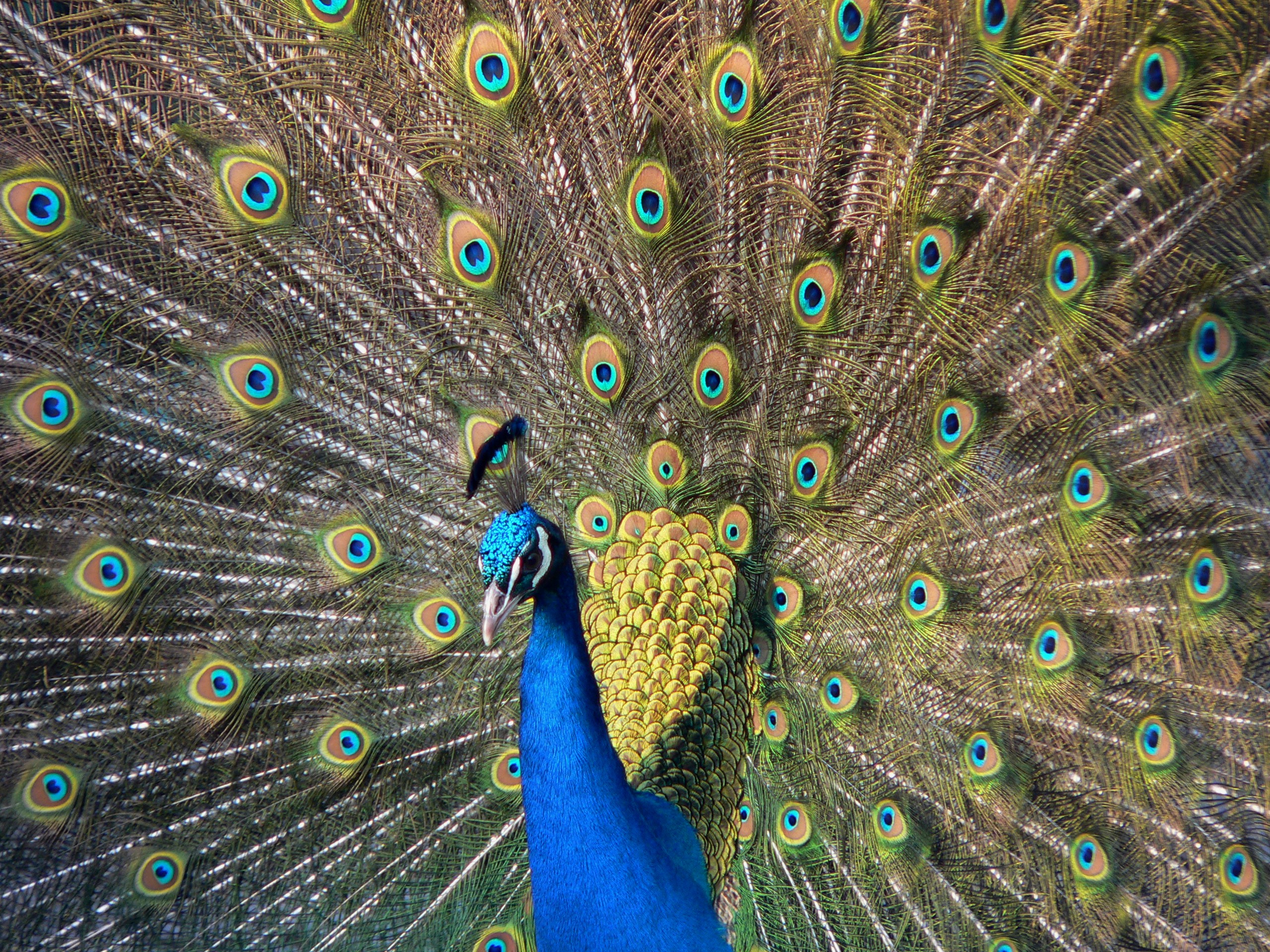
Charles Darwin described sexual selection as "struggle between the individuals of one sex, generally the males, for the possession of the other sex" and nature abounds with strange examples of where animal features have evolved way past their survival needs - for example, reindeer antlers, peacock plumes and quite possible human vocabulary - humans and other primates survived quite nicely without a wide vocabulary, why do we now possess one?

Rob is a leading world expert in the area, listen in to find out what he had to say.
Listen in to this show here (or press play below):


If you would like to hear more about the science of sex, check out The Beer Drinking Scientists episode Let's talk about sex.

References:
Brooks, R. (1999). The dark side of sexual selection Trends in Ecology & Evolution, 14 (9), 336-337 DOI: 10.1016/S0169-5347(99)01689-4

Brooks, R., Hunt, J., Blows, M., Smith, M., Bussiére, L., & Jennions, M. (2005). EXPERIMENTAL EVIDENCE FOR MULTIVARIATE STABILIZING SEXUAL SELECTION Evolution, 59 (4), 871-880 DOI: 10.1111/j.0014-3820.2005.tb01760.x


Monday, 11 October 2010

2SER Subscriber Drive - subscribe and I will give you a cuddle


Between October 11 and October 23, Sydney community radio station 2SER is running its annual subscriber drive. 2SER is home to the science program Diffusion Science Radio to which I regularly contribute, and I also record interviews and podcasts using their studios.

Community radio stations are partially funded by various levels of government, but in the main, they draw their revenue from sponsors and listeners. Subscribing to 2SER is pretty cheap:

$33 - Concession
$66 - Working
$120 - Passionate
$120 - Bands / Artists
$120 - Organisation
$250 - Business
$600 - Lifetime

The theme for this year's drive is Hello Radio, my old friend - so go on, help out a friend in need! Check out the subscriber page to contribute and for more information on the subscriber packs that will be delivered to your door, and the prizes you could win, should you subscribe.

Subscribing to 2SER helps keep independent radio on air - for instance, you will be hard pressed to find quality science radio in Australia outside of the ABC - generally, community radio stations house this type of broadcasting. And as Diffusion is a relatively small operation, we can respond to listener questions in a personal way. Each member of the team is an actual trained and working scientist, as opposed to a journalist, which means that we can bring authority to the topics at hand, as well as having access to Australia's best scientists. The same can be said of 2SER's other talk shows.

To the freebies - if you subscribe, you will receive:
  • Spunk Subscriber Pack containing tracks from Bear Hug, Menomena, Holly Throsby, Sufjan Stevens, Wild Nothing, Caitlin Rose, Active Child, Sonny and the Sunsets, The Books, Olof Arnalds, Mountain Man, Joanna Newsom, Gold Panda, Anthony and the Johnsons plus Jeff The Brotherhood;
  • Three months subscription to Time Out Sydney:
  • Sticker, Fridge Magnet.
The major prizes are:
  • Return flights To Malaysia for two - valued at $1890;
  • A $1000 bike pack;
  • A 12 month membership to Boxing Works, Surry Hills - valued at $1308;
  • 12 months of music - valued at $1440;
  • 2 courses at 2SER School Of Radio - valued at $1320;
  • A DJ course and music production course with DJ warehouse - valued at $540;
  • Oxx Digital and Internet radios - valued at $300;
  • 10x Double Passes To Peats Ridge 2010/11 - Valued At $600.
Plus, if you subscribe and mention Diffusion (or, if you want, me!) then I will give you a cuddle. What more could you want? Check out the subscriber page for more.

Tuesday, 28 September 2010

How close could an average spaceship get to the Sun before melting?


I must start by apologising for being so lax in posting articles and podcast episodes over the last month. We've recently bought a house and moved in, and this process has taken up nearly all my time, given me multiple headaches and left me without the Internet at home.

A while back we put a call out for your burning science questions, and plenty of great questions came in on this site, via email, on twitter (@westius) and over at facebook. I apologise for my delays in publishing these questions and their answers - you can follow the questions that have already been answered in the podcast or on the blog using the Science Week tag.

One interesting question that came in was How close could an 'average' spaceship get to the Sun before melting? Here is an answer from a much more intelligent person than I, Physics PhD holder and all round good bloke, David Bofinger.

An old-fashioned spaceship would probably be made of aluminium, a more modern one might be made of a mixture of aluminium, graphite fibre and polycyanate. Assuming you want the spaceship to actually melt, rather than just fall to bits because a few bits melted, then you probably want to raise it to the melting point of aluminium, which is 933 Kelvin. Of course it will take a lot less than that to kill any crew and cook any electronics on the ship. But melt you asked for and melt we shall give.

We'll assume for the moment that the spaceship is a simple sphere and that we haven't done anything clever to keep the spaceship cool. It will heat up to a temperature such that it's radiating away as fast as it's absorbing heat from the sun. The closer it gets to the Sun the more it absorbs, the more it needs to radiate so the higher its temperature will get.

If we put it in orbit around the Earth, then it's about 150 million kilometres from the Sun and the temperature it reaches is 279 Kelvin, i.e. about 6 degrees Centigrade. (Earth is mostly warmer than this because it has greenhouse gases in its atmosphere.) To melt the aluminium in the spaceship we need to take it into 13 million kilometres, about a twelfth of the distance from Earth and four times closer than Mercury.

Of course there's all sorts of tricks we can play to get closer. We can make the spaceship silvery on the side facing the Sun and black on the side facing space. That will make it absorb less and radiate more. If we made it as white as snow on the Sun side and black as coal on the space side then we could get in as close as 6 million kilometres, about eight times closer than Mercury and twenty-five times closer than Earth. If we made the spaceship long and thin and pointed it toward the sun we could maximise our ability to dump heat compared with how much we absorbed. That might get us in a little close yet. If we pull out all the stops we might do as well as NASA's planned solar probe, which intends approaching within 6.6 million kilometres of the sun while staying cool enough to have functional electronics and cameras.

The moral is that if you want to go close to the sun you don't want an average spaceship, but something built to take the heat.

If you have an alternate opinion, I'd love to hear it.

Monday, 6 September 2010

Dodgy cricket odds

The cricket world has recently been rocked by allegations of match-fixing against the Pakistan team.

The News of the World set up a sting to catch sporting-agent Mazhar Majeed correctly predicting when three no-balls would be bowled during the recent Lords Test Match between England and Pakistan. Whilst this in itself is not match-fixing (it's called spot-fixing - fixing certain events in a days play to win exotic bets), it's a smoking gun pointing towards further corruption.

So what are the odds of correctly picking three no-balls in a day's Test play? Could Majeed have just been lucky?

Let's assume there are 90 overs in a day's play, and on average 10 no-balls and 3 wides. This means that 553 balls will be bowled in the day. There are two ways to work out the probability of correctly choosing 3 balls as no-balls.

1) You can choose 3 random balls from 553 in 28032676 different ways. You can choose 3 no-balls out of 10 possible no-balls in 120 different ways. So mathematically, this looks like:


2) The other way to do this to imagine a big bag of marbles, where the no-balls are black and all other balls white. The first time you pull out a marble, you have 10 chances in 553 of pulling out a black marble. On the second draw, you have 9 chances in 552 and on the third you have 8 chances in 551. This looks like:


This means there are 4 chances in a million of the sports-agent fluking his result. Essentially, he's dodgy! (It is left as an exercise for the reader to prove algebraically that the above two methods are exactly the same...)

Further reading:
Forrest, D. (2003). Sport and Gambling Oxford Review of Economic Policy DOI: 10.1093/oxrep/19.4.598
Frey, James H. (1992). Gambling on sport: Policy issues Journal of Gambling Studies DOI: 10.1007/BF01024122

The Beer Drinking Scientists talk Sex

Over at my other podcast, The Beer Drinking Scientists, we like to tackle the big science topics down at the pub. And what better topic to talk about over a beer than sex?

Darren and Marc review the history of research into sexuality, including the seminal Kinsey Reports, the Masters and Johnson research into the diagnosis and treatment of sexual disorders and dysfunctions, and the more recent, and intriguing, study that Partner wealth predicts self-reported orgasm frequency in a sample of Chinese women.

We also take a look at how sex might have evolved. Why is it that it takes two people to have sex? Wouldn’t evolution be quicker if we could simply reproduce on our own? This is known as the twofold cost of sex - what are the benefits of having two people mix their genes to reproduce? Sexual Selection is another topic up for discussion. Charles Darwin described sexual selection as “struggle between the individuals of one sex, generally the males, for the possession of the other sex” and nature abounds with strange examples of where animal features have evolved way past their survival needs - for example, reindeer antlers, peacock plumes and quite possible human vocabulary - humans and other primates survived quite nicely without a wide vocabulary, why do we now possess one?

We could not possibly tackle this topic without discussing the Sexy Son Hypothesis, or without having a chat to the punters in the pub. Tune in to hear the public’s thoughts on sex, the science involved, length, width, money, style, cuteness, attraction and also hear Darren provide solace to a broken hearted drinker.

Of course, over a beer, much is talked about and you’ll have to tune in to catch the rest! Get over to The Beer Drinking Scientists website to subscribe, listen in to this show here, or press play below:


Wednesday, 25 August 2010

Ep 135: Why do I sneeze at the Sun?

Do you sneeze at the Sun?

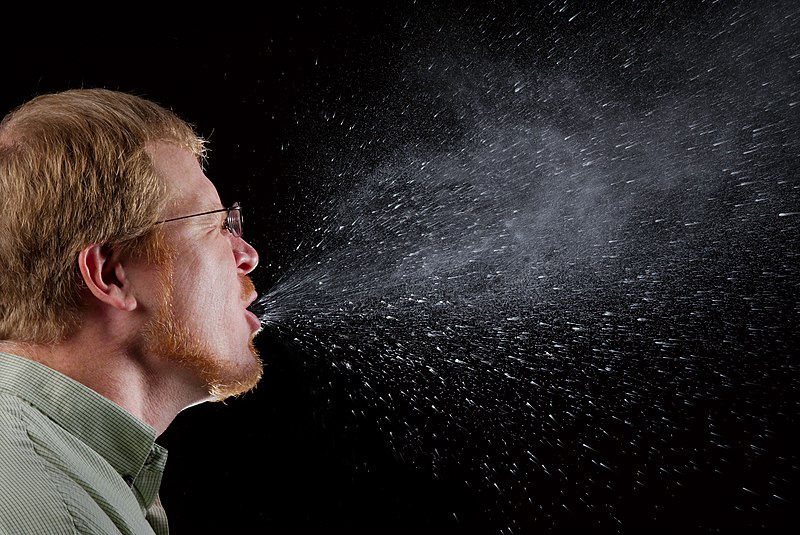
I do. My brother does. Both my parents do. In fact, we are a family of Photic Sneeze sufferers.

The Photic Sneeze Reflex (PSR), also known rather ridiculously as Autosomal Dominant Compelling Helioophthalmic Outburst (ACHOO) Syndrome (how long do you think it took researchers to figure out that acronym....) is a dominant genetic condition affecting around 10% of the population. When a sufferer moves from a region of darkness to a region of bright light - for instance, walking outside and looking at the Sun - multiple sneezes occur. Research into the disorder has yet to explain either its mechanism or an evolutionary reason for why it occurs. One theory is that there is a "short circuit" in the brain, with the stimulated optic nerve somehow triggering the sneeze reflex.

Professor Louis Ptáček runs the Laboratories of Neurogenetics at the University of California, San Francisco. The aim of the lab is to study familial disorders with strong genetic contributions, and thus localise and identify genes that cause human disease. Other conditions in which he is interested include migraine and epilepsy, and an intriguing condition whereby certain sounds cause seizures. He considers PSR to generally be a midly annoying condition, unless you are a combat pilot, where sneezing at the Sun could indeed be life threatening.

I had a really interesting chat to Louis about PSR, and I've left the recording a little longer than usual, as we were really able to explore some fascinating ideas involved with PSR - it was a great chat. Listen in to this show here (or press play below):


Other interesting write-ups of PSR include neurotopia and Scientific American.

This topic came in as part of my call for questions for Science Week, so thanks @lisushi for the question! I'll be putting up more blogs and podcasts to answer the other questions that came in over the next few weeks.

References:
Breitenbach RA, Swisher PK, Kim MK, & Patel BS (1993). The photic sneeze reflex as a risk factor to combat pilots. Military medicine, 158 (12), 806-9 PMID: 8108024 

Langer N, Beeli G, & Jäncke L (2010). When the sun prickles your nose: an EEG study identifying neural bases of photic sneezing. PloS one, 5 (2) PMID: 20169159 

MADIGAN, J., KORTZ, G., MURPHY, C., & RODGER, L. (1995). Photic headshaking in the horse: 7 cases Equine Veterinary Journal, 27 (4), 306-311 DOI: 10.1111/j.2042-3306.1995.tb03082.x

Songs samples in the podcast:
The Steve Wilson Band 
"Stare At The Sun"
from "Sideshows And Fairytales"
Buy at iTunes
DJ Smiths vs Markanera
 "Watching the Sun Goes Down"
from "Watching the Sun Goes Down"
Buy at iTunes
Alexis Cuadrado 
"Bright Light"
from "Puzzles"
Buy at iTunes

Sunday, 22 August 2010

What if we decided election winners using the Big Brother voting method?

This weekend, Australia went to polls in the 2010 Federal Election.

Elections make for some fascinating number analysis. As readers from a while back might remember, I love the statistics of elections. Australia has a preferential voting system, whereby voters list the candidates by order of preference. As opposed to the first past the post system used in Britain, the winner is not decided by who receives the most primary votes, but rather who is the most preferred candidate. Sometime soon I will write a post on the various voting systems used worldwide - see Plus for a great introduction to various voting methods - but for today we ask the question, what would happen if we used the Big Brother voting system?

Big Brother, for those who have been living under a rock, is a TV show in which around 15 house-mates are watched around-the-clock by TV cameras, which broadcast the show live to viewers who, at the end of each week, vote someone out of the house until there is only one contestant left. What if, instead of voting in political parties, we voted out the parties we didn't like?

Let's run an example on my local electorate, Grayndler. At the time of writing, the primary vote distribution looked like this (~70% of the total vote has been counted):

Name Party Votes
James Michael Cogan Socialist Equality Party (SEP) 849
Pip Hinman Socialist Alliance (SAL) 879
Alexander Dore Liberal Party (LIB) 16691
Anthony Albanese Australian Labor Party (ALP) 32406
Sam Byrne Greens (GRN) 17633
Perry Garofani Australian Democrats (DEM) 851

Total 69309

Under the current voting system, it looks like the Labor Party may win the seat, although there is still some uncertainty about this as Liberal party preferences will mostly flow to the Greens, meaning that on preferences there is some small chance that the Greens will win the seat. But what about under our new Big Brother system?

To test out this system, we need to make a few assumptions regarding preferences. We have no idea how voters listed their preferences - whilst, for instance, most Greens voters will preference Labor over Liberal, and many Socialist Alliance voters will preference the Greens over Liberal, I simply don't have the data. Anecdotally, many voters follow party "how to vote cards", meaning that they order their preferences how their favoured parties tell them. So let's assume, for the sake of this analysis, that every voter does this. Taking the party preferences from their senate preference flows list, we see that the parties list their preferences in the following way:

1 2 3 4 5 6
Socialist Equality Party (SEP) SEP GRN SAL LIB ALP DEM
Socialist Alliance (SAL) SAL GRN ALP SEP DEM LIB
Liberal Party (LIB) LIB DEM GRN ALP SEP SAL
Australian Labor Party (ALP) ALP GRN DEM SEP SAL LIB
Greens (GRN) GRN SAL DEM ALP SEP LIB
Australian Democrats (DEM) DEM SAL SEP GRN ALP LIB

It was difficult to come up with the SEP list of preferences as they have three preference lists for the Senate and didn't actually make any effort to order the other parties in terms of preference but rather simply numbered their preferences down the page according to where the parties were written on the ballot. Weird. I suspect that because of this I have their preferences incorrect, but this is simply a worked example so don't hold it against me!

Let's now cross to Gretel Killeen at the Big Brother house.....

Week 1:
After battling it out with a number of pointless challenges and staying up late because they had nothing else to do, the first eviction saw an overwhelming majority of voters evict the Liberals. Using the vote table above and counting up the number of times a party was put as last preference on the ballot, the number of votes for eviction were as follows:

Week 1
Socialist Equality Party (SEP) 0
Socialist Alliance (SAL) 16691
Liberal Party (LIB) 51769
Australian Labor Party (ALP) 0
Greens (GRN) 0
Australian Democrats (DEM) 849

Week 2: 
A dancing-doona between the two socialist parties was the highlight of week 2. With no Liberals to evict, most voters had to turn to their second least-liked party. The Socialist Alliance pulled in an extra 32406 votes - for those playing along at home, these are all the voters who put Labor at number 1 on the ballot box and the Liberals at number 6, whilst the Socialist Equality Party, the ALP and the Democrats also picked up extra eviction votes. It's time to go....  Social Alliance.

Week 1Week 2
Socialist Equality Party (SEP) 017633
Socialist Alliance (SAL) 1669149097
Liberal Party (LIB) 51769-
Australian Labor Party (ALP) 0851
Greens (GRN) 00
Australian Democrats (DEM) 8491728

The following weeks saw an attempted turkey-slap by Labor on the Greens and an impressive Bum Dance by the Democrats. However, in the final week of the show, The Greens took out the seat of Grayndler using the Big Brother eviction rules.

Week 3Week 4Week 5
Socialist Equality Party (SEP) 66730--
Socialist Alliance (SAL) ---
Liberal Party (LIB) ---
Australian Labor Party (ALP) 85135175-
Greens (GRN) 0017542
Australian Democrats (DEM) 17283413451767

75% of voters preferred the Democrats to be evicted in the final round.

There are other ways in which one could run a Big Brother-style election and generally these methods would be likely to find the least offensive, rather than most preferred, party. I'd love to see this method run across the whole parliament!

Tuesday, 17 August 2010

Is the Taliban training monkeys to fight in Afghanistan?

Sometimes you gotta love the internets. A story recently popped up that the Taliban was training combat monkeys to fight wars in Afghanistan. The original popped up on the Chinese People's Daily Online (I caught this story on news.com.au) and opened with:

Afghanistan's Taliban insurgents are training monkeys to use weapons to attack American troops, according to a recent report by a British-based media agency.

It doesn't actually identify the British-based agency, but continues:

Reporters from the media agency spotted and took photos of a few "monkey soldiers" holding AK-47 rifles and Bren light machine guns in the Waziristan tribal region near the border between Pakistan and Afghanistan.... According to the report, American military experts call them "monkey terrorists." ... The emergence of "monkey soldiers" is the result of asymmetrical warfare. The United States launched the war in Afghanistan using the world's most advanced weapons such as highly-intelligent robots to detect bombs on roadsides and unmanned aerial vehicles to attack major Taliban targets. In response, the Taliban forces have tried any possible means and figured out a method to train monkeys as "replacement killers" against American troops. 

The report suggests that the monkey killers will arouse Western animal protectionists to pressure their governments to withdraw troops from Afghanistan and that the CIA trained monkeys to kill in the Vietnam War.

What a wonderfully weird, and bogus, story!


The photo of the terrorist monkey at the heart of this story (above) was found by Jeff Schogol at stripes.com to be photoshopped and Live Science went out and asked some actual scientists (gasp!) whether monkey terrorists were possible - they said no...

You can watch CNN's video of the saga here, view some pretty funny comments and images over at fark, but for the best coverage, check out the Taiwan Animated News version below. I can't understand a word of it, but you really don't need to. Make sure you stick it out till the hilarious animation.

Wednesday, 28 July 2010

Classic Science Videos

If you understand all the mathematical references in the following video, you're doing well. Enjoy the classic mathematical a capella (bet you thought you'd never read that sentence) Finite Simple Group (of Order Two).


If you think that dance is the best medium to portray protein synthesis, then the next video is for you. Made in 1971 by Robert Alan Weiss for the Department of Chemistry of Stanford University, this short film is narrated by Paul Berg, 1980 Nobel prize winner for Chemistry. It makes me wish I had taken science in the 70s - there is no other word than awesome to describe seeing 30s ribosome in the form of hippy interpretative dance. Gotta love the acid-trip music.

Wednesday, 21 July 2010

Ep 132: Science of Superheroes - The Hulk

The science of superheroes is taking a green and nasty turn this week as we discuss the largest superhero of them all, The Hulk. Join myself and our regular superhero expert Dr Boob as we delve into the science of how we might realise The Hulk in the lab. It was one of the more entertaining interviews I have done for the podcast.

Listen in to this show here (or press play below), and read further for more info:


The Hulk is alter-ego of Dr Bruce Banner, who allegedly bares a striking resemblance to Dr Boob. Banner is a reserved physicist who involuntarily transforms into The Hulk when triggered by a strong emotion such as anger, fear, terror or grief. The Hulk himself is a massive green monster who gets stronger the angrier he gets. He also has bullet-proof skin.

The Hulk’s origin story includes depends on whether we are looking at the comic book Hulk, the Hulk of the two recent movies, or The Incredible Hulk of the TV series (in which it is David Banner, not Bruce Banner, who metamorphoses into The Hulk).

The 2003 movie version "Hulk" includes many of the topics we discuss in the podcast. The movie starts with genetics researcher David Banner – Bruce Banner’s father - working with the military to "improve" human DNA. The opening credit sequence depicts experiments with jellyfish and starfish DNA, and Banner’s notepad mentions bioluminescence. This suggests that the Hulk gets his green colour from jellyfish DNA as some jellyfish bioluminesce at around 450 nm, which is at the blue/green end of the spectrum. In 1961, Osamu Shimomura extracted green fluorescent protein and another bioluminescent protein, called aequorin, from Aequorea victoria while studying bioluminescence. He eventually received the Nobel prize in Chemistry in 2008 for this work. The mention of starfish is also interesting because, as we found with Wolverine, starfish and sea cucumbers have great healing powers and are able to regenerate lost limbs. Evidently, Banner wanted to splice bioluminescence and improved healing into human DNA.

Banner’s experiments then moved to lizards and monkeys, but unfortunately they all died. Naturally, he then decided if his experiments did not work on animals, he would try them on himself – clearly, ethics committees are not part of superhero science. After conducting experiments on his own DNA, he eventually passes on his mutant DNA to his unborn son Bruce. Once David realises this, he changes his approach and works to cure his son of his genetic afflictions, however the research is shut down and an explosion kills David’s wife. David is taken to a lunatic asylum and Bruce is adopted.

Years later, Bruce has followed his father’s line of work and is conducting military research – Bruce’s area of interest is the use of nanomeds in soldiers. This might include such things as targeted drug delivery for rapid recovery from injury. An experimental accident subjects Bruce to an enormous dose of gamma radiation which “activates” his mutant DNA (possibly combining with the nanomeds) and the building rage/stress transforms him into The Hulk for the first time.

Whether or not this is scientifically possible – well, that’s the topic of the podcast so tune in!

Other issues that we discuss include:
  • Gamma radiation and radiation poisoning;
  • Genetic transfer and gene therapy – could David Banner change his own DNA in such a way that this change would be copied to his progeny? For more information, check out the Weismann Barrier;
  • The Hulk’s size – is it possible to rapidly increase your size? Simple conservation of mass equations would suggest no, and bacteria in a Petri dish generally have a 24 hour doubling time. There are also enormous metabolic requirements involved – we need to have resources available to feed these growing cells and Bruce Banner is not excessively fat. Perhaps to do this we need to accelerate Bruce Banner to the near the speed of light, at which point he may relativistically pick up some mass - however, this is not particularly practical!
  • The Hulk’s strength – is it possible to rapidly increase your strength?
  • The Hulk's healing properties - could we use some of the science of Wolverine here?
  • The materials used to create bullet-proof skin. The toughest skins in the animal kingdom are crocodile, elephant, shark and armadillo; however none are bullet (and knife) proof;
  • What materials could we use to make his "one-size-fits-all" pants? You will notice that no matter what size Bruce Banner or The Hulk are, and no matter what the ripped state of his other clothes, his undies always fit.
  • And of course, whether The Hulk has irritable bowel syndrome and wears giant green snuggies.
    Hope you enjoy this show - we certainly enjoyed recording it, as you will be able to tell by the end! Listen in to this show here (or press play below):


    NB: I've now discovered there's a Red Hulk - future show perhaps?
    Samples in this podcast are broadcast courtesy of ioda PROMONET. They were:

    The Toxic Avenger
    "Superheros 2007" 
    from "Superheroes" 
    Buy at iTunes
    Spaceman
    "Superhero"
    from "Little Baby Souls"
    Buy at iTunes
    Candye Kane
    "Superhero" 
    from "Superhero"  
    Buy at iTunes
    Ninja Kodou
    "Superhero (Psychedelic Man)"
    from "Ninjutsu"  
    Buy at iTunes

    References:
    Shimomura, O., Johnson, F., & Saiga, Y. (1962). Extraction, Purification and Properties of Aequorin, a Bioluminescent Protein from the Luminous Hydromedusan,Aequorea Journal of Cellular and Comparative Physiology, 59 (3), 223-239 DOI: 10.1002/jcp.1030590302

    Moghimi, S. (2005). Nanomedicine: current status and future prospects The FASEB Journal, 19 (3), 311-330 DOI: 10.1096/fj.04-2747rev

    National Science Week 2010 Preview (oh, and vote for Marc!)

    Australian National Science Week is being held in 2010 between the 14th and 22nd August.

    One of the competitions being run for this year's festival is a hunt for Australia's best science blogger called The Big Blog Theory - and I am rather humbled to have made the shortlisted top 10. There are some top Australian science blogs in the list, and it will be a tough ask to gain more votes than the ABC and sceptic blogs (not climate sceptic, thank goodness...), so if you feel like voting and checking out the final 10, check out the comp website.

    Dan Keogh, one of the judges, put together this video on what he likes in science blogs.


    They are also looking for Australia's best microblogger. Shortlisted in this category is @brainsmatter who you may remember from our combined show on fictional scientists. The closest other contender (IMHO) in this category is @cbsquared_, who made this video we featured a few weeks back on climate change for the Australian current affairs program Q and A.

    There are a few cool events that I'll be looking out for during the week. Apart from the usual cavalcade of scientific fun and excellence, if you are in Melbourne check out the aforementioned @brainsmatter and his From Slime to Dinosaurs show at the Monash Science Centre. If you're not in Melbourne, you'll be able to watch it live online on the Brains Matter site.

    I'm also intrigued by the Big Sleep Survey 2010. People of all ages are invited to take part in the survey during Science Week, during which time they get online at the Sleep Survey website, answer questions about their sleep habits and fill in a week long sleep diary. As well as contributing to a real research project, each participant will find out their Sleep IQ (hmmm, sounds pretty pop-sciencey to me, although probably fun) and go into the draw for a prize. Check out the National Tour and Guests page for more info on the science week happenings.

    I'm very much looking forward to seeing Simon Pampena in what I guess you would describe as a humorous maths stage show called Planet of the Primes. Last year I saw Simon in Super Mega Maths Battle and it was one of the funniest things I've seen on stage, certainly on a "science" stage - although I'm pretty sure the kids in the audience didn't get the jokes! If you are near one of these shows, make sure you get along to see it, not only because it is maths communication (a particular passion of mine) but because it's very funny - well I presume it is, going on last year's show. Below is the video from last year's show - I'm not sure it does it justice, but you can sense the absurdity, which is right up my alley.


    I'll be at various Sydney shows, hope to see you there. And don't forget to vote!

    Sunday, 11 July 2010

    The Science of Double Rainbows (OMG, what does this mean?)

    This post was chosen as an Editor's Selection for ResearchBlogging.orgThis question came in from @holabendez for Science Week. What causes a double rainbow? The question is inspired by, in my opinion, the best youtube video since Keyboard Cat met Hall and Oates. Check out the Double Rainbow video below - if I'm this happy for just one day in my life, it will have been a happy life:


    And now you'd better check out the Double Rainbow Song....


    Rainbows are the result of the reflection and refraction of light by water droplets. They can be seen when there are water droplets in the air in front of you and sunlight shining from behind you at a low angle. You can also see them when looking at a sprinkler or hose, and sometimes they are created by the moon. But before we jump into the optics involved, let's review some high school physics.

    White light and refraction:
    White light from the Sun is made up of all the various colours of visible light. Each of these colours has a different wavelength - red light (at one edge of the rainbow) has a wavelength of ~650 nm, whilst violet light (at the other edge) has a wavelength of ~400 nm.

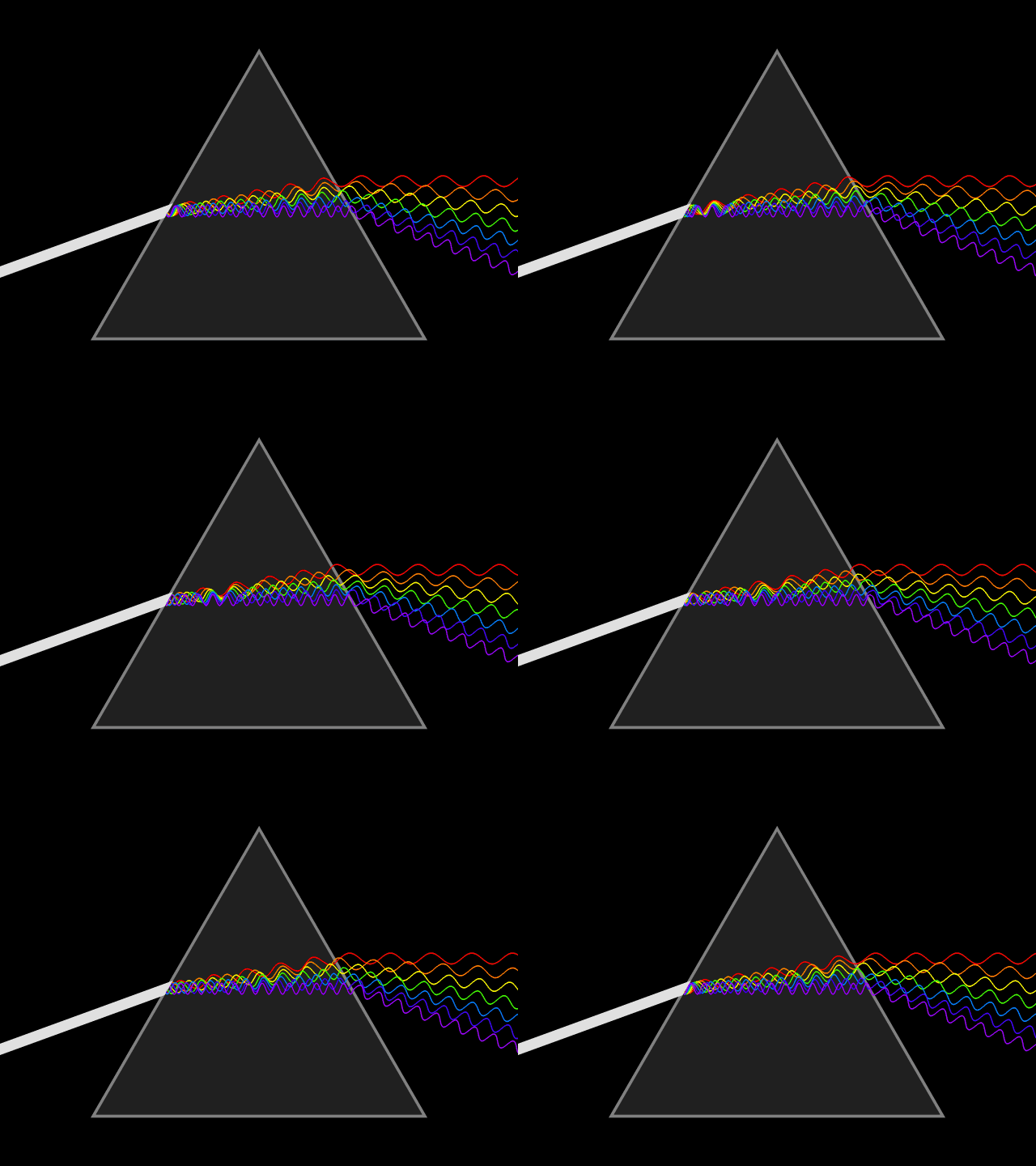
    When light travels from one medium (say air) to another (water), it changes speed, and if the light enters at an angle, it will bend. This is known as refraction. Shorter wavelength light (such as violet) refracts more than longer wavelength light (such as red). You can see white light splitting into its constituent colours in the image to the right.

    NB: The Sun may not look white from here on Earth (it looks yellow), but if you were to observe it from space, it would look white. This is because the Earth's atmosphere scatters shorter wavelength light (like violet) more than longer wavelength light (red). See our story on the dust storm that turned Sydney red for more discussion of atmospheric scattering.

    Primary Rainbow:
    Rainbows result from a combination of reflection and refraction. The pictures below show the optics of how this works. The grey circles are water droplets. White light enters the droplet and is refracted, then reflected off the back of the droplet, before leaving the drop split into its constituent colours, again refracted. Some light will travel through the droplet - the reflection is not 100%. Red light leaves the droplet at a slightly higher angle than violet - this angle is independent of the size of the drop, but does depend on its refractive index. Seawater has a higher refractive index than rain water, so the radius of a rainbow in sea spray is smaller than a rainbow in the sky. The following picture shows the paths of red and violet light in the production of a rainbow - the other colours of a rainbow (for example green) travel somewhere between the two extremes.

    Primary Rainbow

    When you see a rainbow, you are seeing light that has been refracted and reflected through water droplets, however the red colour does not come from exactly the same droplets of water as the violet colour. If you were able to isolate one particular water drop that produced some of the red colour you saw, the violet light from this drop would not meet your eyes - it would travel over your head. The following picture shows that multiple water droplets contribute to the colours you see - this is why red is the top colour in the rainbow.

    Primary Rainbow View

    Secondary Rainbow:
    In the immortal words of the above youtube video, a double rainbow, Oh My God, what does this mean? It means interesting optics. A secondary rainbow is produced when there is one extra reflection of light within the water drop. As some light is lost each time it hits the edge of the drop, the secondary rainbow is fainter than the first. It appears higher in the sky because the light exits the drop at a larger angle (50-53 degrees) than the primary rainbow (40-42 degrees).

    Secondary Rainbow

    The colours in the secondary rainbow are in reversed order to the primary rainbow.

    Secondary Rainbow View

    The following picture shows how the rainbow appears in the sky with regards to the Sun and the observer. The same picture also makes sense for the secondary rainbow, however it would appear at a larger angle, and therefore could also appear later in the day when the Sun is higher in the sky - it would also have the colours reversed. If the Sun is higher than 42° (or 53° for the secondary), the rainbow is below the horizon and usually cannot be seen.

    Rainbow

    The reason that the rainbow is circular is that this is the only shape that reflects the light back to your eyes at 42° (or 53°) - water droplets below and above (or to the left and right) of the rainbow do not reflect the light to your eyes. What this means is that everyone sees a different rainbow. If you are looking at a rainbow and walk to a new position, the light you see in the new spot will have been reflected by different water droplets to the light you saw in the first spot. This is also why there is no pot of gold at the end of the rainbow - there is actually no end of the rainbow. A rainbow does not actually exist at a particular location in the sky - it all depends on your location and the position of the Sun.

    It is possible to see a completely circular rainbow, but only if you are in a plane above the ground. In this case, you could look down and possibly see a rainbow whose centre is the shadow the plane. Climbing a mountain may not help you see a more complete rainbow as the mountain itself would cast a shadow, blocking the light which would cause the rainbow.

    So even though a "double rainbow all the way across the sky" may seem a mystical experience, it's really just physics!

    References:
    G., T. (1938). Descartes' Discourse on Method Nature, 141 (3574), 769-769 DOI: 10.1038/141769c0

    Tuesday, 6 July 2010

    An egg in space - or an egg in a vacuum - what would happen?

    This is a question that has been bugging us at work.

    What would happen to a chicken egg in space? Equally interesting is the question what would happen to a chicken egg if placed in a vacuum chamber?

    Eggshells are able to withstand quite large forces from the outside because of their dome structure, but are not so strong from the inside. This makes sense - they need to be strong enough to withstand the force of the mother chook sitting on them, but need to be fragile enough from the inside for the baby chick to escape. If placed into a vacuum, would the pressure of the small amount of air inside the egg be enough to break the shell? Let's assume for the sake of argument that the egg was laid at normal atmospheric pressure.

    Other things to consider include temperature. Would the egg white and egg yolk freeze and therefore expand? This could break the shell. Is there enough empty space inside the egg into which the mainly water interior could expand? Or would this happen too suddenly? Is temperature actually a factor?

    Or perhaps a sudden change in pressure might cause the interior to rapidly boil, exploding the egg? Water only boils at 100 degrees at normal atmospheric pressure - the more you lower the pressure, the lower the temperature that water boils at. For instance, at the top of Mount Everest, the boiling point of water is 69 degrees. Human blood would boil in space except for the fact that our skin is strong enough to protect our blood from the rapid drop in pressure. Is an eggshell similarly strong, or is it too permeable?

    Is there a difference between the scenario where the egg is in space - let's say at about the Earth's orbit - and so is heated by the Sun (or at least half of it), and in a vacuum chamber where there is no heat source?

    As much as we like to ponder these questions, we don't have an answer. What do you think? Please feel free to speculate and throw ideas into the mix.

    For extra reading, check out the references for work conducted on hatching chickens in low gravity, and also hypergravity.

    References:
    SUDA, T., ABE, E., SHINKI, T., KATAGIRI, T., YAMAGUCHI, A., YOKOSE, S., YOSHIKI, S., HORIKAWA, H., COHEN, G., & YASUGI, S. (1994). The role of gravity in chick embryogenesis FEBS Letters, 340 (1-2), 34-38 DOI: 10.1016/0014-5793(94)80168-1

    Jones SM, Warren LE, Shukla R, Browning A, Fuller CA, & Jones TA (2000). The effects of hypergravity and substrate vibration on vestibular function in developing chickens. Journal of gravitational physiology : a journal of the International Society for Gravitational Physiology, 7 (3), 31-44 PMID: 12124183

    Saturday, 26 June 2010

    Ep 131: The Science of Sport at Altitude

    Professor Chris Gore, head of Physiology at the Australian Institute of Sport, has had over 20 years experience in the science of sport at altitude, including the study of the physiological effects of altitude on the body and designing altitude training regimes for athletes.

    The effects of altitude have been known for some time, however their effects on sport became prominent during the 1968 Mexico Olympics, which were held at over 2000 metres. At these games, endurance sports suffered whilst records were set in sprint events. Many games in the current 2010 FIFA World Cup are being held at altitude, and all of the highly professional teams have had some form of altitude training before the competition.

    I spoke to Chris about the science of sport at altitude, including the physiological effects on the body, the different physics that apply to sports played at altitude, how altitude training works and the ethics of artificial altitude training. Listen to this show here, or press play below - and read on for some more info. This question came in from the guys at Green and Gold Rugby as part of our call for science stories for science week. With the World Cup currently being played at altitude, I thought it best to bring this particular question forward - thanks for the question guys! I will be writing up a more comprehensive story on the topic soon.


    Much of the effect of altitude on sport concerns our aerobic performance. As the atmospheric pressure is less at altitude than at sea level, less oxygen is taken into the blood. The maximum capacity of the body to utilise oxygen is known as VO2 max. At altitude, VO2 max decreases, meaning that for every 1000 metres climbed, our aerobic performance (VO2 max) decreases by 7%. For endurance and aerobic events, if you are not acclimatised, your performance will decrease.

    The body reacts to the decreased atmospheric pressure by making more red blood cells to help the uptake of oxygen. This is where the benefit of altitude training comes in. If you spend a number of weeks at altitude and then return to sea level, these extra red blood cells could help your aerobic ability on your return. The Live High, Train Low concept has become reasonably well established. What this means is that for most of the day, you live at altitude, but you conduct your training at low altitude. As you are less able to work at high altitude because of your decreased aerobic ability, and hence less able to build strength or work on skills, training is conducted at low altitude. However, you live most of the time at high altitude in order to increase your VO2 Max.

    The second part of the problem is the different physical dynamics that are present at altitude. For ball sports, as the air is thinner, there is less drag and hence balls tend to travel further. There is also less curve on the ball (or swing in cricket) as there is less friction caused by the air. This can mean that skills learnt at sea level are not necessarily attuned to the higher altitudes.

    This mix of physiology and physics means that some sports are better performed at high altitudes and others at low altitudes. Foot races up to about 400 metres are faster at high altitudes as these are sprint events where aerobic capacity is less important (that is, they are anaerobic sports that don't require much oxygen) and the decreased drag improves the time. Chris Hoy famously attempted to break the World 1 kilometre Cycling sprint time at altitude in Bolivia and Bob Beamon smashed the long jump world record in Mexico, both largely due to decreased drag.

    However, sport at altitude is not simply a matter of VO2 max and air friction. More than 200 genes are turned on during hypoxia, which is the condition where the body is deprived of oxygen. The AIS is studying many aspects of the problem including how lactic acid builds up in muscles differently at altitude than at sea level. Studies are also being conducted into the effect of altitude on skills. Chris considers that for a mid altitude of 2500 metres, it takes at least 2 or 3 weeks of acclimatising to be ready to compete, and possibly up to 8 months to be completely adjusted.

    High altitude football teams have been found to have an advantage at home, but interestingly, low altitude teams have a similar advantage as it has been found (but not yet explained) that people coming down from altitude can struggle to adjust at sea level, becoming sluggish and lethargic. However, this is only for very high altitudes of 4 - 5 kilometres.

    Chris considers that altitude training will only improve your performance by 1 or 2% and only for elite athletes. The effects may last up to 3 weeks but those who have spent a lifetime at altitude may see positive effects for much longer at sea level.

    The use of "artificial altitude" - that is, hyperbaric chambers - has been ruled OK by the World Anti-Doping Agency. To hear more on this topic, all the topics mentioned above, and plenty more, tune in here, or press play below:


    Here are some videos of the two altitude feats mentioned in the podcast, the Long Jump World Record of Bob Beamon in Mexico, and the attempted 1km Cycling World Record of Chris Hoy in Bolivia:

    Bob Beamon:


    Chris Hoy:


    References:
    McSharry, P. (2007). Effect of altitude on physiological performance: a statistical analysis using results of international football games BMJ, 335 (7633), 1278-1281 DOI: 10.1136/bmj.39393.451516.AD

    Loland S, & Caplan A (2008). Ethics of technologically constructed hypoxic environments in sport. Scandinavian journal of medicine & science in sports, 18 Suppl 1, 70-5 PMID: 18665954

    Friedmann-Bette B (2008). Classical altitude training. Scandinavian journal of medicine & science in sports, 18 Suppl 1, 11-20 PMID: 18665948

    Levine BD, & Stray-Gundersen J (1997). "Living high-training low": effect of moderate-altitude acclimatization with low-altitude training on performance. Journal of applied physiology (Bethesda, Md. : 1985), 83 (1), 102-12 PMID: 9216951

    Bärtsch P, Saltin B, Dvorak J, & Federation Internationale de Football Association (2008). Consensus statement on playing football at different altitude. Scandinavian journal of medicine & science in sports, 18 Suppl 1, 96-9 PMID: 18665957